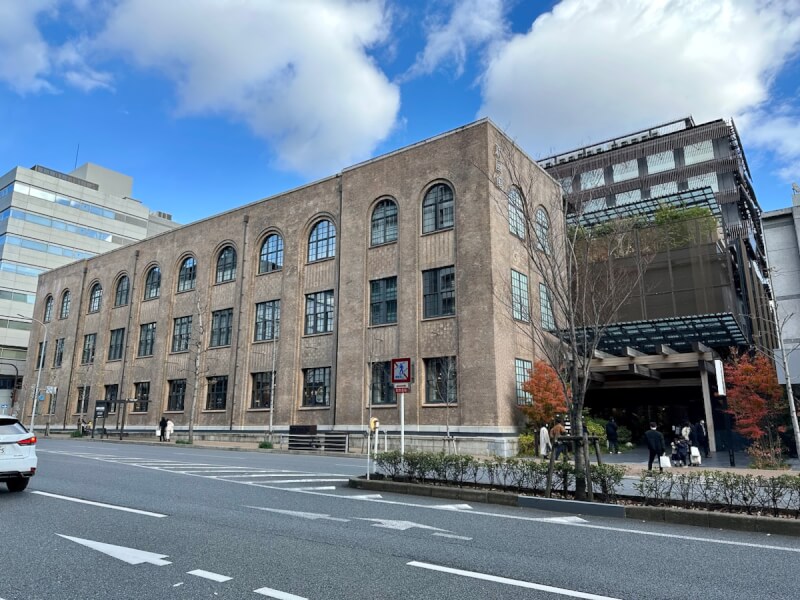

Shinpuhkan above Karasuma Oike Station
Two brown buildings
On the second day of my Kyoto trip I stayed at Ace Hotel Kyoto, which is located almost directly above Karasuma Oike Station. The brick building was built in 1931 as the former Kyoto Central Telephone Office, and the building visible behind it is newly constructed.
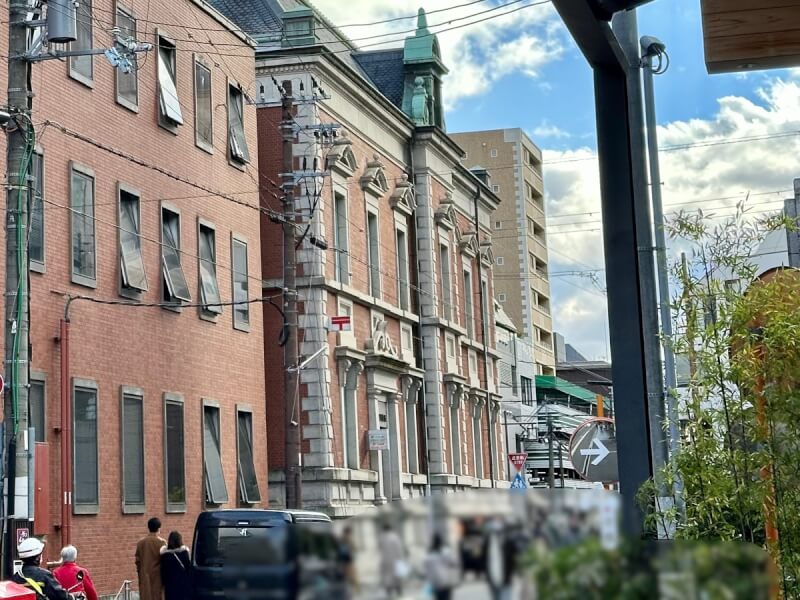
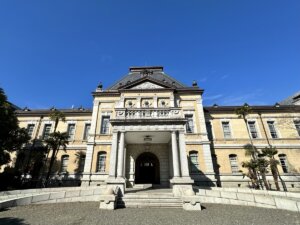
Kyoto has building height regulations, so it’s great that this site was preserved instead of becoming a typical high-rise “waist-wrap” building. The nearby former Chukyo Post Office building also has a very nice presence.
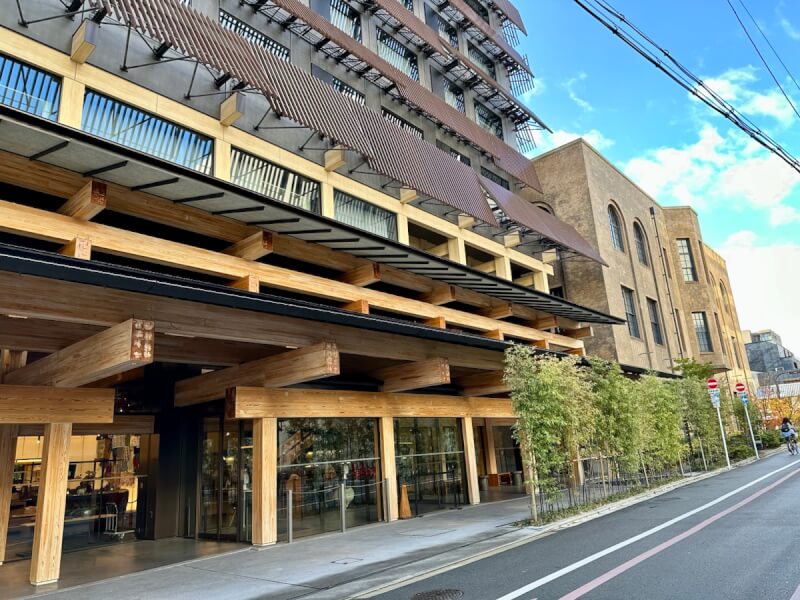
Most of the facility is in the new section (foreground left in the photo below), but the façade with brown louvers is distinctive—this was supervised by Kengo Kuma. The large canopy over the entrance and the protruding beams are interesting too; it gives off a sci-fi version of Japan.
Ace Hotel is a brand making its first entry into Asia. It felt much more casual than I expected.
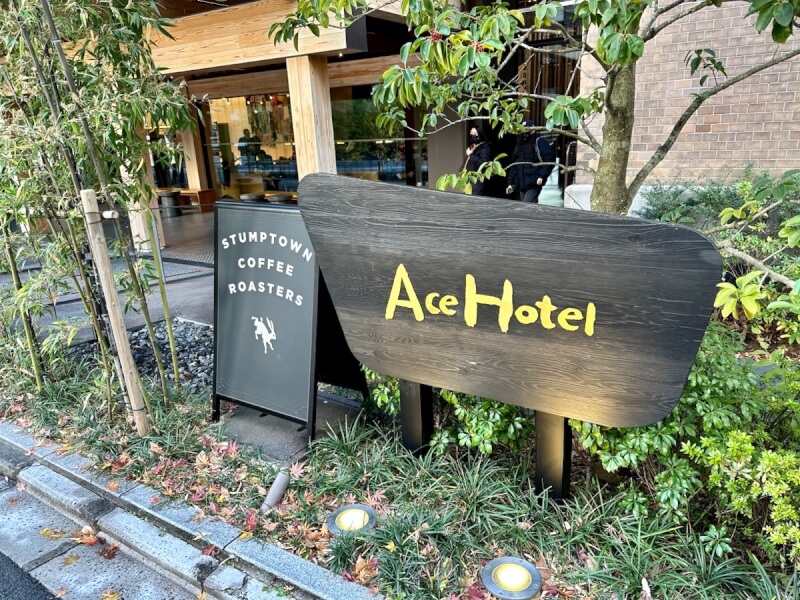
Many ways in: entering via the courtyard
Because Ace Hotel Kyoto is part of the mixed-use Shinpuhkan complex, you can enter from several different routes. There’s almost no boundary at all between the hotel and the outside world!
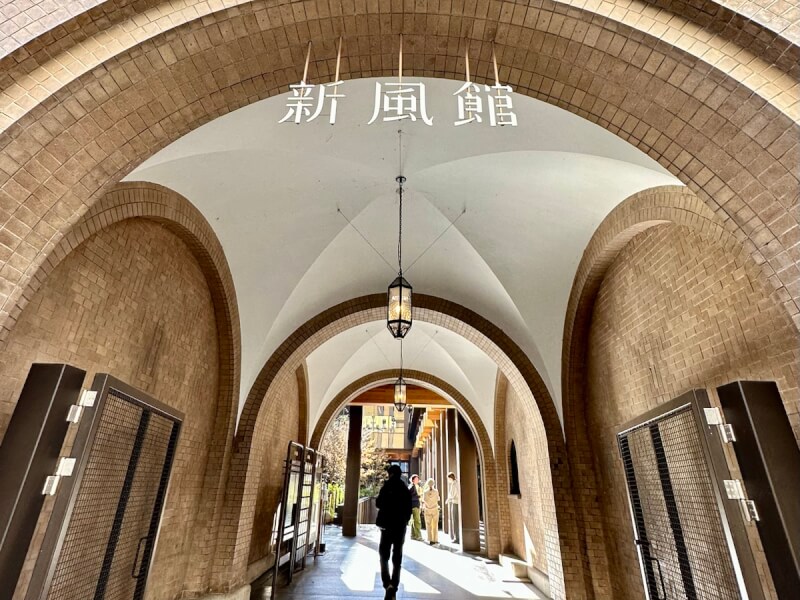
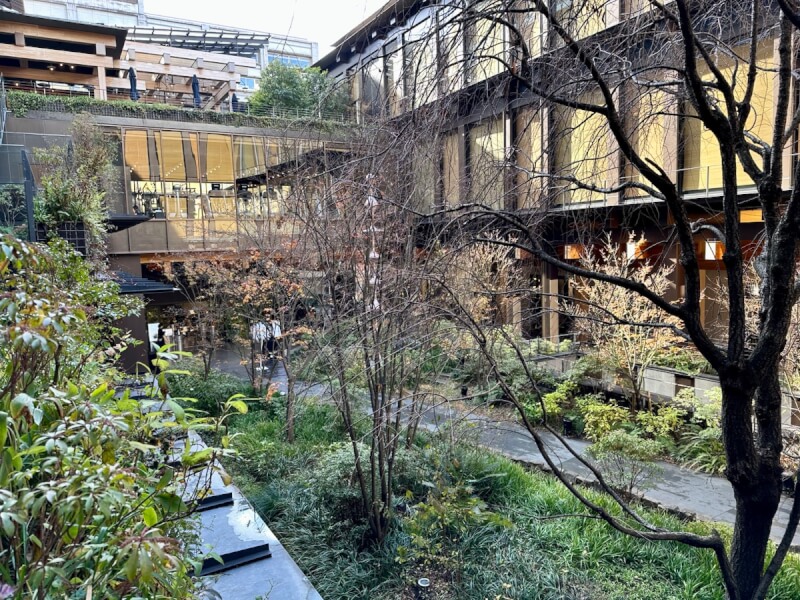
The courtyard is lined with shops and there were lots of people taking photos. There’s a lot of greenery and it feels pleasant.
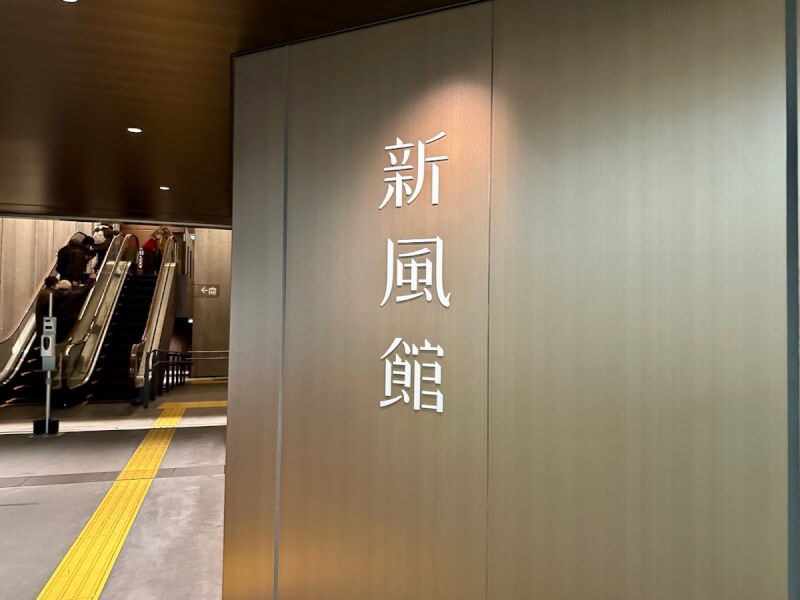
Many ways in: entering from the subway
It’s wonderfully convenient that you can enter directly from Karasuma Oike subway station. As soon as you come through the ticket gate, you’re at Shinpuhkan’s entrance.
Stylish signage—the signs made from fencing are intriguing; I wonder what inspired that choice.
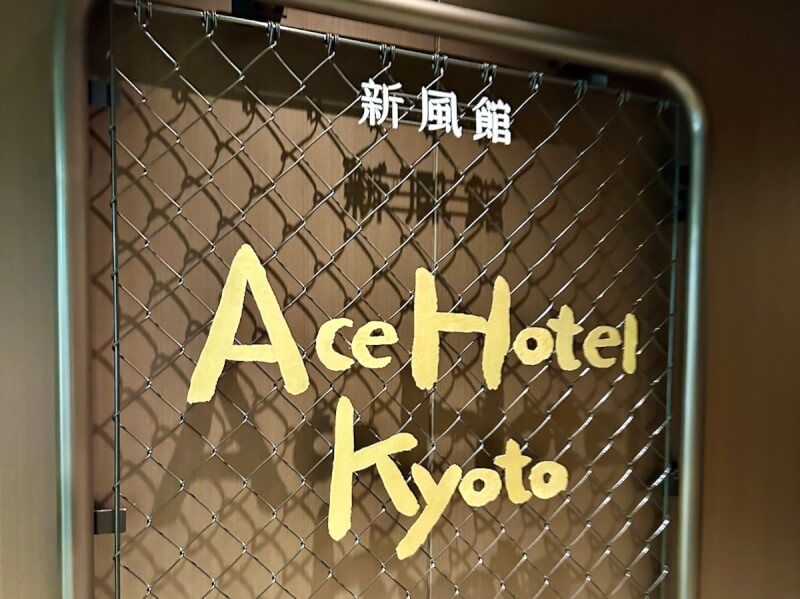
From the Shinpuhkan passage lined with shops you can enter the hotel immediately. The HOTEL sign is made from fencing as well.
A hotel in a curious world
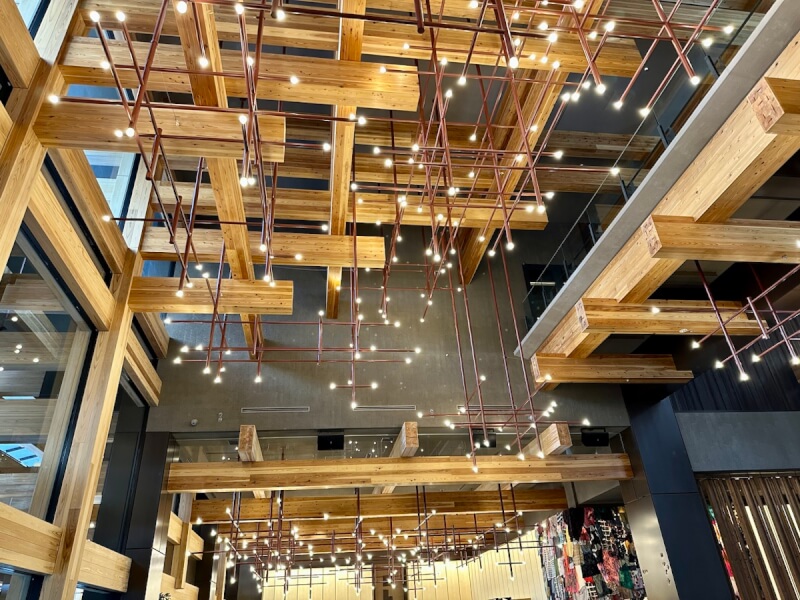
A glittering front lobby
When I entered the lobby loud background music was playing, and I immediately understood this hotel isn’t aiming to be a typical one. (Though it’s probably smaller than W Hotels.)
The ceiling has that unmistakable Kengo Kuma–style wooden framework. At first I thought the lighting might be his too, but it turned out to be different.
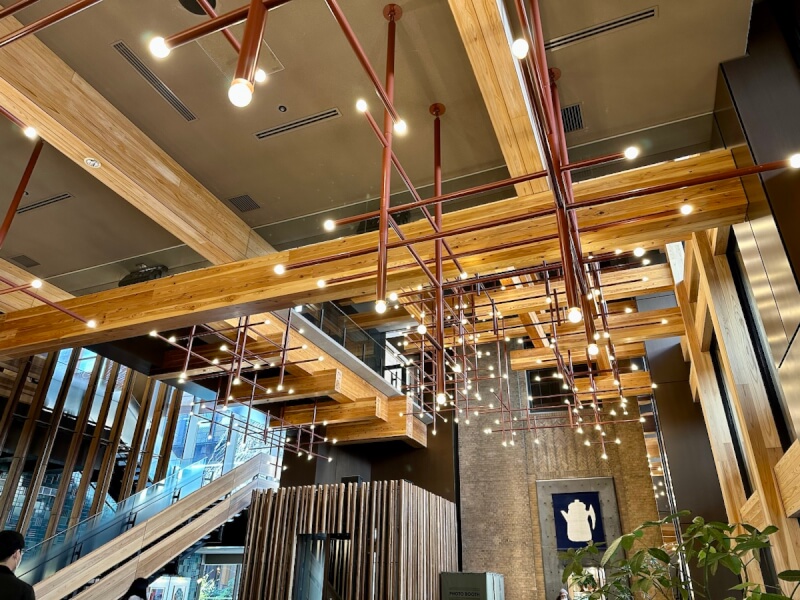
The lighting was designed by Commune Design, the studio responsible for the property’s interior. The copper-tube fixtures integrate with Kuma’s woodwork so well that you’d easily assume the lights were his design.
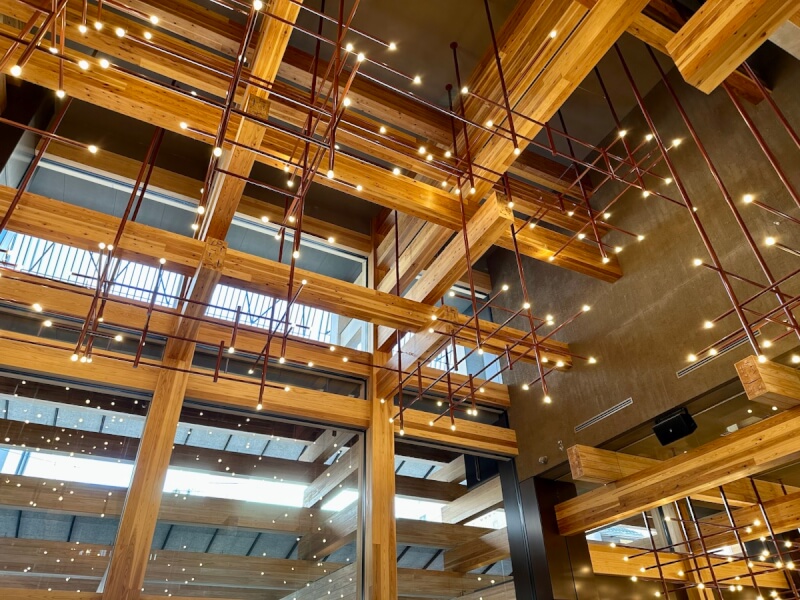
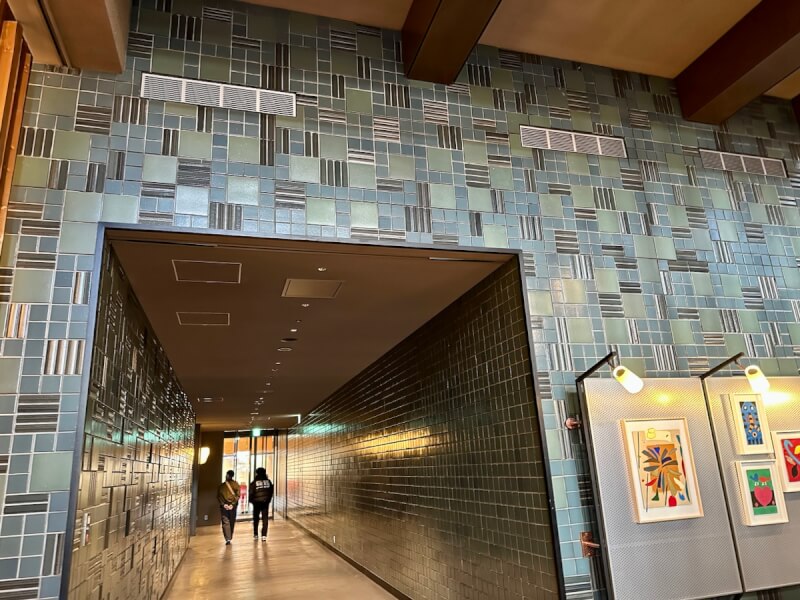
This lobby area appears to be freely usable even by non-guests, and it was full. Many people buy coffee from the café right in front of it.
Lots of cute little details that make my heart skip
Ace Hotel’s overall theme is “East meets West.” Rather than using stereotypical Japanese motifs like Hokusai prints, they express the East on a deeper level—something that feels natural for Ace and is very pleasant.
The tiles on the lobby and elevator hall walls are Shigaraki pottery. Though new, they give a kind of Showa-era office-building vibe that’s comforting.
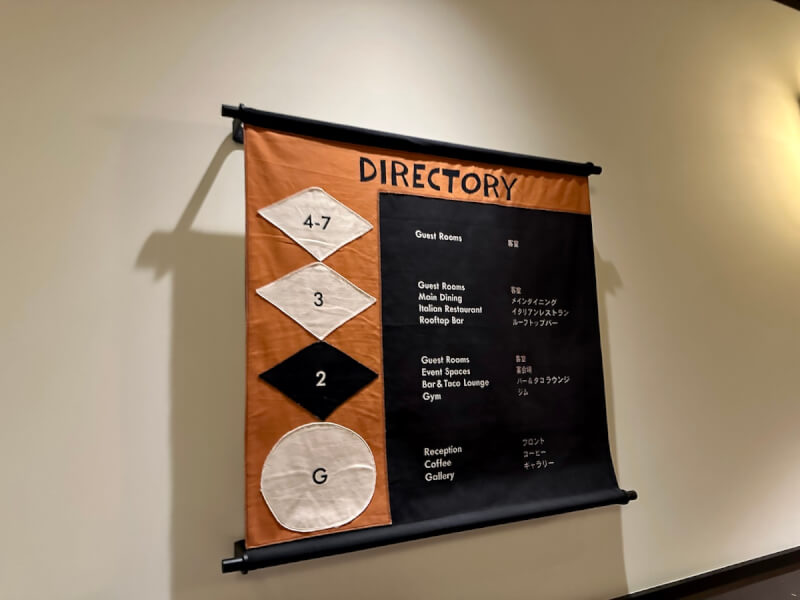
The warm fabric floor guide and its typography were designed by Samiro Yunoki.
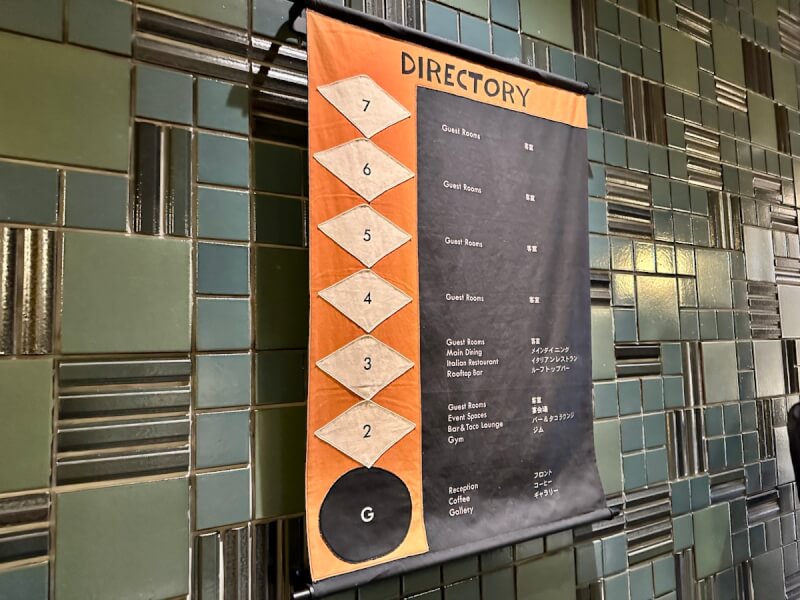
As of 2023 he is still an active artist at the remarkable age of 101! There was also an exhibition this year.

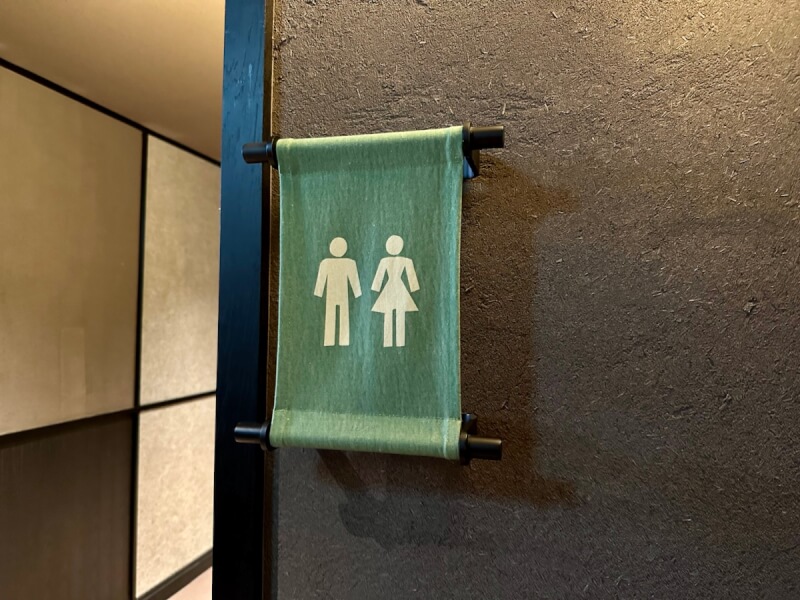
Even the restroom signs are made of fabric—so cute!
I’m staying on the second floor tonight. Off the elevator, I head to my room.
Staying in a Historic Twin
A room in the preserved wing
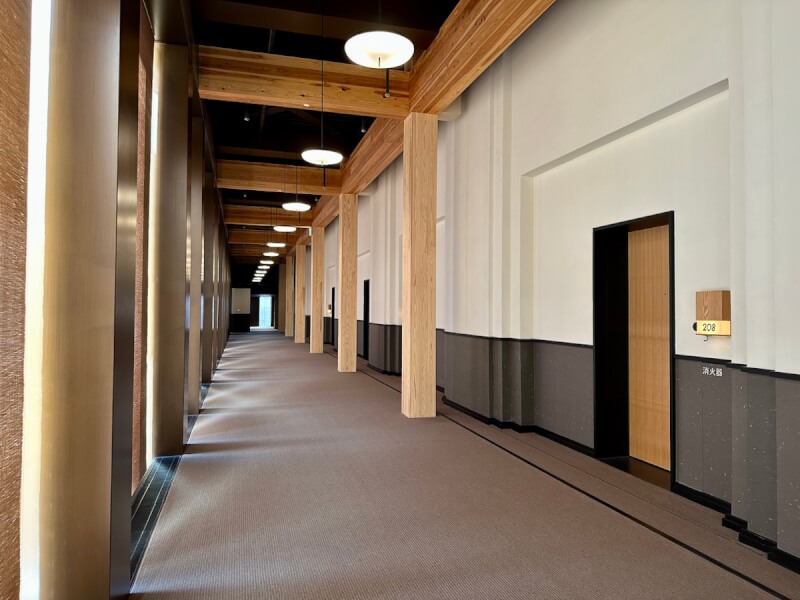
I’m staying in the preserved wing repurposed from the former Kyoto Central Telephone Office. The corridor has tall ceilings—I wonder if the positions of the room doors haven’t changed since the telephone-office days?
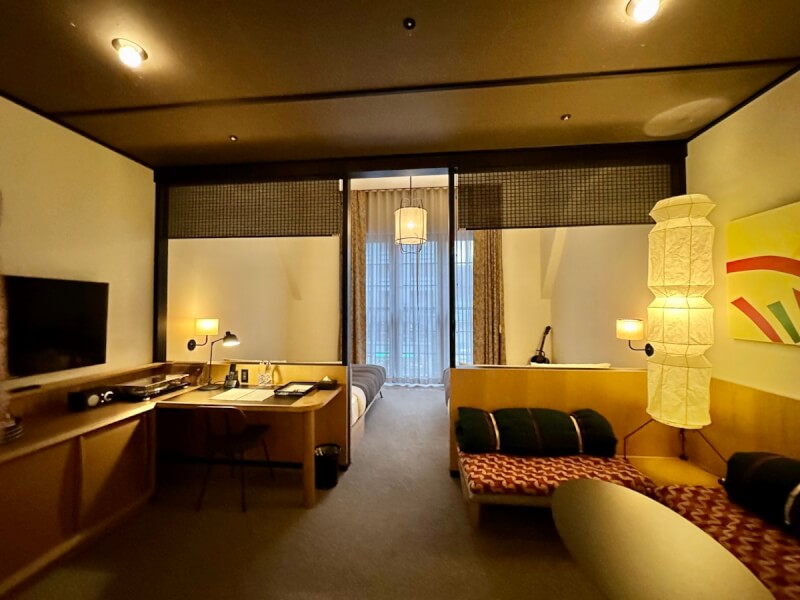
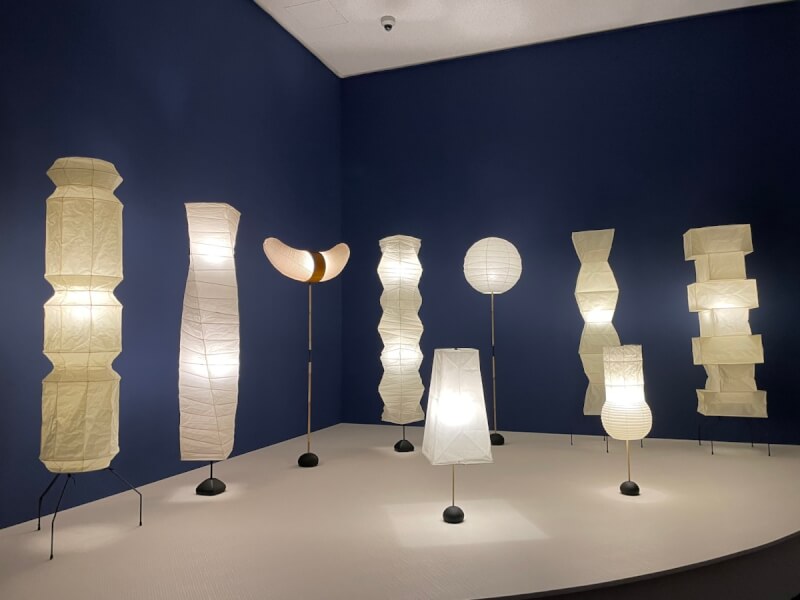
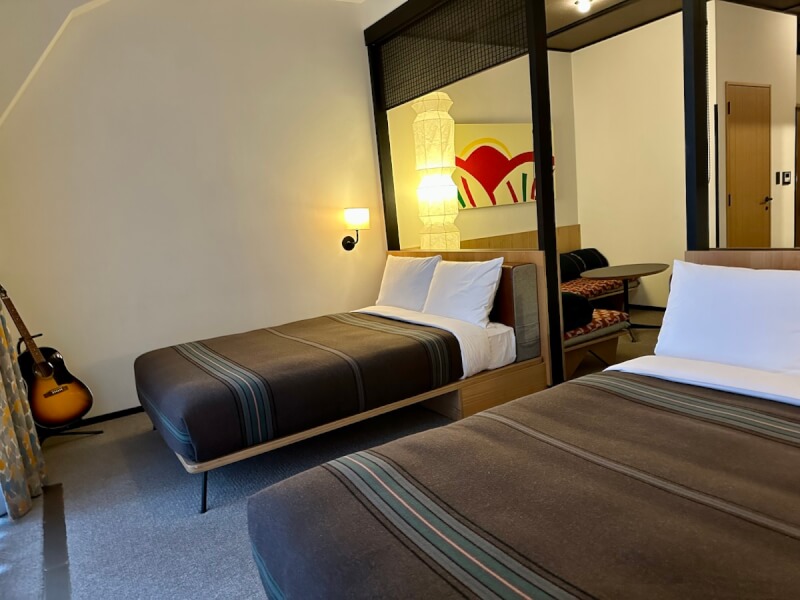
The room is a Historic Twin—historic because it’s in the preserved wing. It’s a long, narrow room with windows facing Karasuma Street. The floor lamp is from Isamu Noguchi’s AKARI series.
It was also shown at the 2021 Isamu Noguchi exhibition (leftmost in the photo).
The bed faces the window, and there’s an acoustic guitar you can use freely.
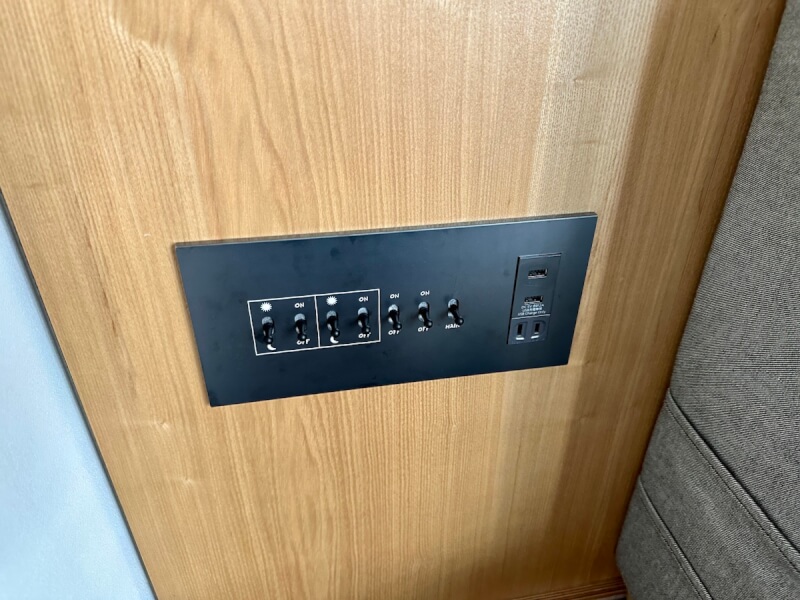
The bedside switches are the clicky kind. They look fragile and made me worry they might break.
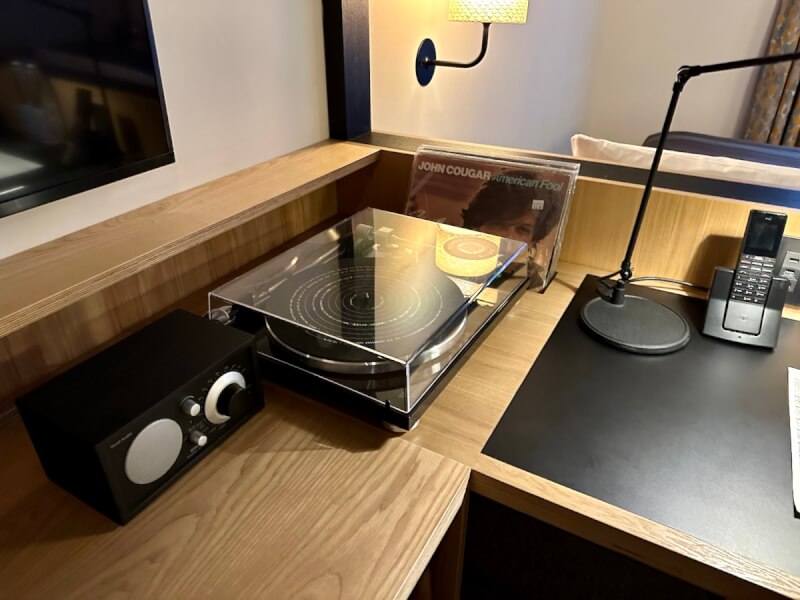
On the desk there’s a record player and records—mostly foreign albums, but I found one Seiko Matsuda record.
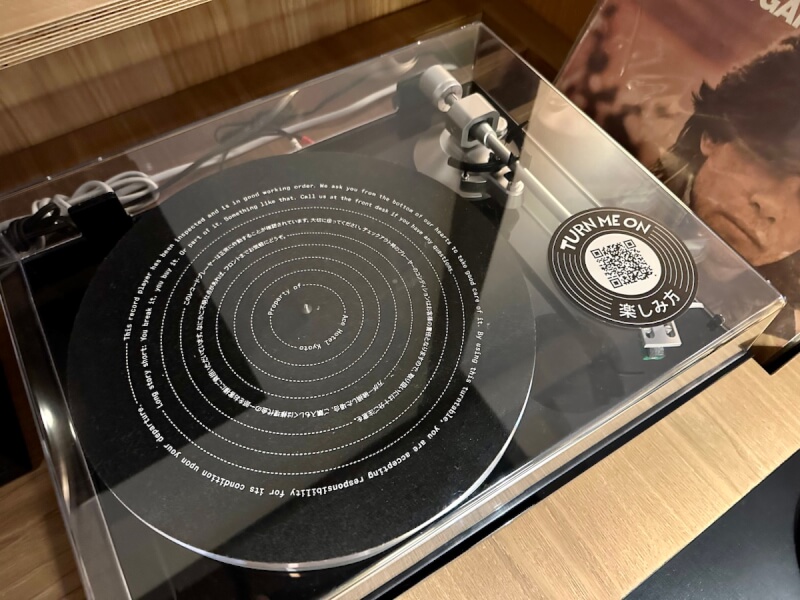
Instructions for use are available via a QR code. I had a record player at my parents’ house but never used it, so I nervously tried it out. (The notice said I’d have to pay for repairs or buy it if I broke it—scary!)
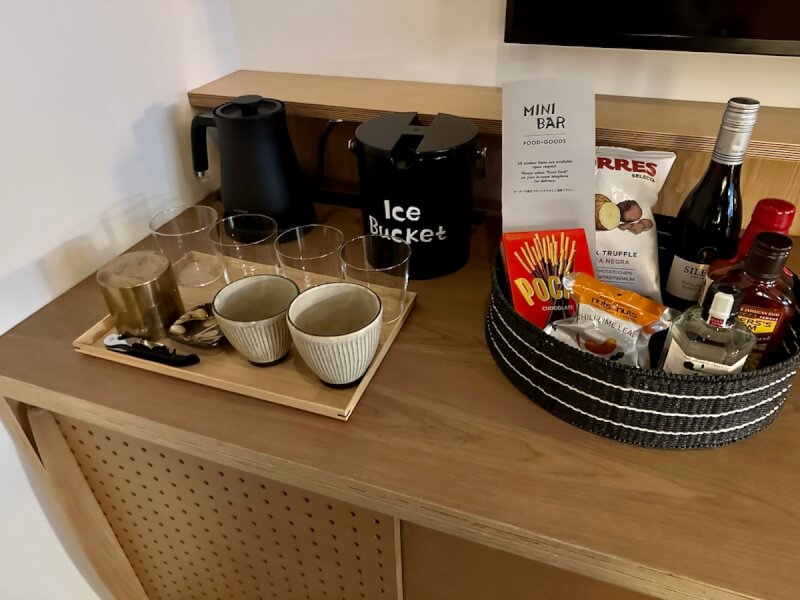
The mini-bar is cute.
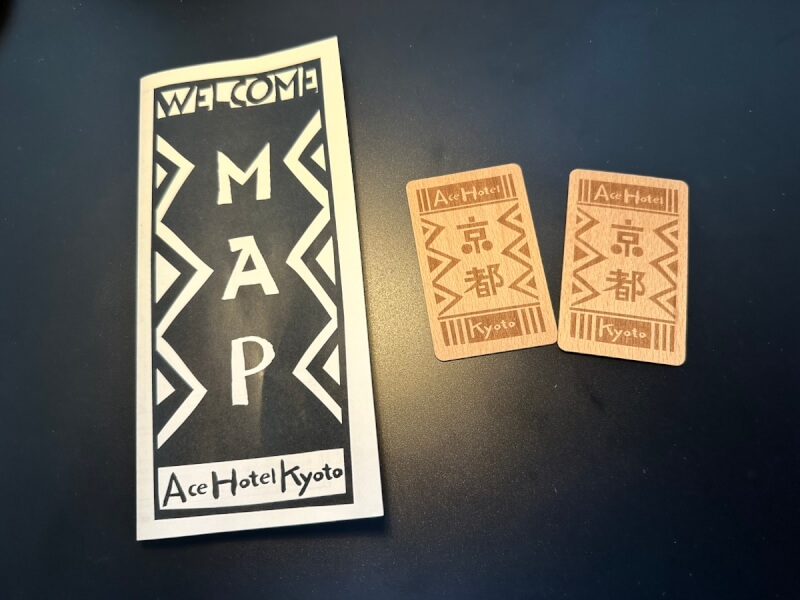
The hotel map and room key are cute too—I wonder if these were also designed by Samiro Yunoki.
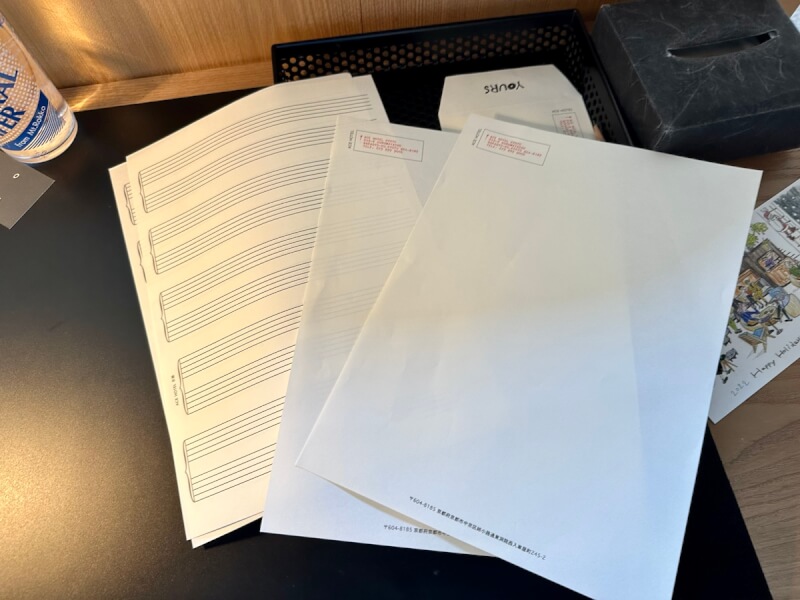
Inside the letter set there was even staff paper for musical notation. I meant to use it but ended up not doing so.
The wash area is a spacious double bowl; the color palette somehow gave me a Muji-like feeling.
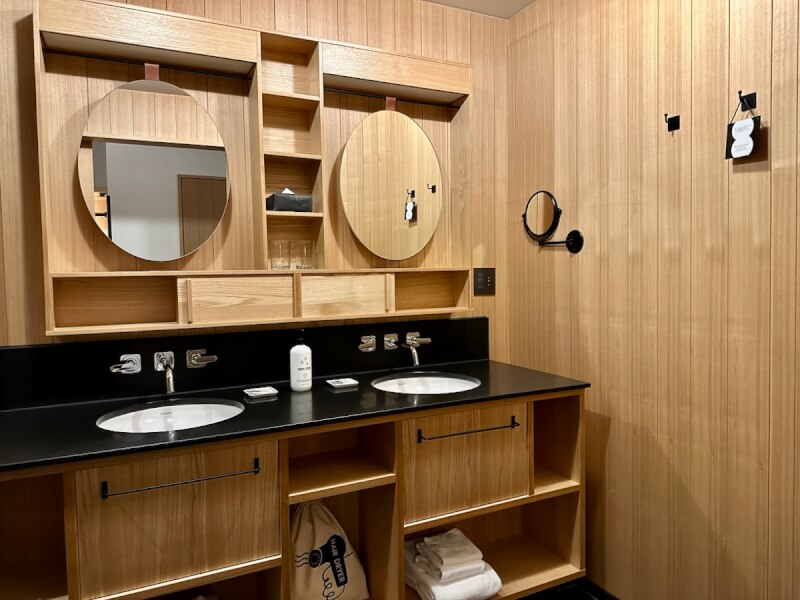
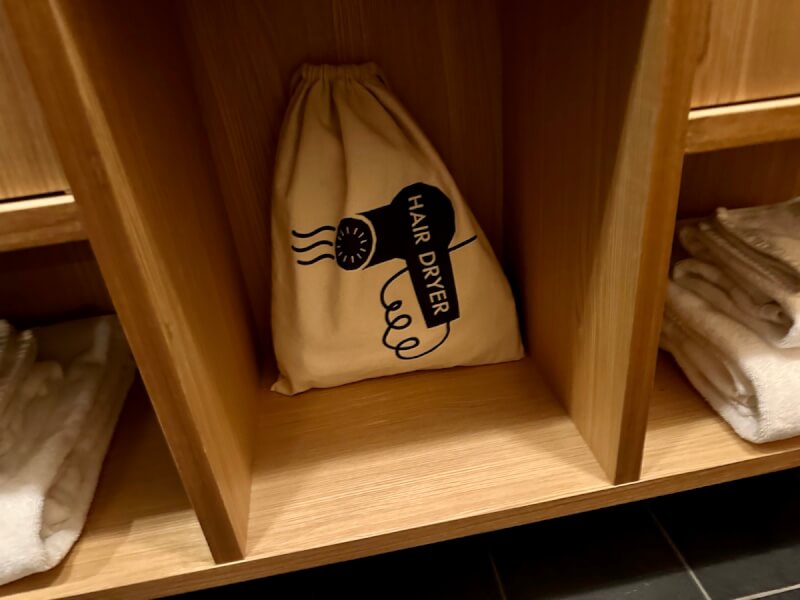
The hairdryer bag is super cute—I wanted to buy it… (not for sale).
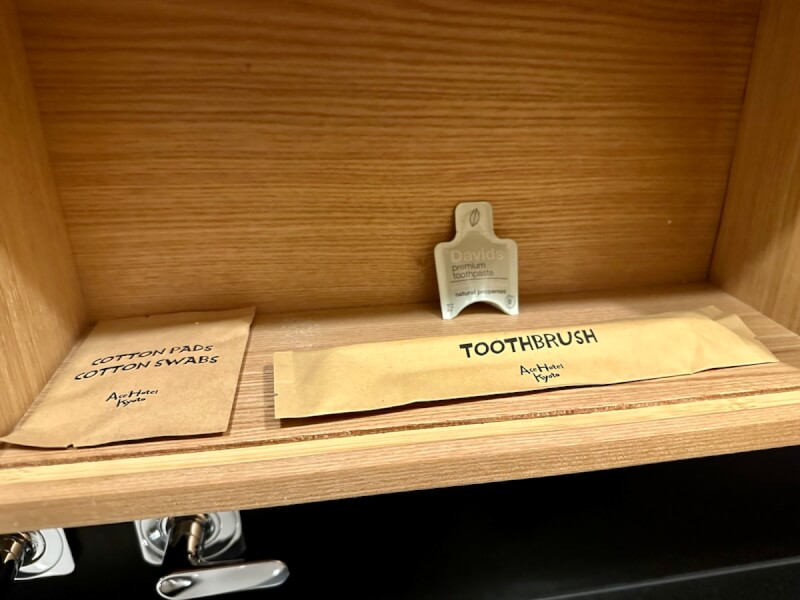
The amenities are plastic-free, and the font is consistent across everything.
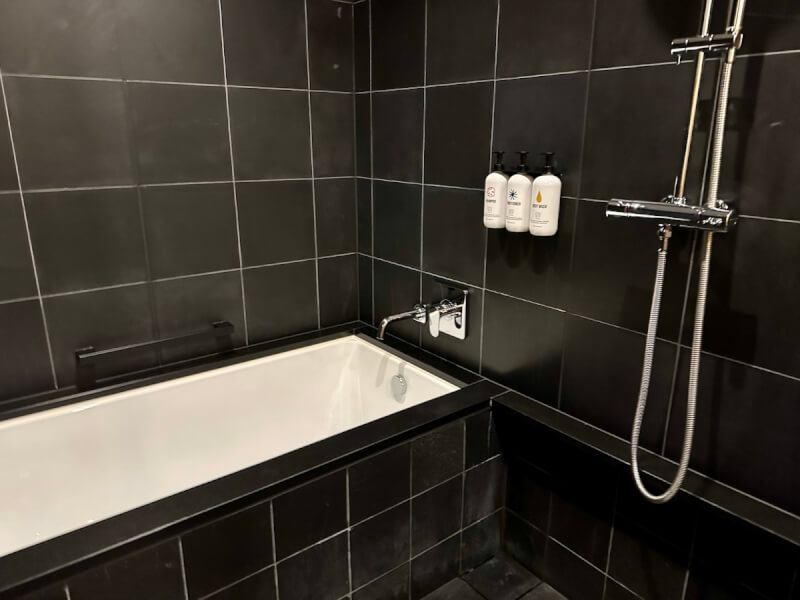
The bath is in a black-tiled room with a Japanese-style setup: a tub and a washing area.
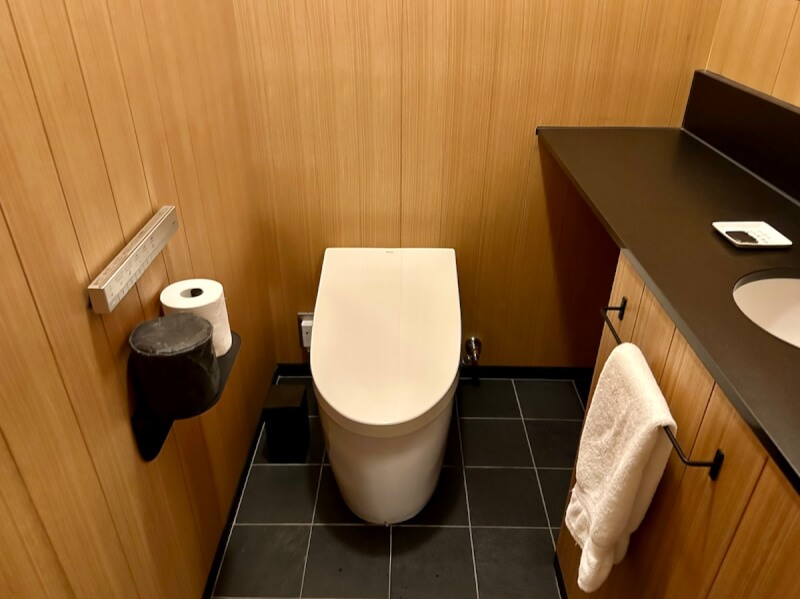
The toilet is separate, which is appreciated. The way the toilet paper is placed is novel!
Having breakfast
Breakfast was included, so the next morning I had breakfast on the third floor at Mr. Maurice’s Italian. They didn’t seem to have much seating, so there was a line.
I chose the American breakfast: an omelet where you can pick the fillings.
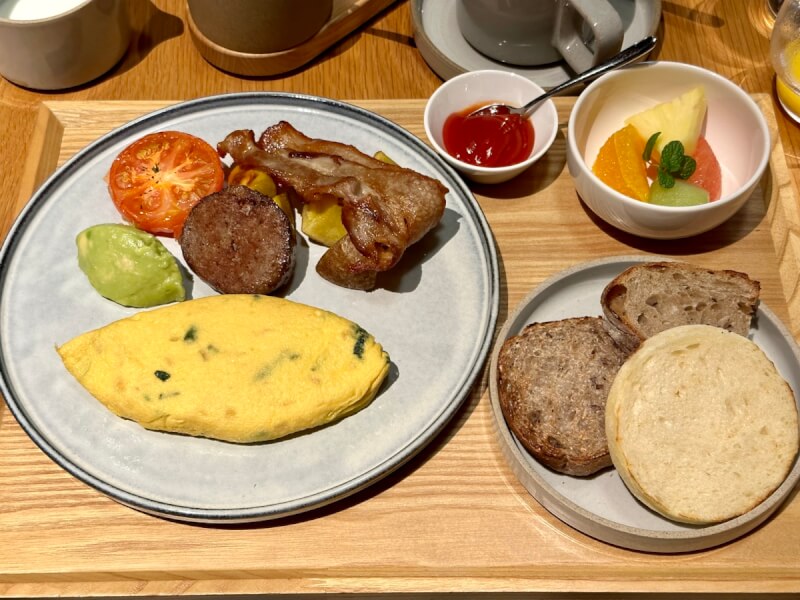
It was busy and the tables were fairly small, so I couldn’t really relax while eating.
Afterwards I checked out, left my luggage at the front desk, and set off for my final day of sightseeing.
To be continued…
Comments