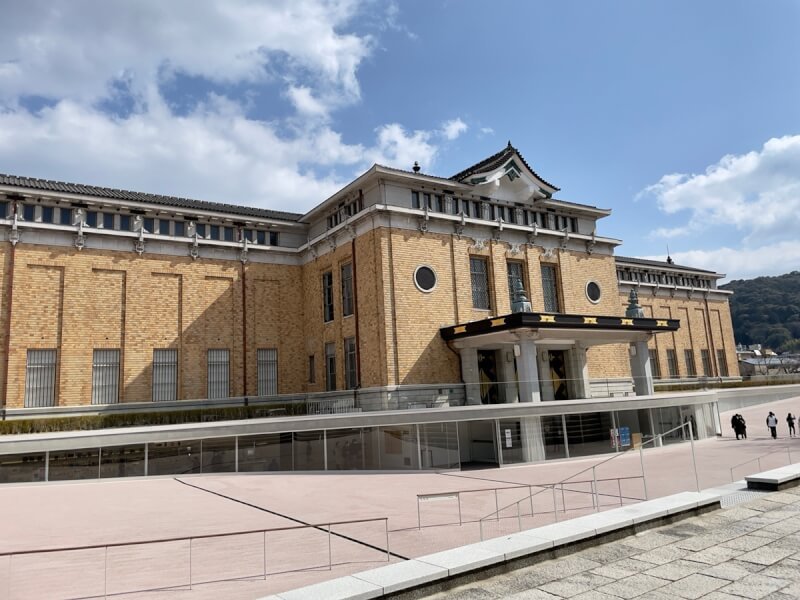

To the New Kyoto City KYOCERA Museum of Art
It’s Not a Museum of Kyocera Products
Kyocera is in the name, but this is not a museum displaying Kyocera products. It originally opened in 1933 as the Kyoto Municipal Museum of Art, and during the 2020 renovation, Kyocera acquired the naming rights, which is how the name changed.
It’s said to be the second-oldest public art museum in Japan, after the Tokyo Metropolitan Art Museum, which opened in 1926. Even the National Museum of Western Art in Ueno dates only to 1956, so that really shows how old it is.
Beneath the Solemn Imperial Crown–Style Building
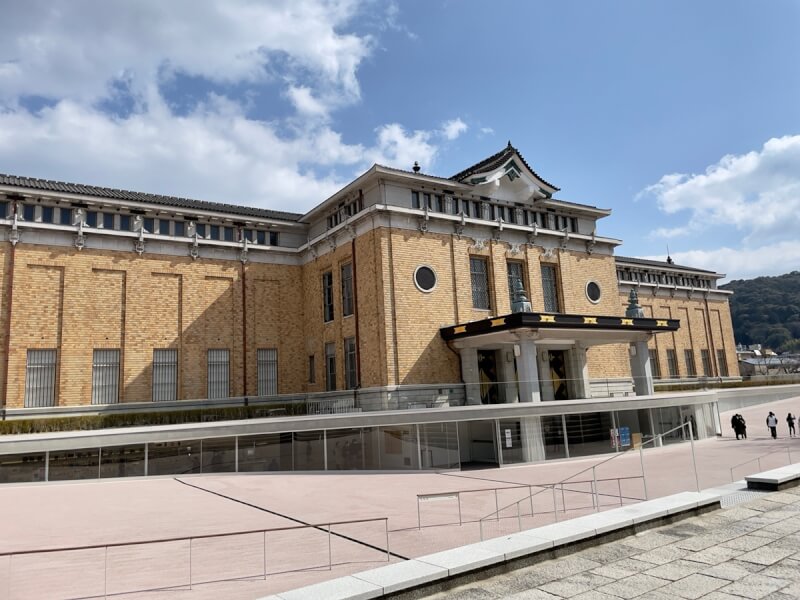
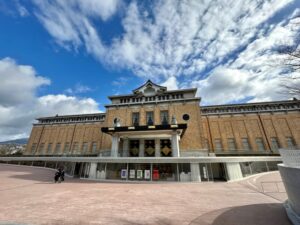
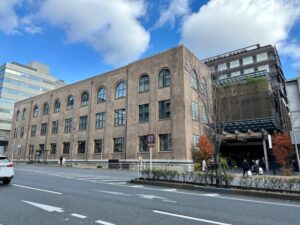
The museum is built in the Imperial Crown style. It’s a Western-style reinforced concrete building, but with a dignified roof that incorporates Japanese design elements. That combination is what defines the Imperial Crown style. It really feels uniquely Japanese.
And yet beneath that Imperial Crown–style building, there’s a level made of sweeping curved glass…
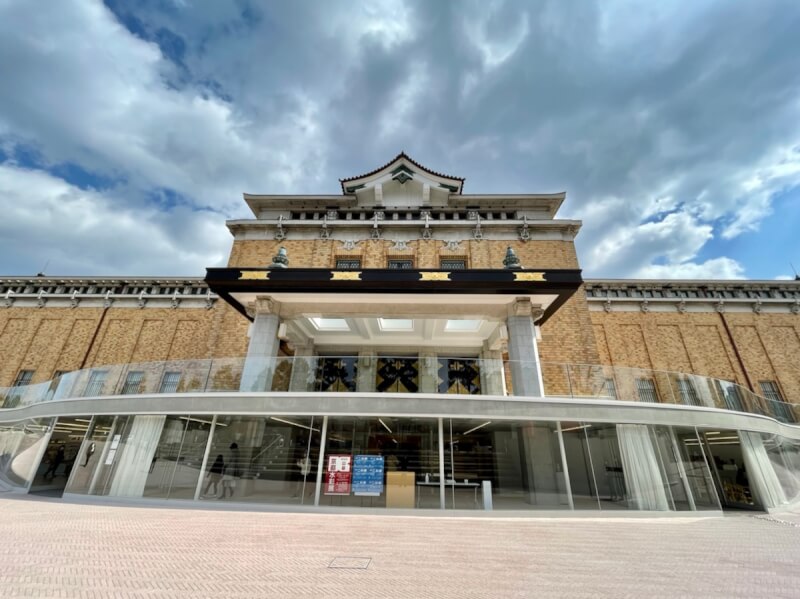
That part was newly added during the 2020 renovation. The overlap of the Imperial Crown–style structure and the transparent contemporary addition gives the Kyoto City KYOCERA Museum of Art its distinctive atmosphere.
The original entrance was, of course, in the Imperial Crown–style section, but the current entrance is the glass-fronted lower level. The old building has been preserved as it is, while the functionality expected of a modern museum has been inserted underground. It’s amazing.
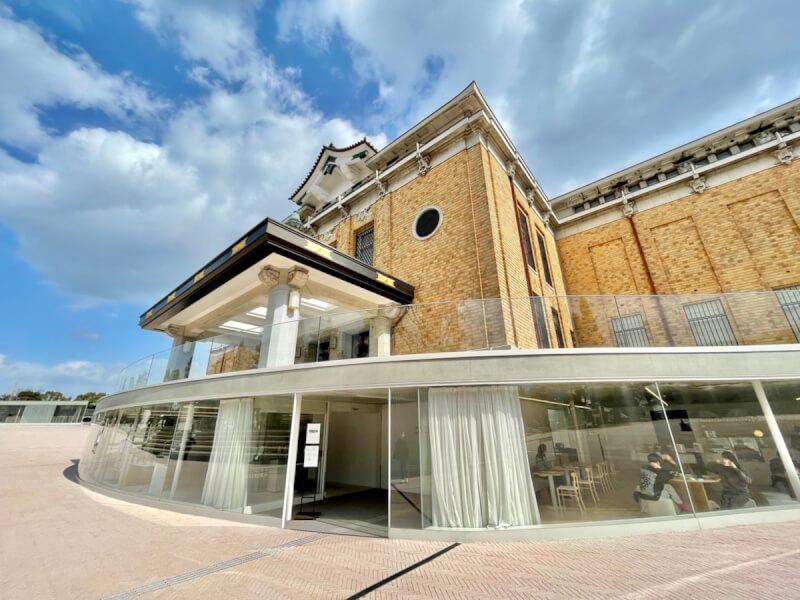
It’s so interesting that I ended up taking photos from all kinds of angles.
A Museum Where the Architecture Is Part of the Pleasure
After entering through the Glass Ribbon, you pass the former shoe-check room, which used to be part of the underground back-of-house area, and then continue on to the Central Hall. I’ve read that the Central Hall was originally exhibition space, but now it serves as a hub connecting the various galleries.
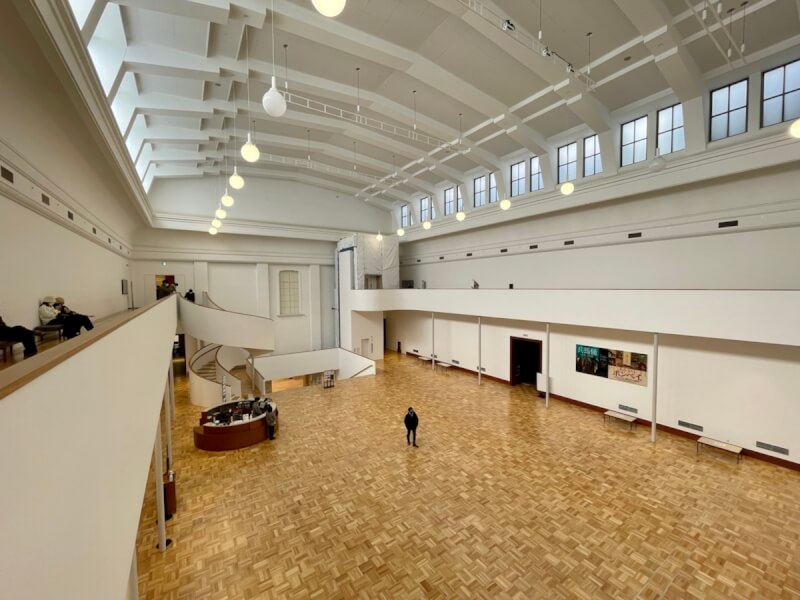
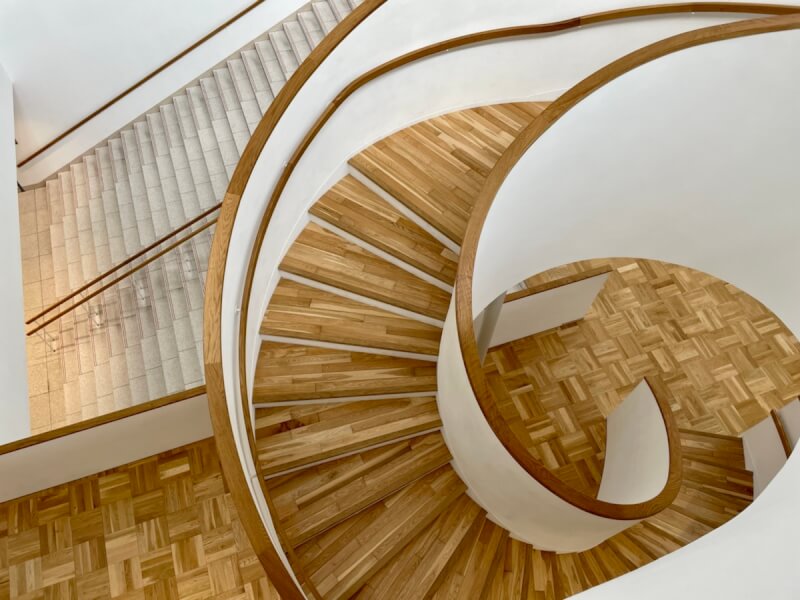
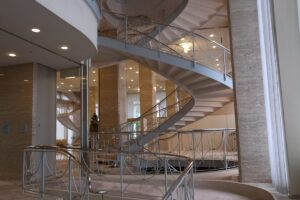
The newly added spiral staircase is incredibly photogenic.
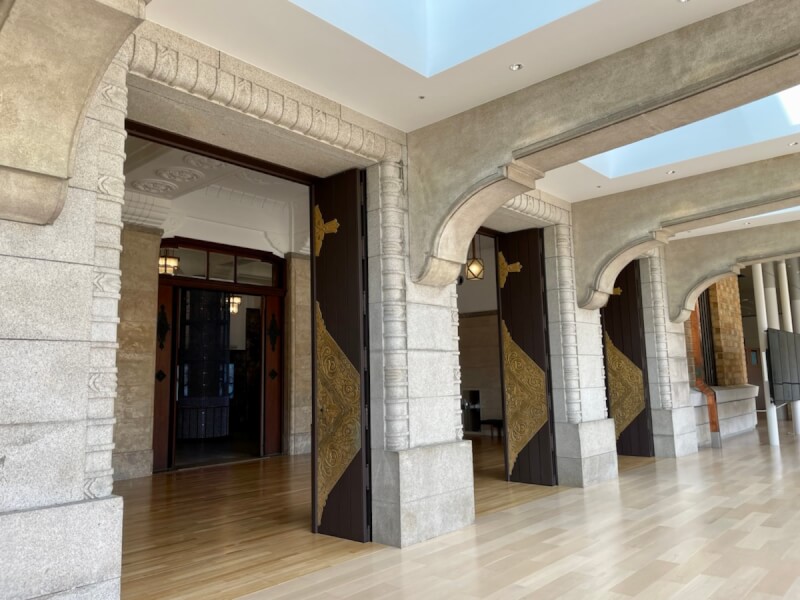
At the far end of the Central Hall is the East Entrance, and beyond that is Higashiyama Cube, the space for contemporary art exhibitions. The old entrance has been preserved there.
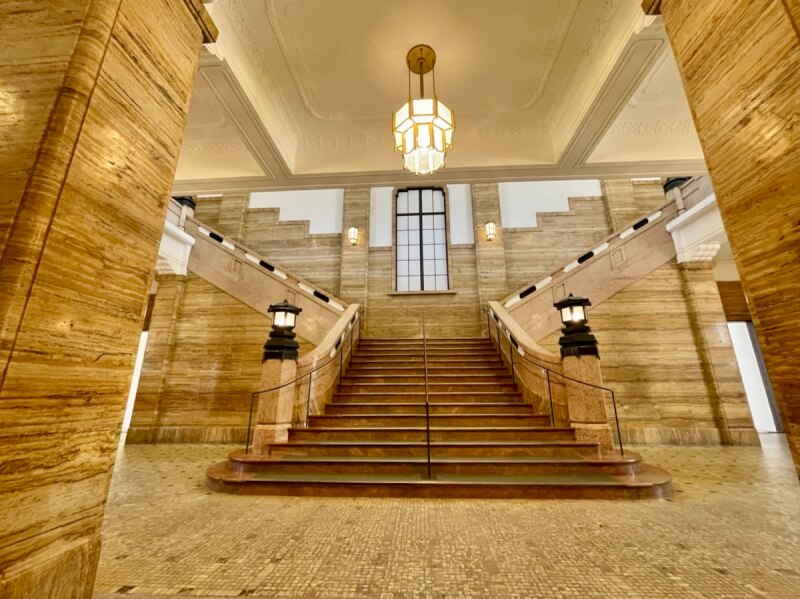
Near the front side of the Central Hall, the former main entrance still remains. That stately staircase… so good. The chandelier has an Art Deco feel, while the lights on the stair railings resemble traditional lanterns. That East-meets-West blend is what makes the Imperial Crown style so fascinating. It’s one of a kind.
As you climb the stairs, daylight streams in through the beautiful stained glass. It’s enjoyable enough even without seeing an exhibition.
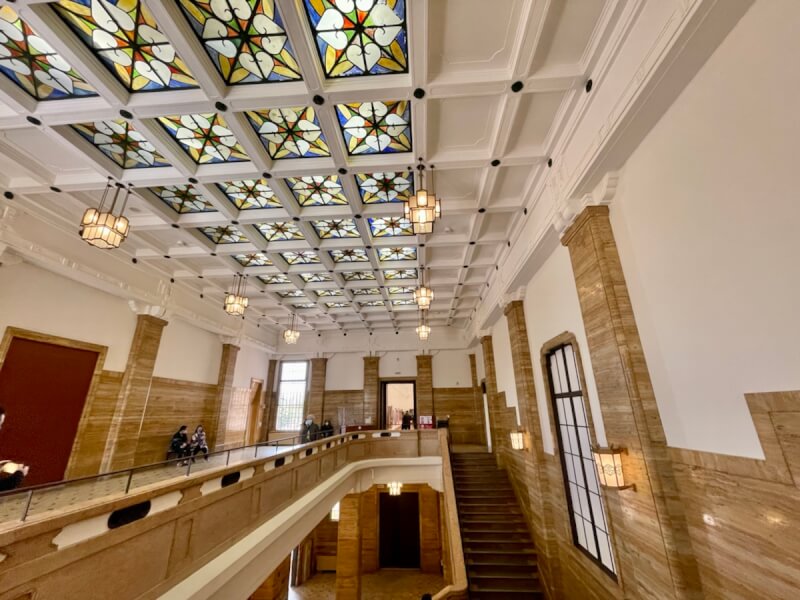
Enjoying the Architecture Through the Collection Exhibition
Everything up to this point can be enjoyed for free, but if you want to appreciate even more of the architecture, you should go into the Collection Room (the collection exhibition). The seasonal works from the museum’s holdings are worth seeing, and the architecture is a highlight too.
The exhibition is on the first floor of the South Wing corridor. Along the way, the former south entrance has been preserved and turned into a hall. The lighting and ceiling here also have an Art Deco style.
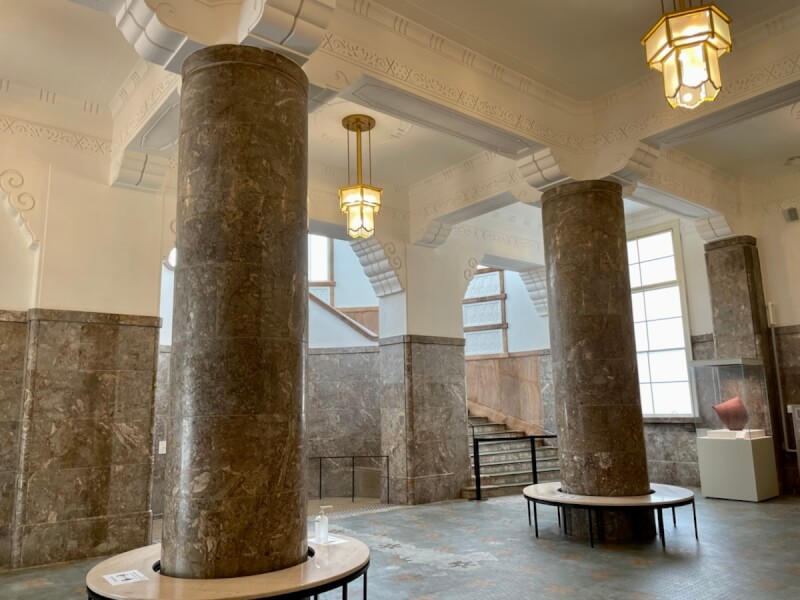
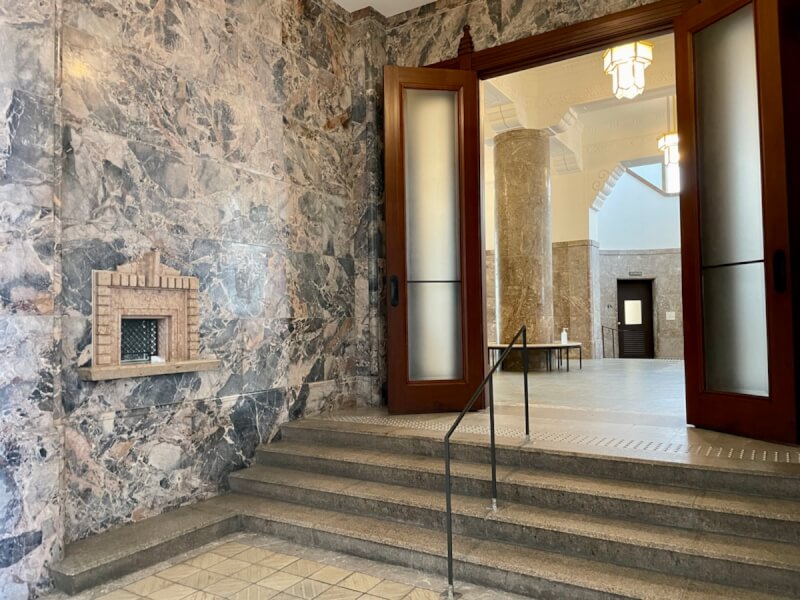
The old ticket counter has also been preserved. This is Art Deco too, and it’s cute. Though really, isn’t it tiny?
You can also step into the inner courtyard. There are benches, so it’s possible to take a short break.
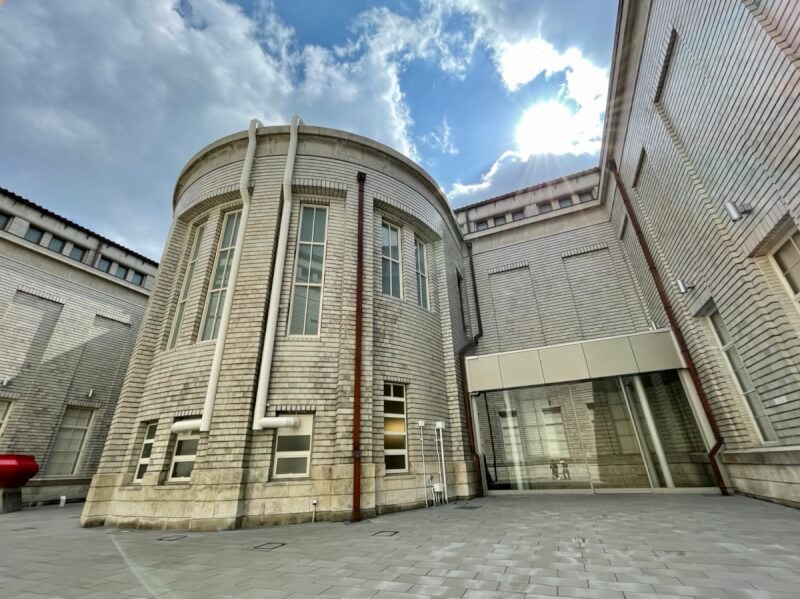
The Kyoto City KYOCERA Museum of Art, where old and new blend together, was a really wonderful place.


Comments