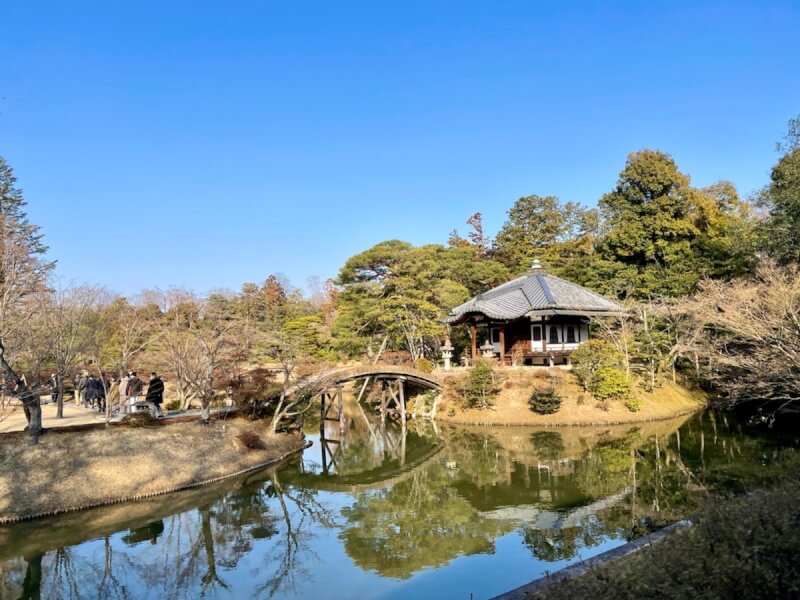

The challenge begins before you even arrive in Kyoto
Check the Imperial Household Agency website every day—and don’t give up until the very end
Katsura Imperial Villa is a place you can only enter if you reserve in advance or manage to get a same-day reservation. Even when the website shows availability, it isn’t first come, first served—applications close each night, and the available slots are assigned by lottery.
So even if the website says there are 2 openings, if 5 people apply that day, those 5 go into a lottery. But cancellations do create new openings, so if you check every day, you may be able to apply and, if you’re lucky, get in.
That’s why I kept trying, trusting the advice I’d heard from people before me: “Never give up until the last minute!” And finally, 4 days before my trip, I got selected…!
I’m so glad I believed them… At last, I’m on my way to the long-awaited Katsura Imperial Villa!!
From Kyoto Station to Katsura Imperial Villa
Taking the bus from Kyoto Station to Katsura Imperial Villa
There seem to be several ways to get there, but we took Keihan Kyoto Kotsu bus route 26. When we got off at the “Katsura Rikyu-mae” stop, we found ourselves squarely in a residential neighborhood, and walked on thinking, Wait, it’s really here?
We kept walking, surprised by the sudden appearance of fields managed by the Imperial Household Agency.
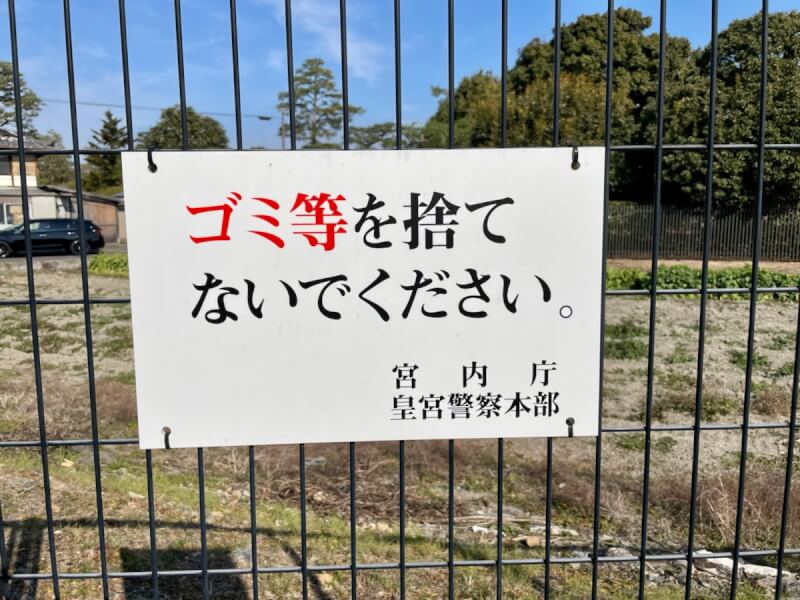
About 15 minutes from the bus stop, we reached the entrance to Katsura Imperial Villa. At the entrance is one of the villa’s famous bamboo fences: the Hogaki fence.
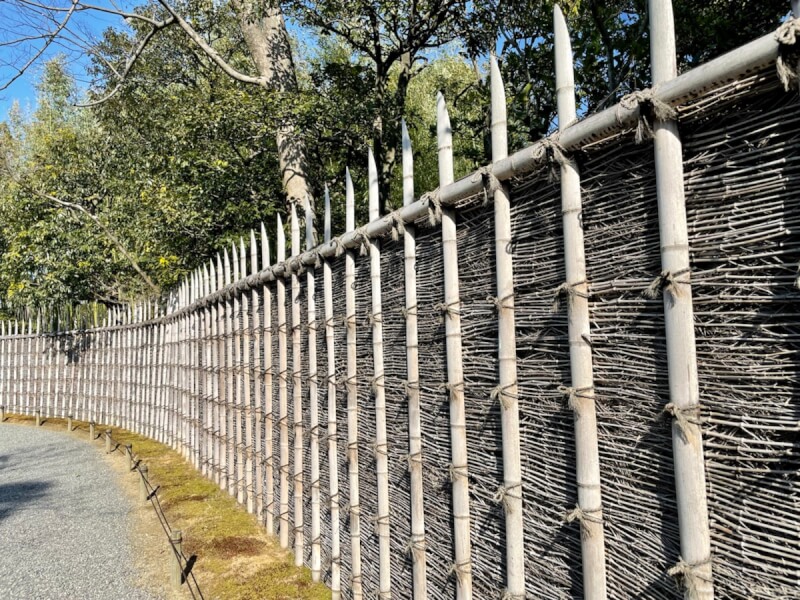
I missed the other famous one, the Sasagaki fence… *sob*
Touring Katsura Imperial Villa with a guide
Hospitality and playfulness in the details
Katsura Imperial Villa is a place where beautiful gardens and teahouses laid out more than 300 years ago have been carefully preserved. Looking at it in books alone doesn’t really tell you what the place is like, so my anticipation kept building.
Once the time came, we spent about an hour touring the gardens of Katsura Imperial Villa with a guide. At first I thought, I don’t need a guided tour… but it took no time at all to realize that no, a guide is absolutely essential—the experience was that rich.
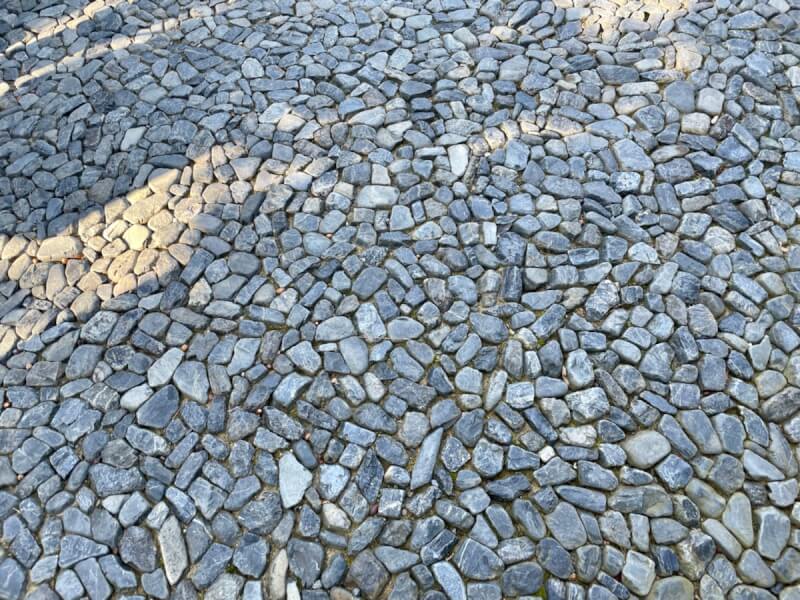
Once inside, we walked along the stone-paved Miyukimichi path. It’s beautiful, and above all, very easy to walk on. I was told the sides slope down slightly as well, so drainage is good too.
This is the Miyukimon Gate, the entrance to Katsura Imperial Villa. I love that the pillars were intentionally used without stripping off the bark—it looks so stylish.
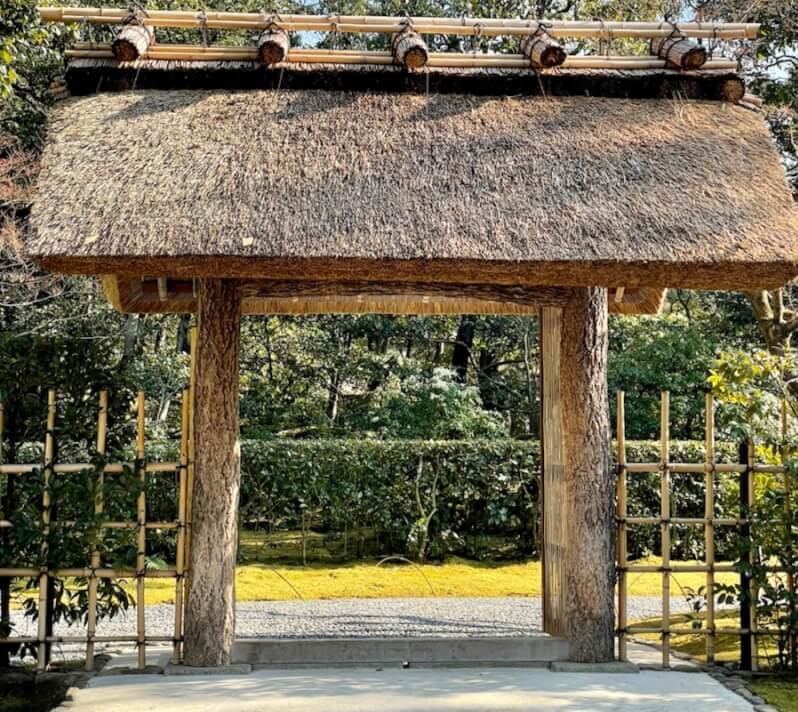
Apparently the road in front of the Miyukimon Gate gets wider as it approaches the gate. That makes the road look longer… which, isn’t that straight out of Disneyland? Kyoto had Disneyland 300 years ago.
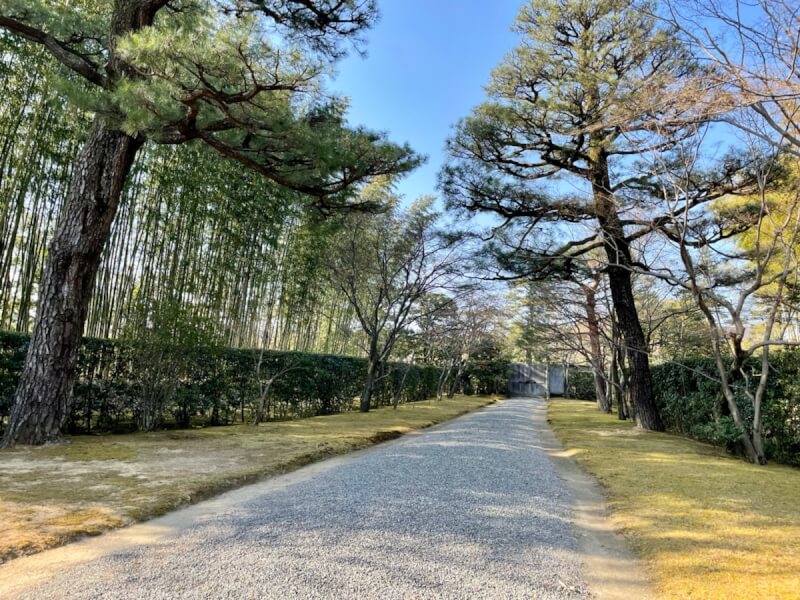
Awe at the ever-changing scenery
The first place we headed to was the Okoshikake. It’s just a small shelter, but apparently people would compose themselves there before enjoying tea. Th
When you sit there, Sotetsuyama spreads out before you. I was told the cycads there, rare at the time, were presented by the Shimazu family of Satsuma.
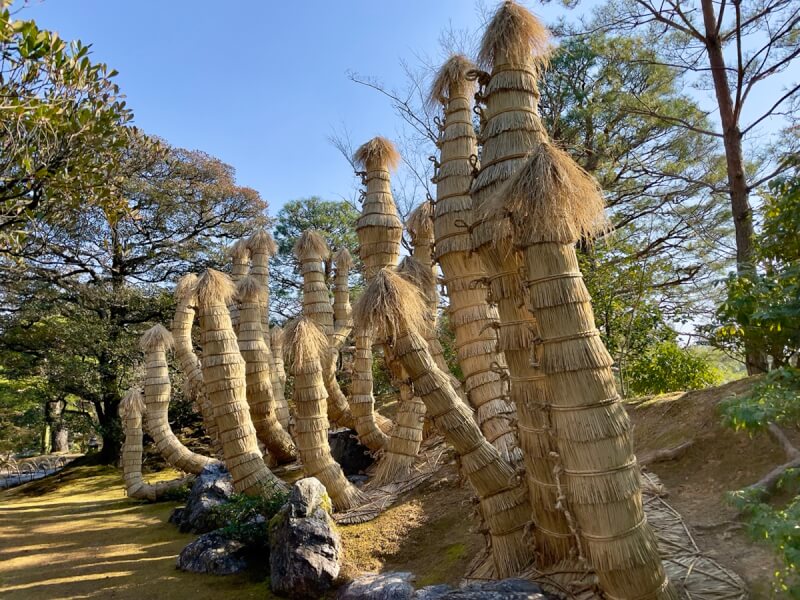
Kyoto winters are cold, so they’re wrapped in straw for protection, haha. People really have loved rare things in every era.
In front of the outer waiting bench is something called a Nijūmasugata Chōzubachi.
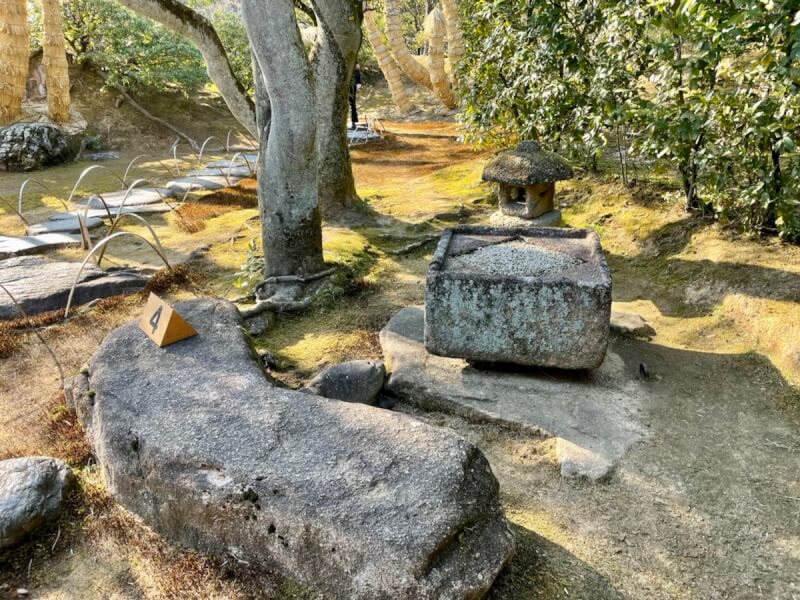
Why “double”? Because there’s another square inside the square… There are just too many great details here…!!
A little farther on, the view opens up to the pond. This is meant to represent the sea, and the feature visible in the center of the photo is said to evoke Amanohashidate. I was also told the lantern beyond the spread of stones is meant to resemble a lighthouse—isn’t that almost too charming?
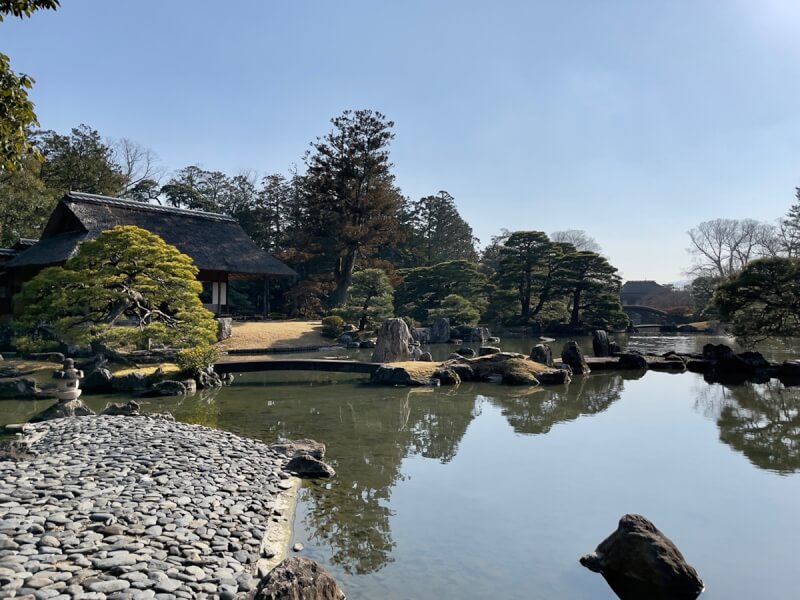
Crossing the stone bridge over that pond brings you to Shokintei. The bridge is seriously narrow,* so watch your step. *65 cm wide
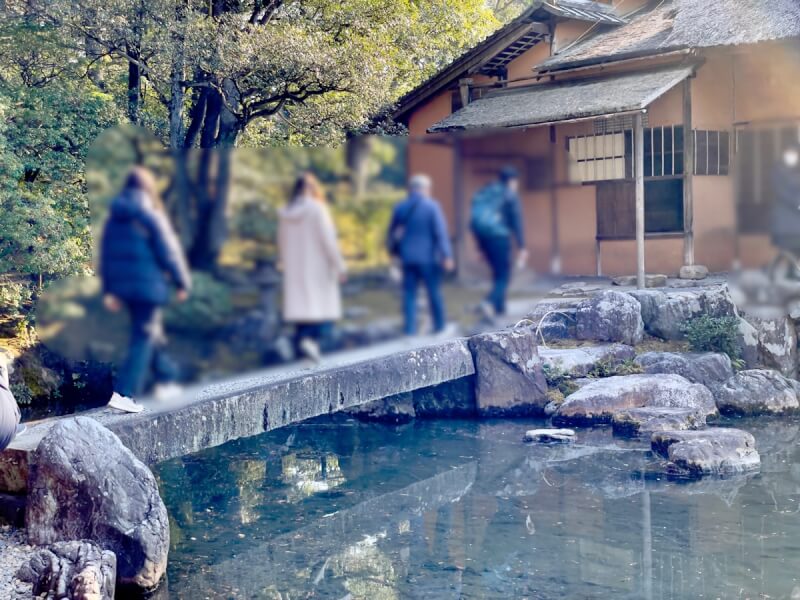
Shokintei is said to be the most formal teahouse in Katsura Imperial Villa. It also represents winter among the villa’s teahouses.
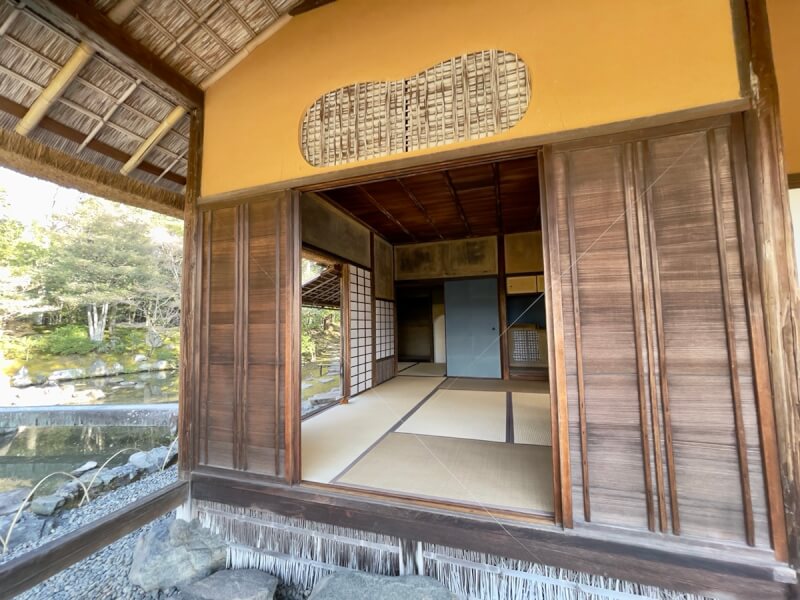
The blue-and-white checkered pattern feels wonderfully modern, which is part of its appeal too.
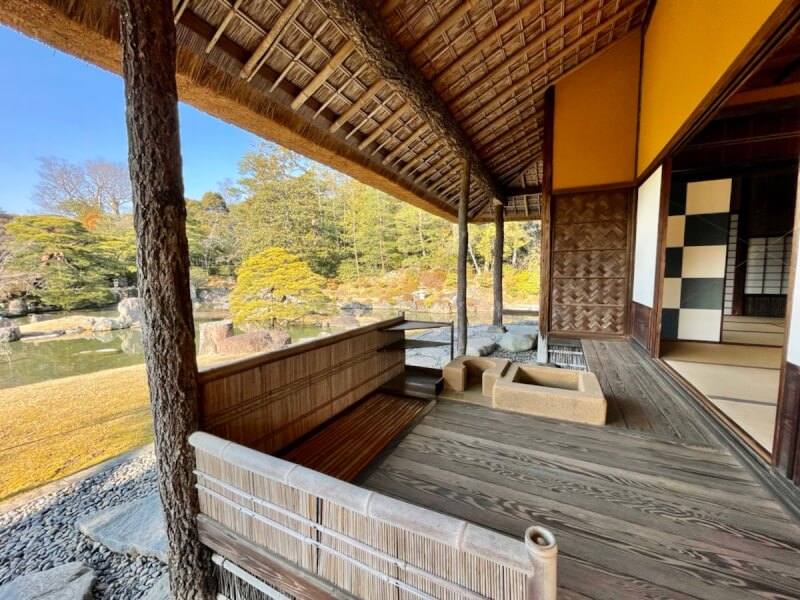
If I tried to tell every story here, I’d never finish, so I’m going to skip ahead little by little. Next is Onrindō, which is not a teahouse but a Buddhist hall.
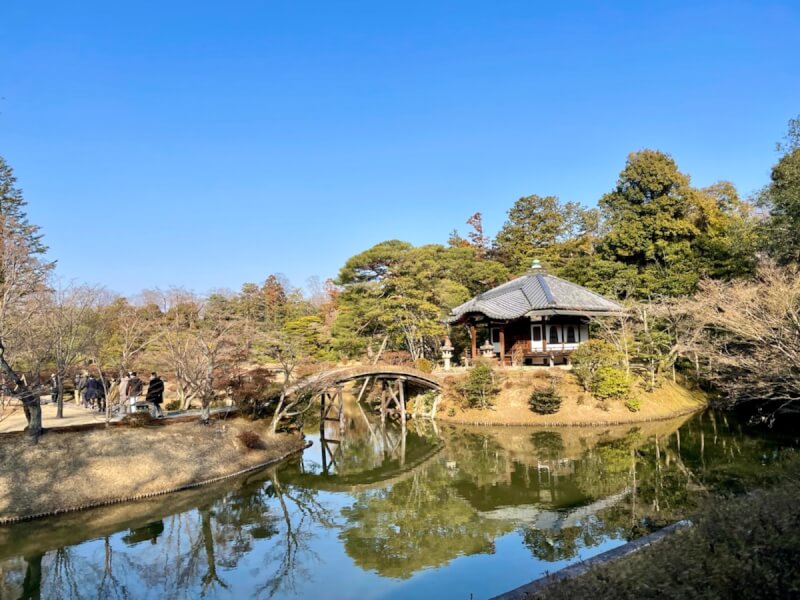
Its slightly rounded form has a different kind of charm from the other teahouses. The roof is in the hōgyō-zukuri style.
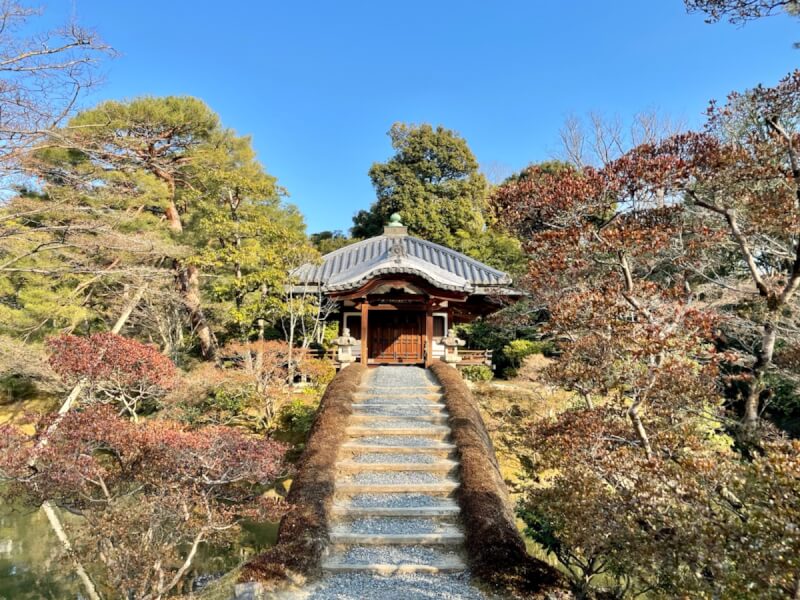
I was told memorial tablets of the Katsura-no-miya family were enshrined here.
Next is Shōiken. The broad stretch of land along the pond is a landing place for boats. Apparently you could get around Katsura Imperial Villa by boat. At this point, isn’t this basically the prototype for DisneySea…? haha
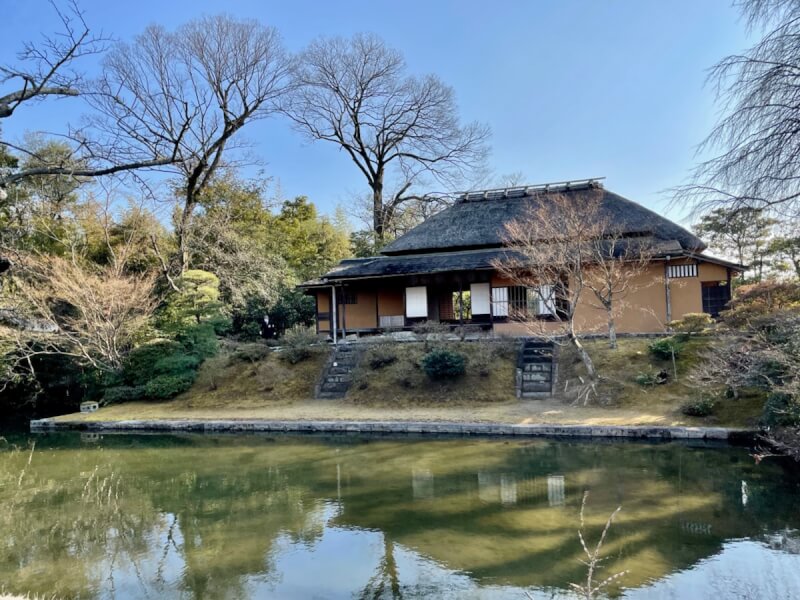
What makes this place so fun is how just a short walk completely changes the scenery again.
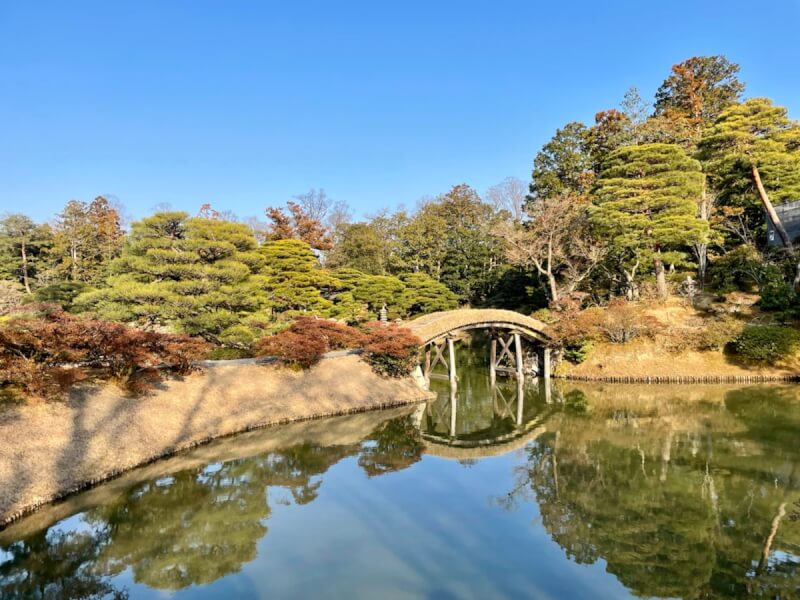
The palace buildings are currently under construction
The palace buildings are the core structures of Katsura Imperial Villa. They were built in three phases over an astonishing 40 years: the Old Shoin (1624), the Middle Shoin (1641), and the New Palace (1663), in that order from oldest to newest.
They’re arranged in a zigzag pattern—apparently this is called a gankō layout.

Unfortunately, part of it was under renovation, so I couldn’t see the full view—but it also gave me a reason to come back.
Projecting out from the Old Shoin is the Tsukimidai. As the name suggests, it’s a veranda for enjoying the moon. Very elegant.
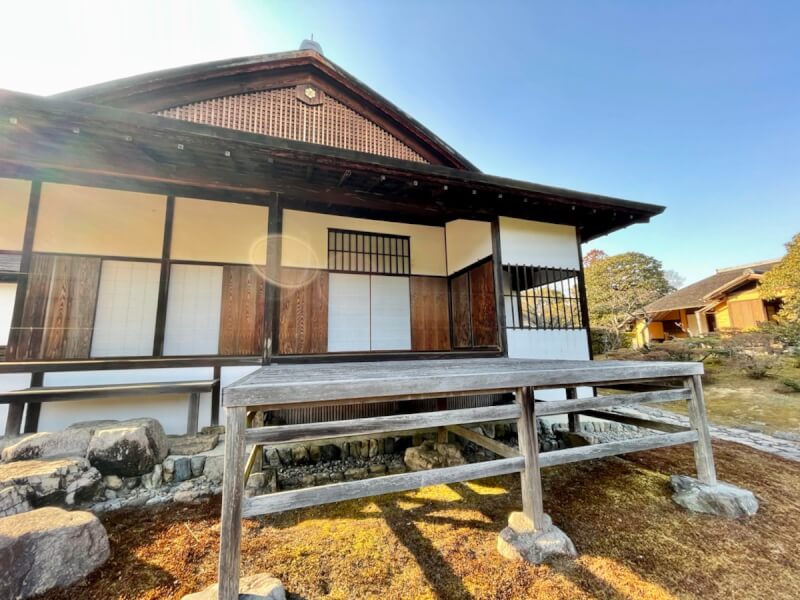
From the Tsukimidai, you’re meant to look out over the pond, the trees, and the moon. It was carefully designed so the platform faces exactly this direction.
By Gepparō, the circuit is almost over…
This teahouse we saw near the end is Gepparō. The view beyond it is Shokintei.
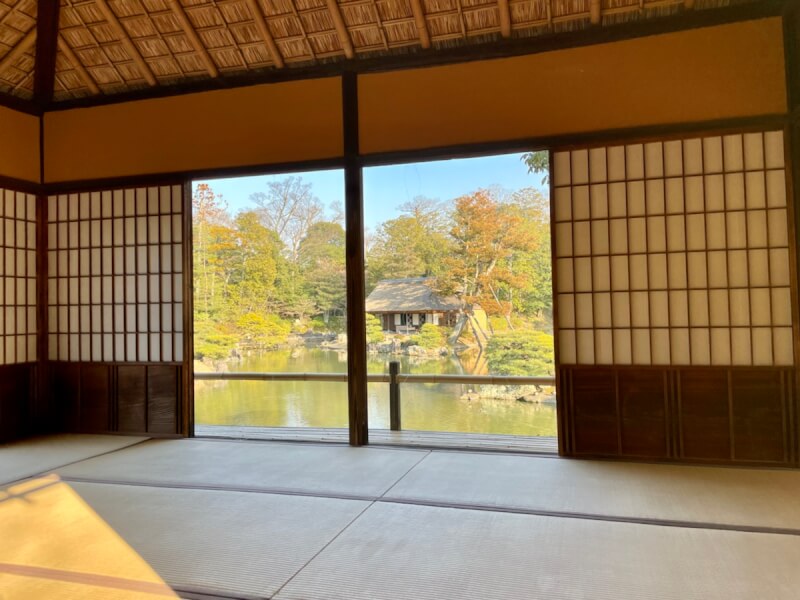
The ceiling is apparently designed to evoke the underside of an overturned boat hull, and hanging there is a picture of a boat. The pillar in the center, which looks like it’s supporting the ceiling, is thin and crooked and honestly feels a little nerve-racking… but then I learned it’s actually decorative and not structural at all—it isn’t supporting the ceiling.
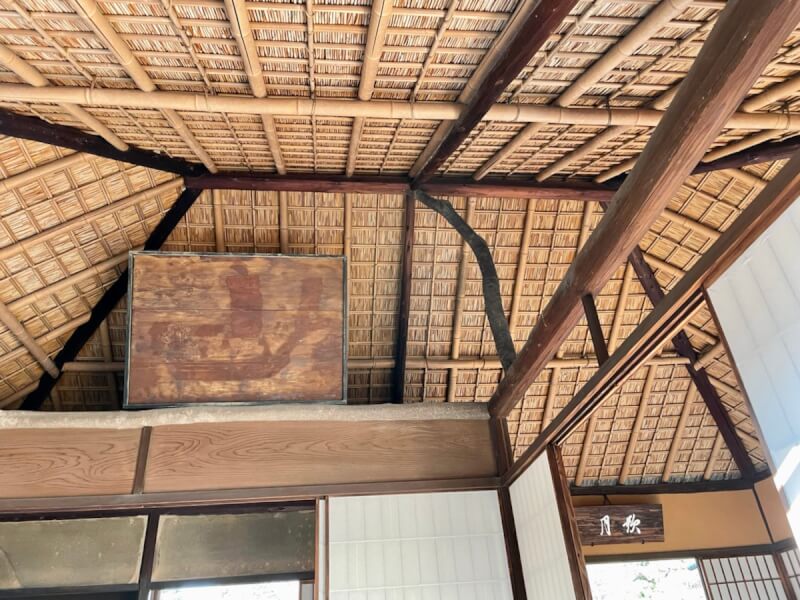
Apparently it’s meant to create a lighter impression, but this kind of playful flourish is just too stylish…!!
I want to come back and see it in other seasons
At the end of the path stands a pine called the Tsuitatematsu, which is apparently meant to heighten anticipation by partially hiding the inner scenery from the outside.
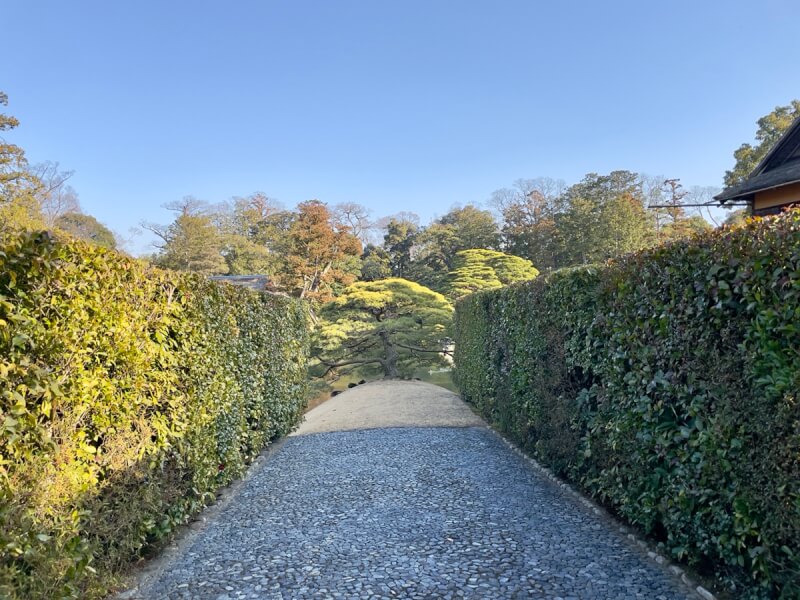
It doesn’t block the view completely—the way the pine softly blurs it is so elegant. The playful ingenuity that refuses to compromise even in the smallest details is incredible. It was an astonishingly dense stroll garden experience packed into about an hour.
I’ve heard the atmosphere changes with the seasons, so I’d love to come again at a different time of year. But it was such a special experience that I even found myself wondering whether it’s okay for me to book a second visit when I want other people to experience it too.




Comments