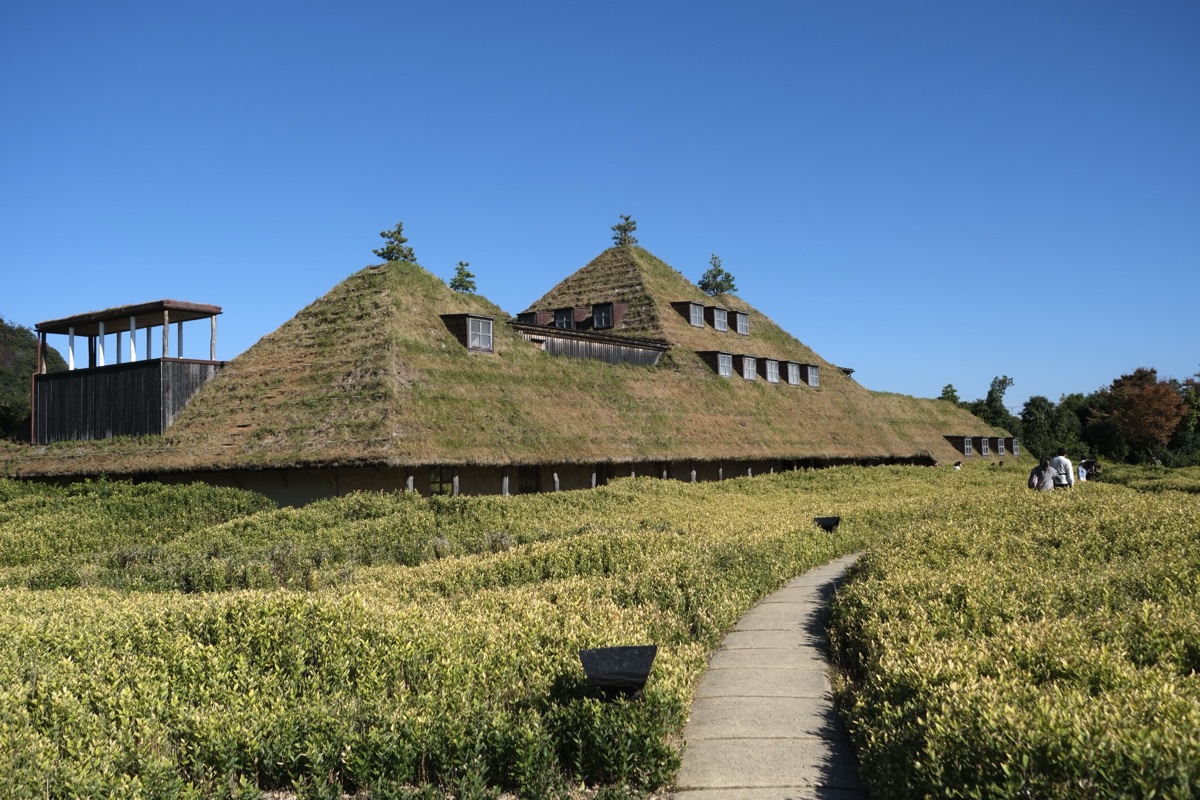

To La Collina Omihachiman
A Strange World Created by Terunobu Fujimori
The first place we headed to on day 3, the final day of our Shiga trip, was La Collina Omihachiman.
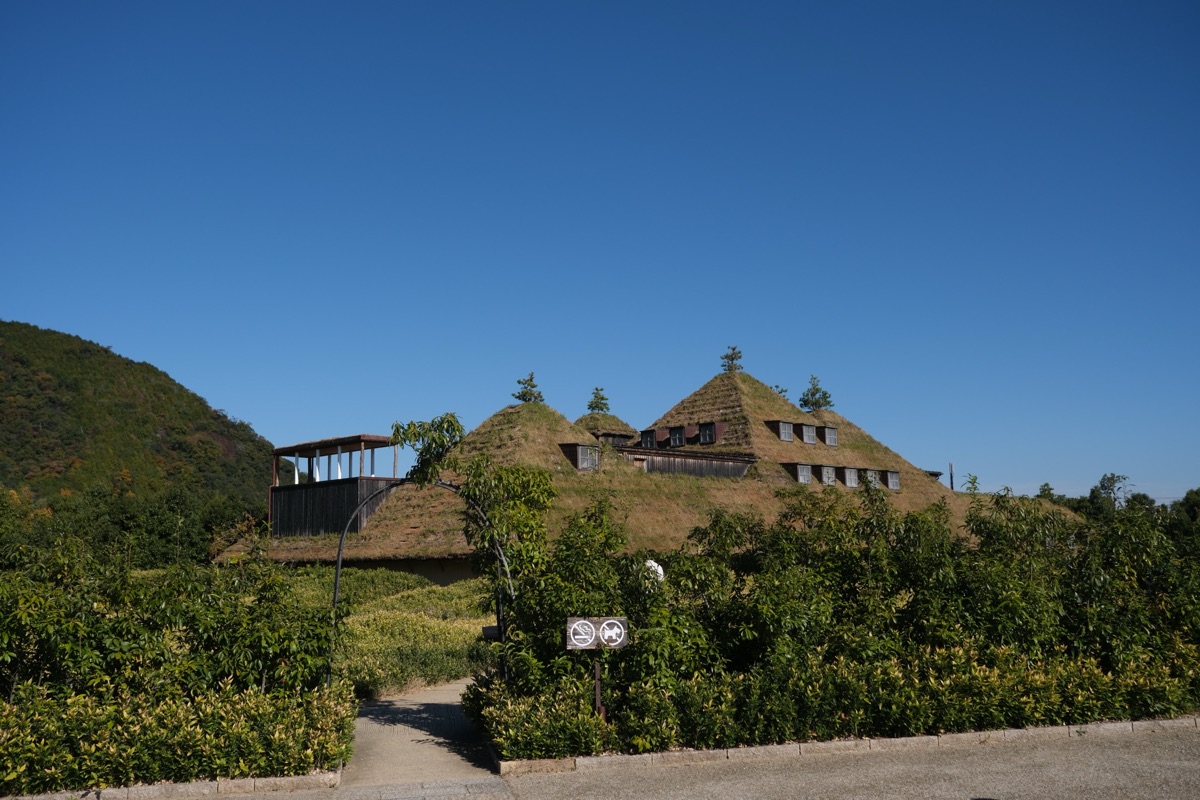
We arrived in the morning, but it was already very crowded! It's an incredibly popular spot.
From the moment you leave the parking lot and start walking in, the space unfolding before you feels like you've wandered into another world. It's even more immersive than a small theme park, and it gave me chills.
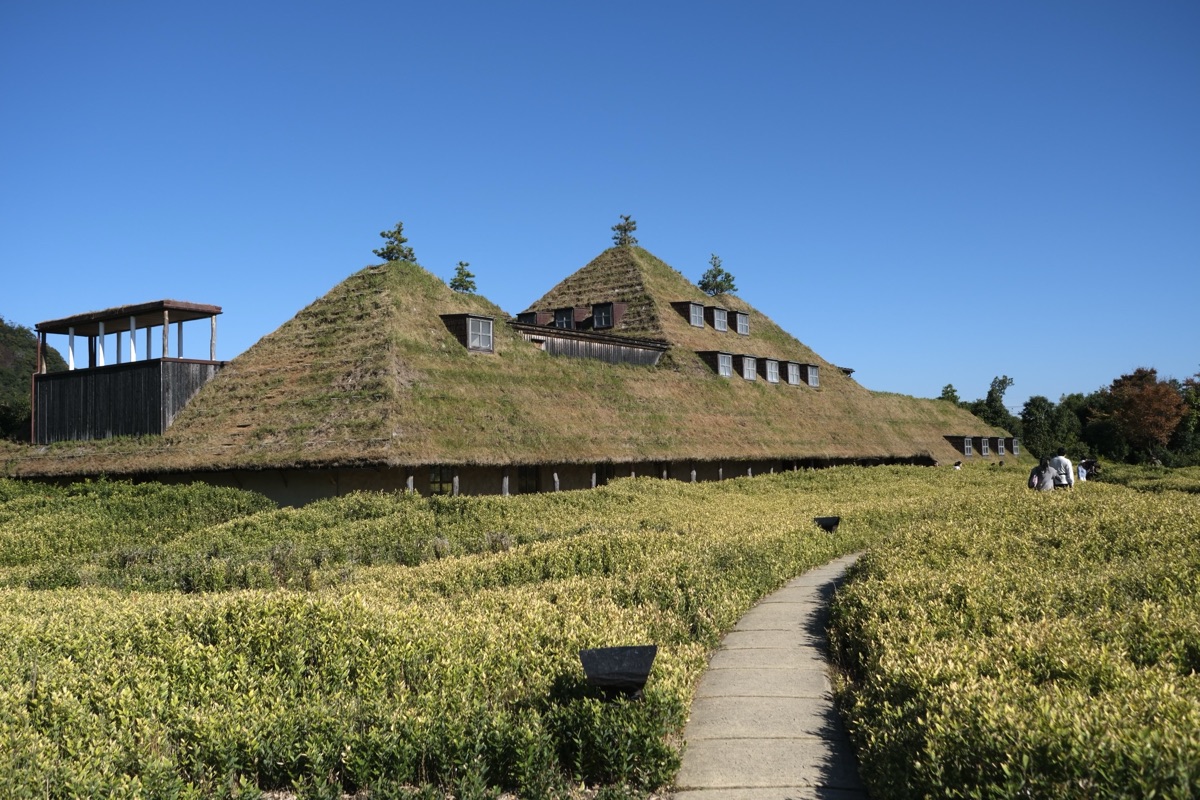
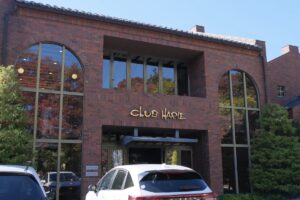
But La Collina Omihachiman is not actually a theme park. It's the headquarters and shop of the Taneya Group, the company behind Taneya and Club Harie.
It was designed by Terunobu Fujimori, an architectural historian, a master architect, and someone often described as a true original. Compared with his Flying Mud Boat, this one almost feels normal—if only because it's still attached to the ground, lol.
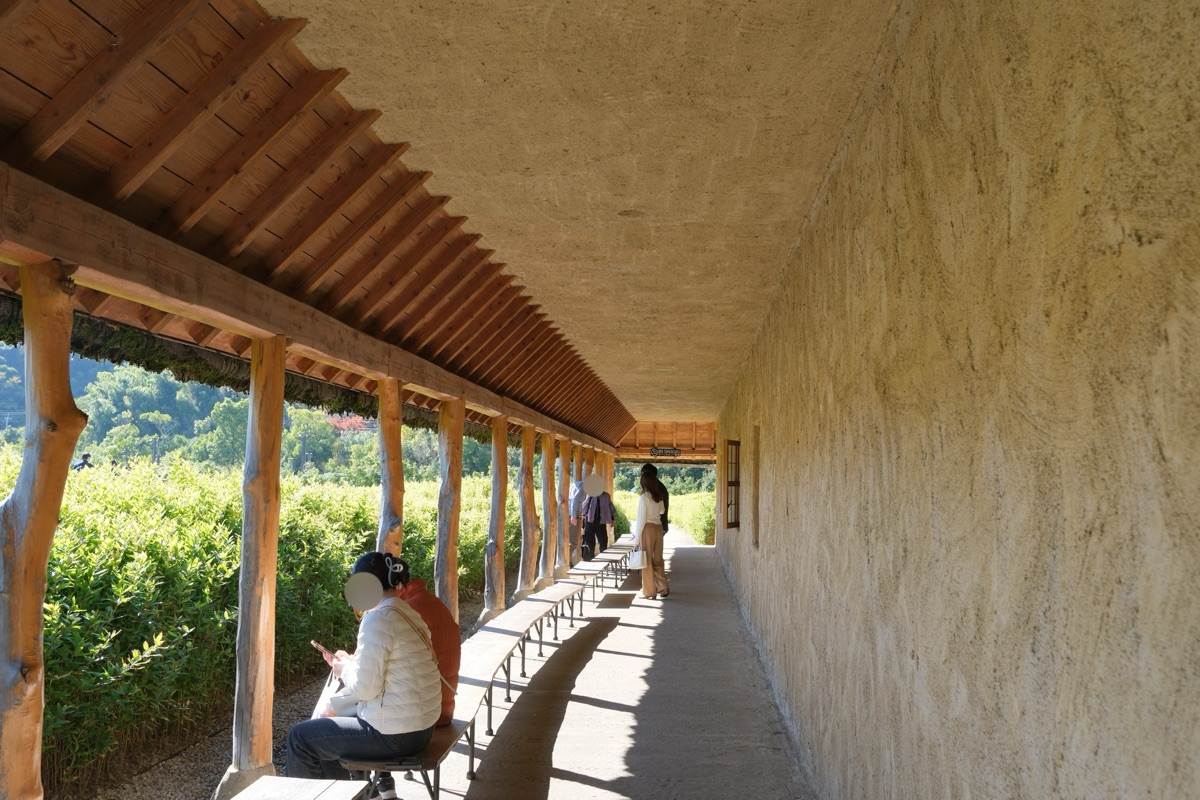
Just before the entrance, the space under the eaves had been turned into a pleasant resting area with wooden pillars and earthen walls. The pillars, made from whole chestnut logs, were especially striking.
Now, let's head inside.
A Ceiling of Charcoal
The first building you come to is the Main Shop (Grass Roof), shaped like a pyramid.
Inside, there's not only retail space for Club Harie and Taneya, but also a café where you can enjoy pancakes made with dorayaki ingredients. In contrast to the grass-covered exterior, the interior has a completely different atmosphere.
The most distinctive feature is the black dotted pattern covering the dome-shaped ceiling. If you have trypophobia, it's the kind of thing that might make you shudder.
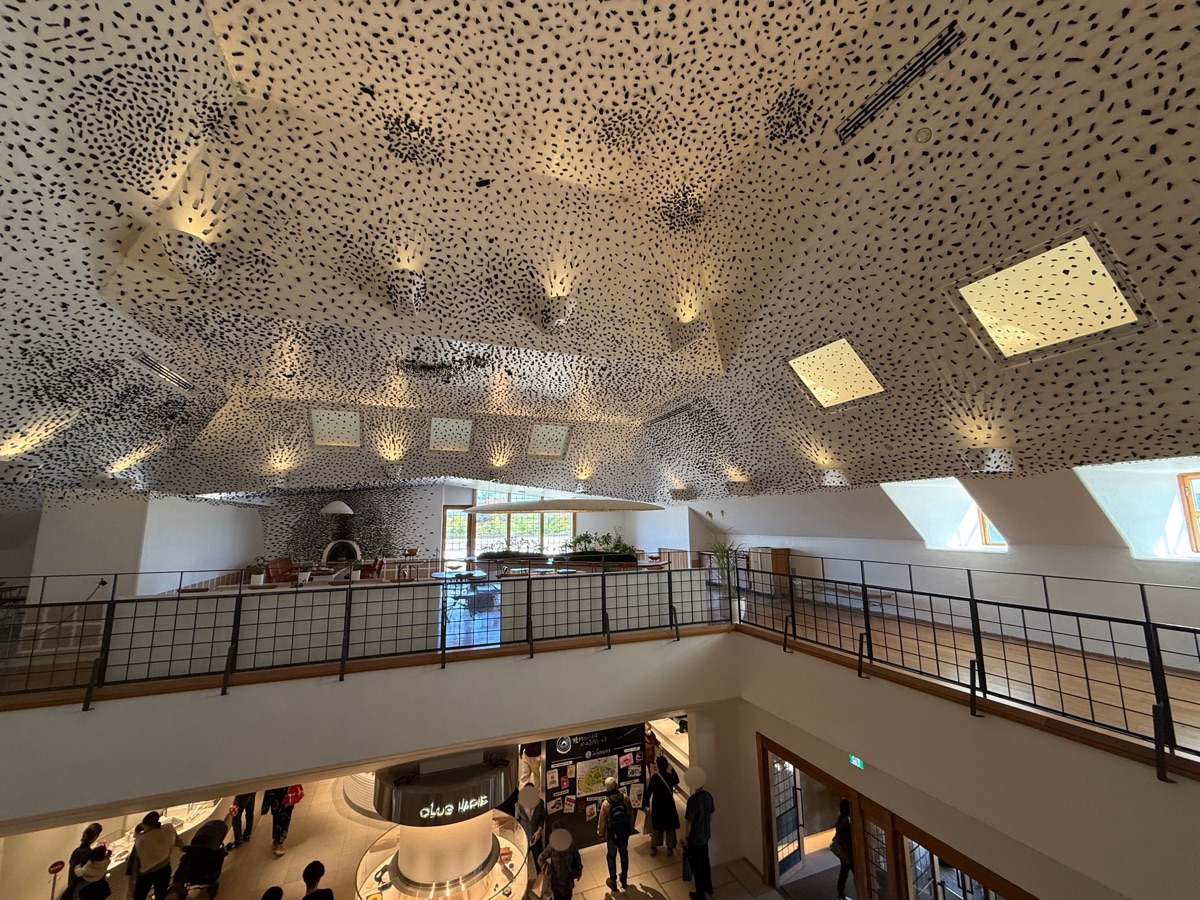
But when you get closer, you realize it's not just a pattern.
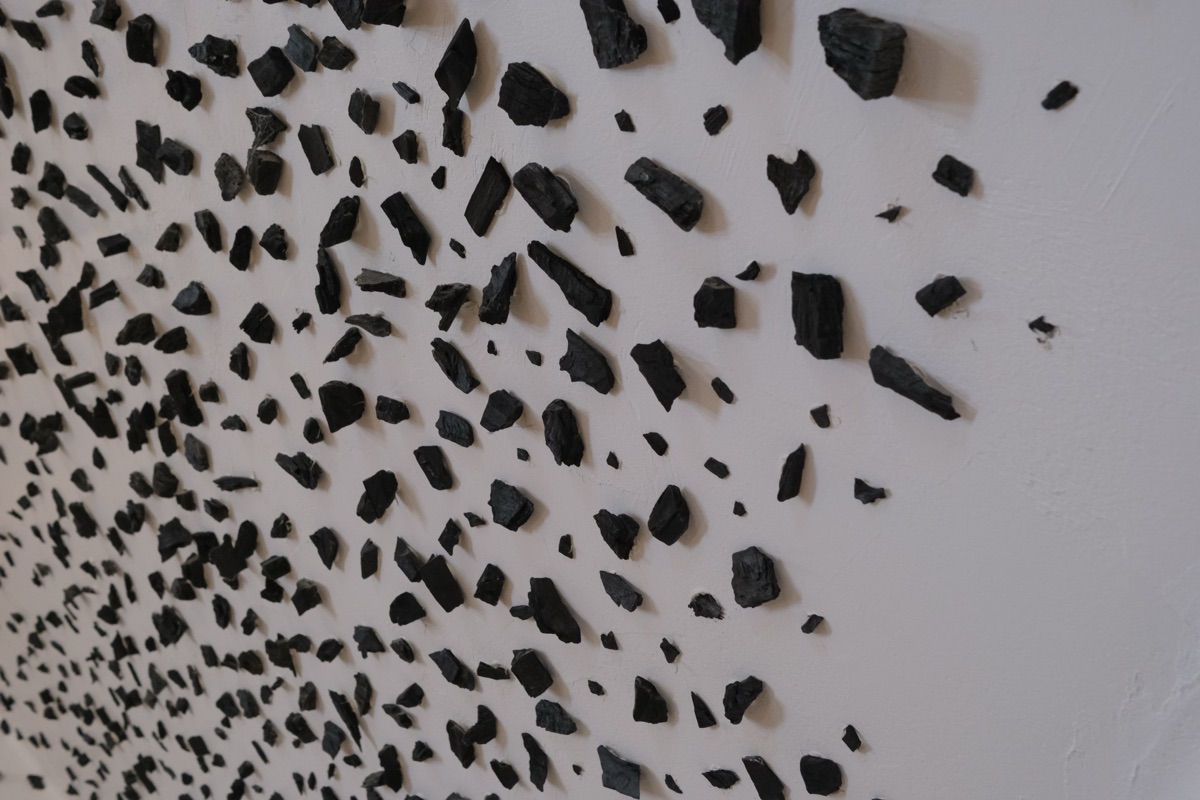
These are actually pieces of charcoal, apparently used to reduce sound reverberation. Even more surprising, Fujimori and the staff attached each one by hand.
It was a space that impressed not only visually, but also through its functionality and the sense of painstaking handcraft behind it.
A Full Loop Around the Fields and Rice Paddies
Once you pass through the Main Shop (Grass Roof), the world of La Collina opens up even more. At its center is a rice paddy.
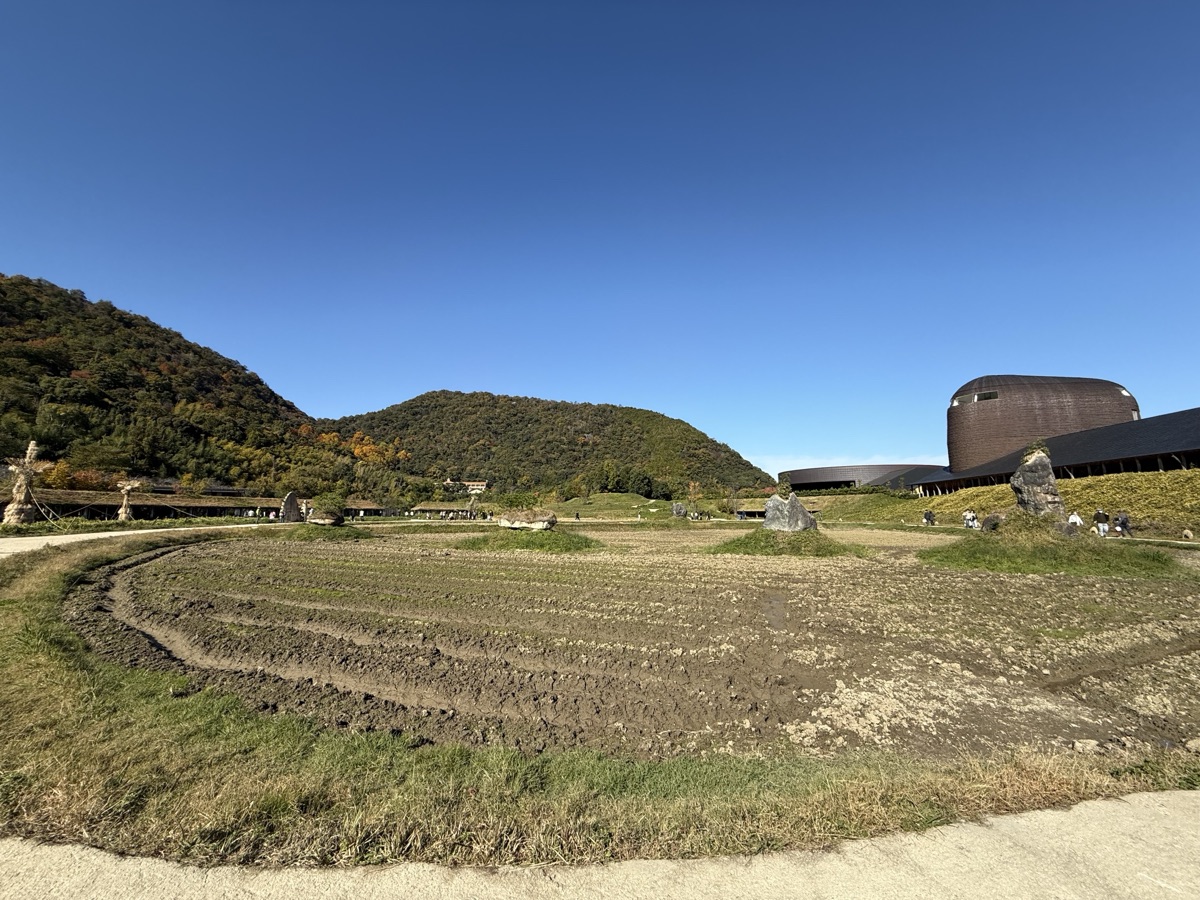
It wasn't the right season when we visited, so no rice had been planted, and part of the area was being used as a field instead.
The submarine-like building on the right is the Headquarters (Copper Roof). You can't go inside, but the Baum Factory behind it is open to visitors. We'll check that out a little later.
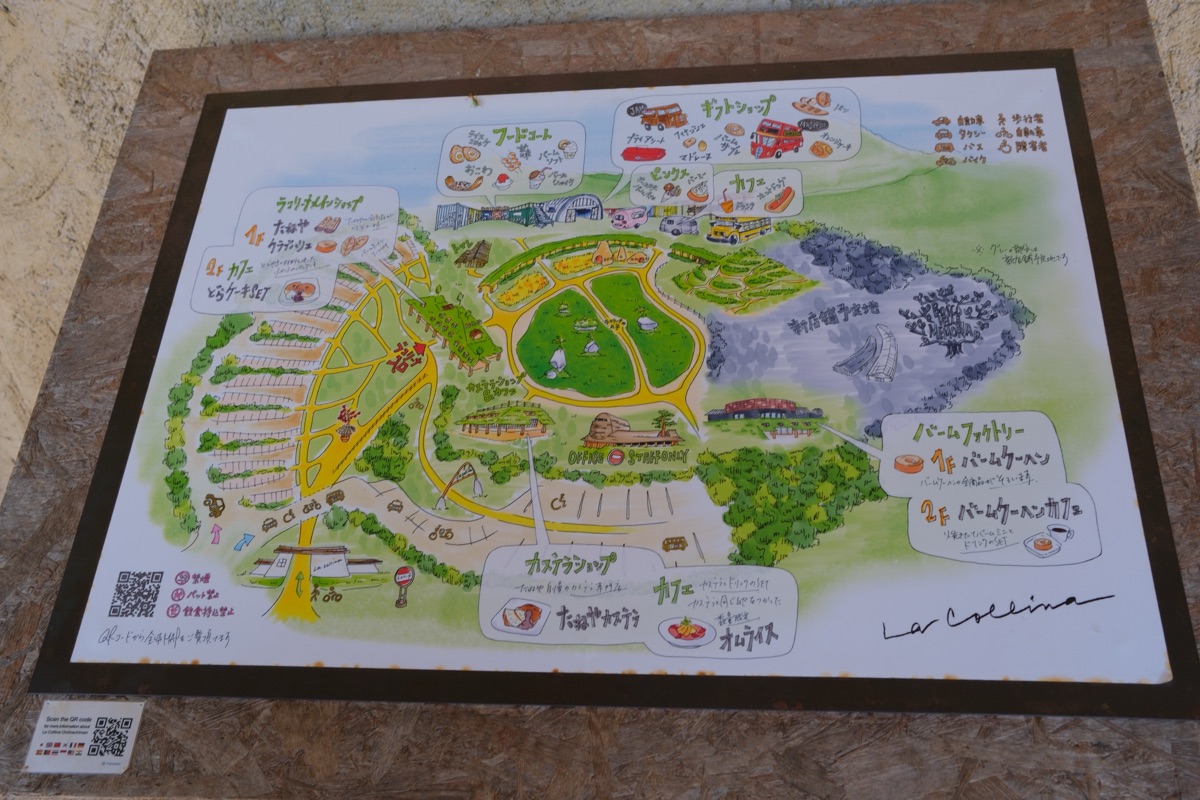
In the middle of the rice paddy—or field—there's a photo spot called Doto. Its design is unmistakably Fujimori, and it was full of children.
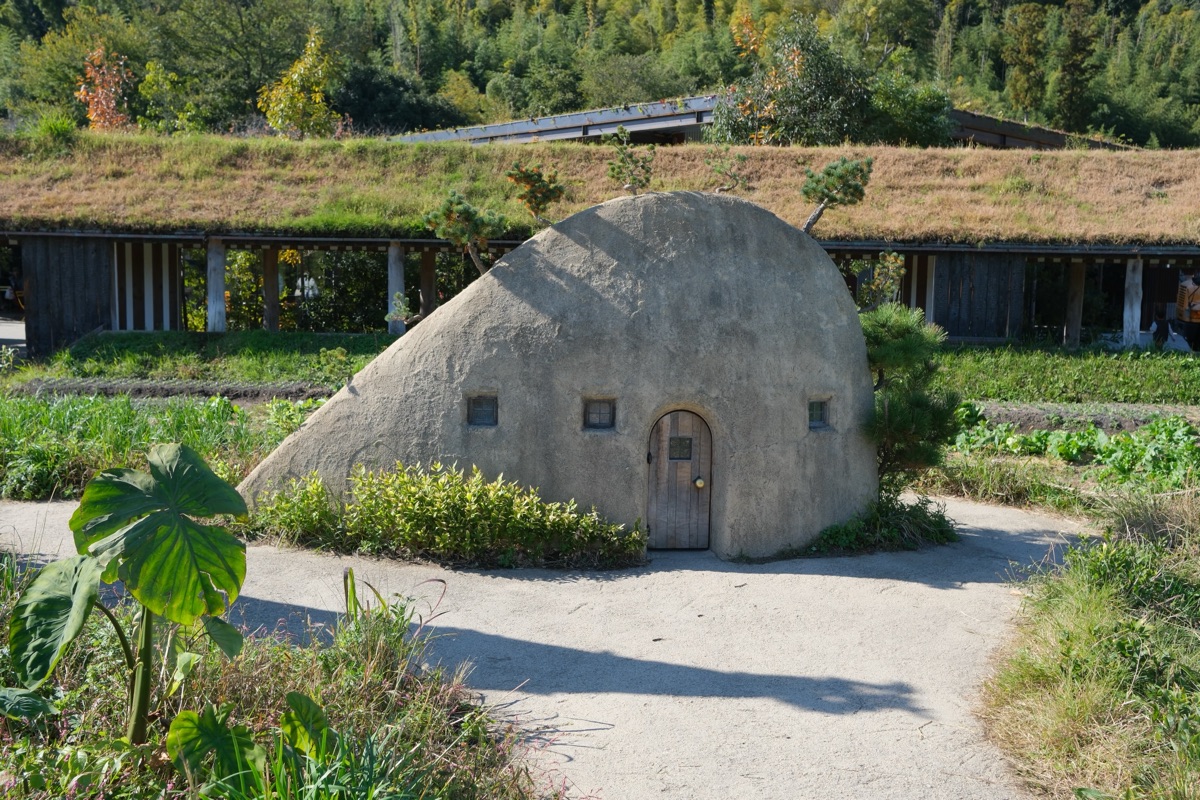
There are also giant stones placed throughout the paddy, known as the Seven Stones. Each one has its own name, and these are Tokuishi and Ariishi.
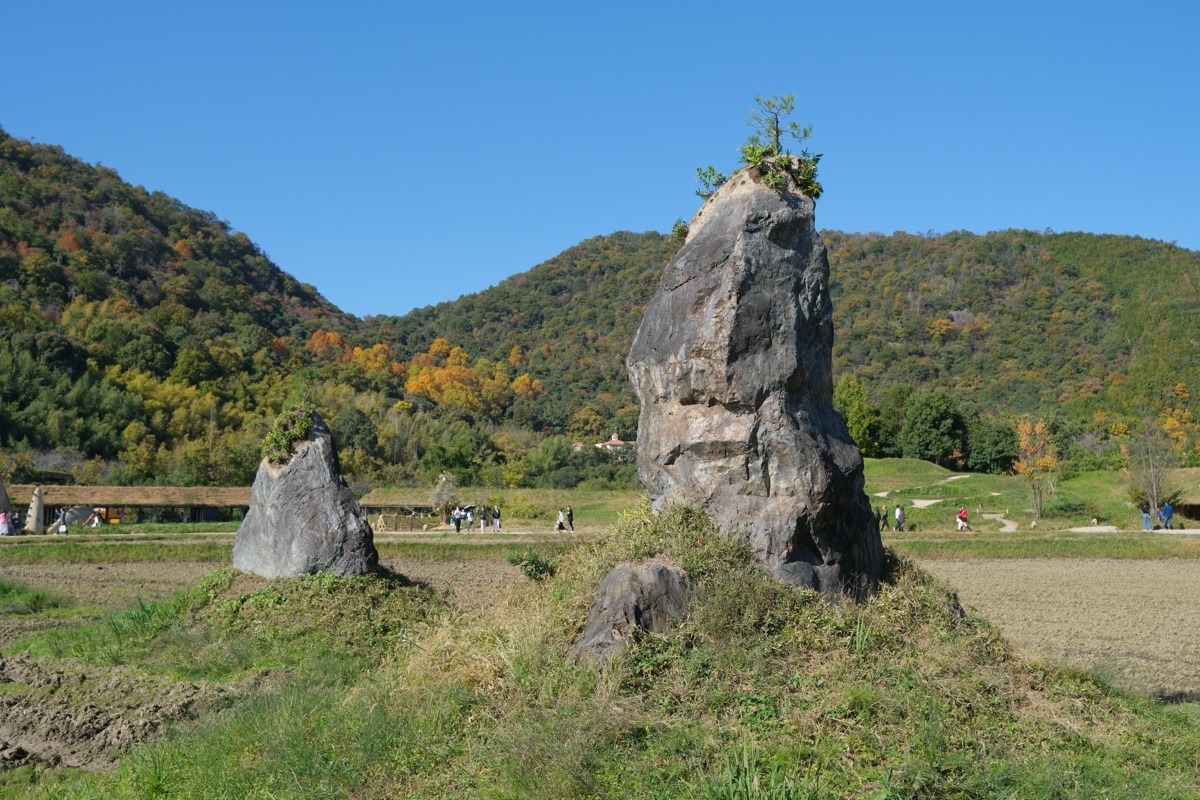
Trees have been planted on top of the stones, creating a curious landscape that feels almost like bonsai.
The whole space is clearly designed with harmony with nature in mind, but what struck me most was the sight of a tree piercing through the roof of the Headquarters (Copper Roof).
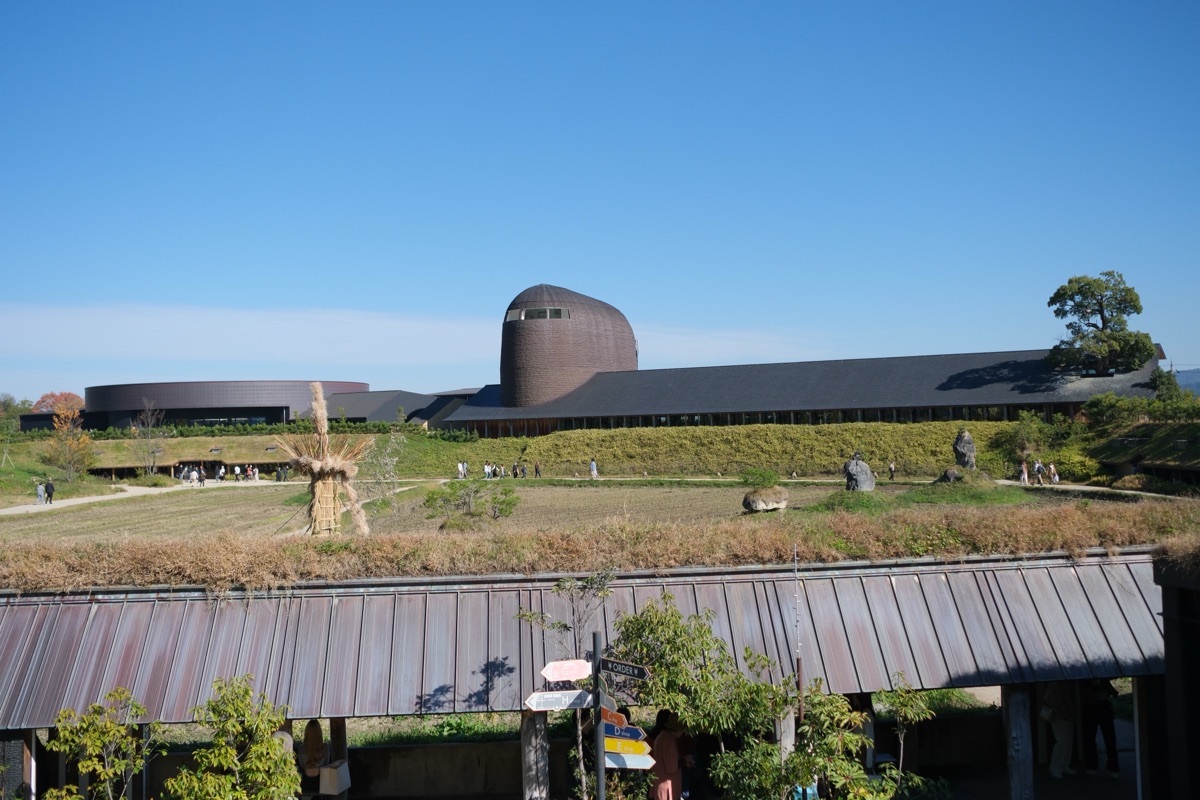
I was told it's a camphor tree over 200 years old that had been growing in Omihachiman and was replanted here as it was. The idea and the scale are bold in every sense.
The Main Event: Baum Factory
First, Straight to the Café
The liveliest place in La Collina is the Baum Factory. As the name suggests, it's the building where baumkuchen is actually made.
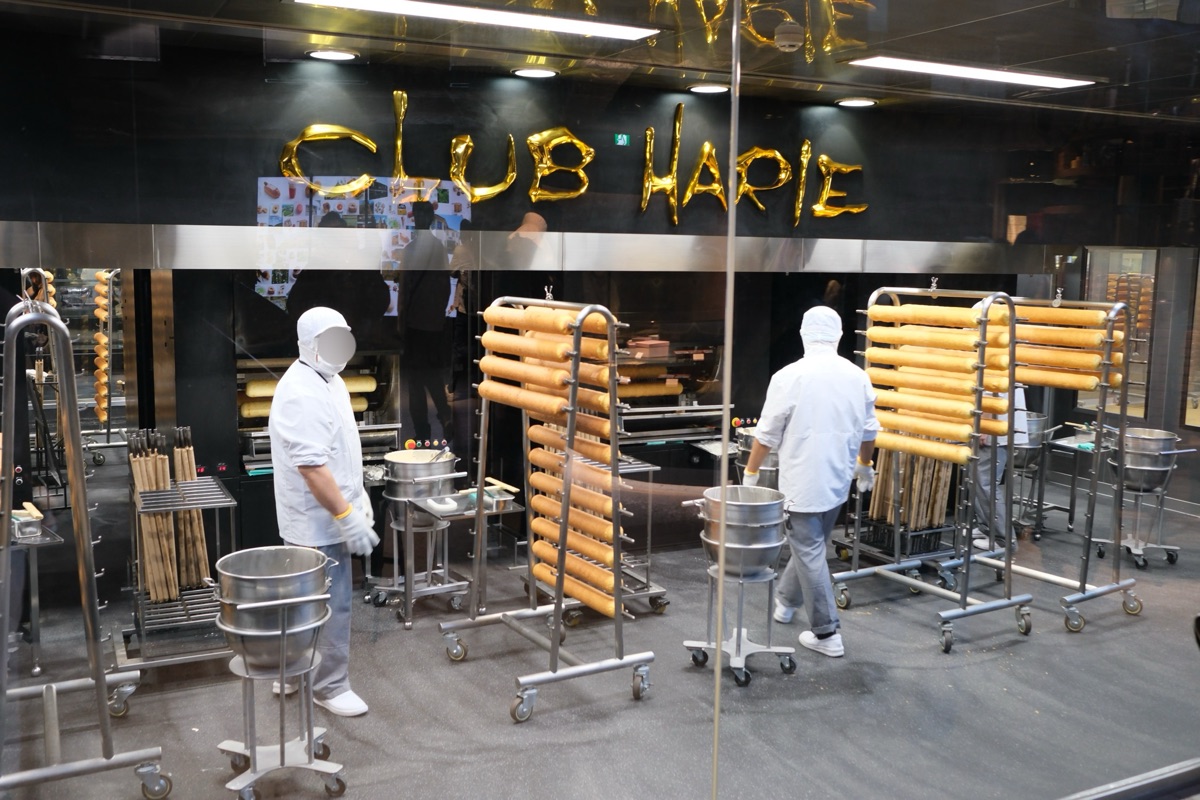
On the second floor, you can enjoy freshly baked baumkuchen. There was a line to buy it, but ordering was smooth thanks to the machines, and the cakes were served one after another, so we were able to eat surprisingly quickly.
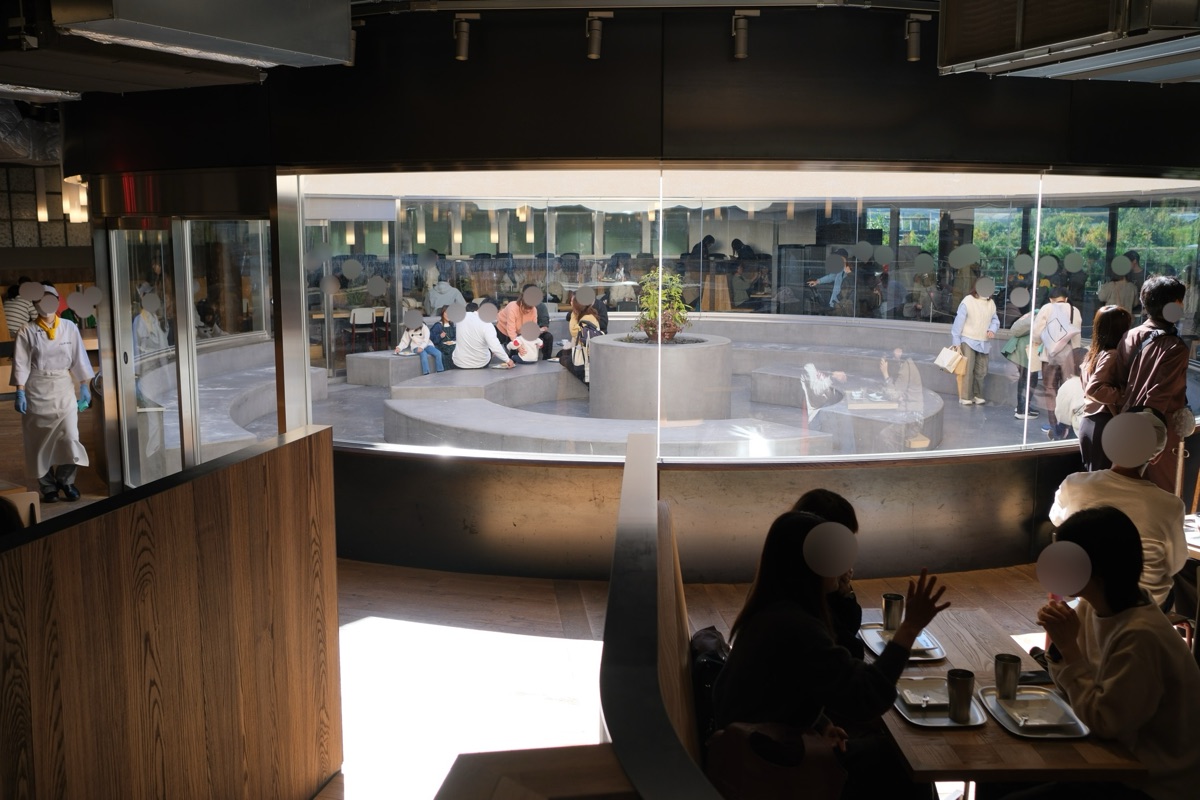
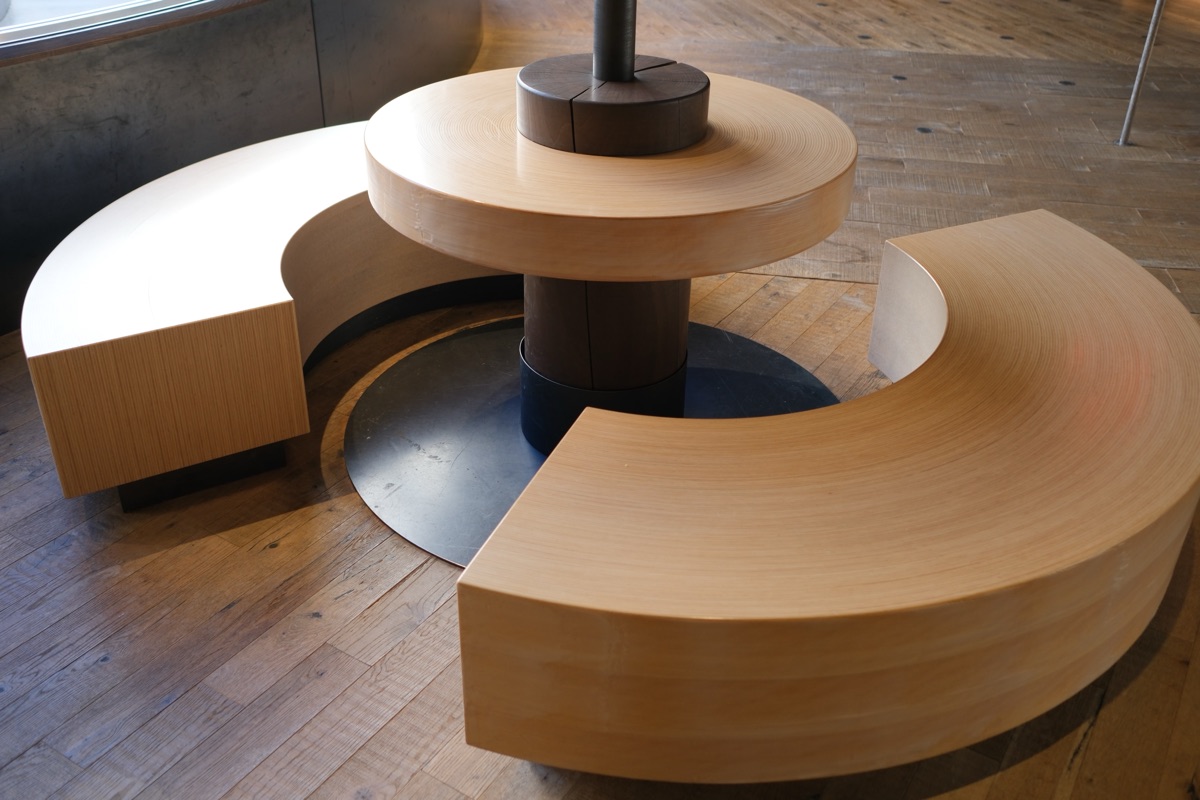
The design motif of the space is baumkuchen too, and you can spot elements inspired by it all over the building. Even the tables are designed to resemble baumkuchen…
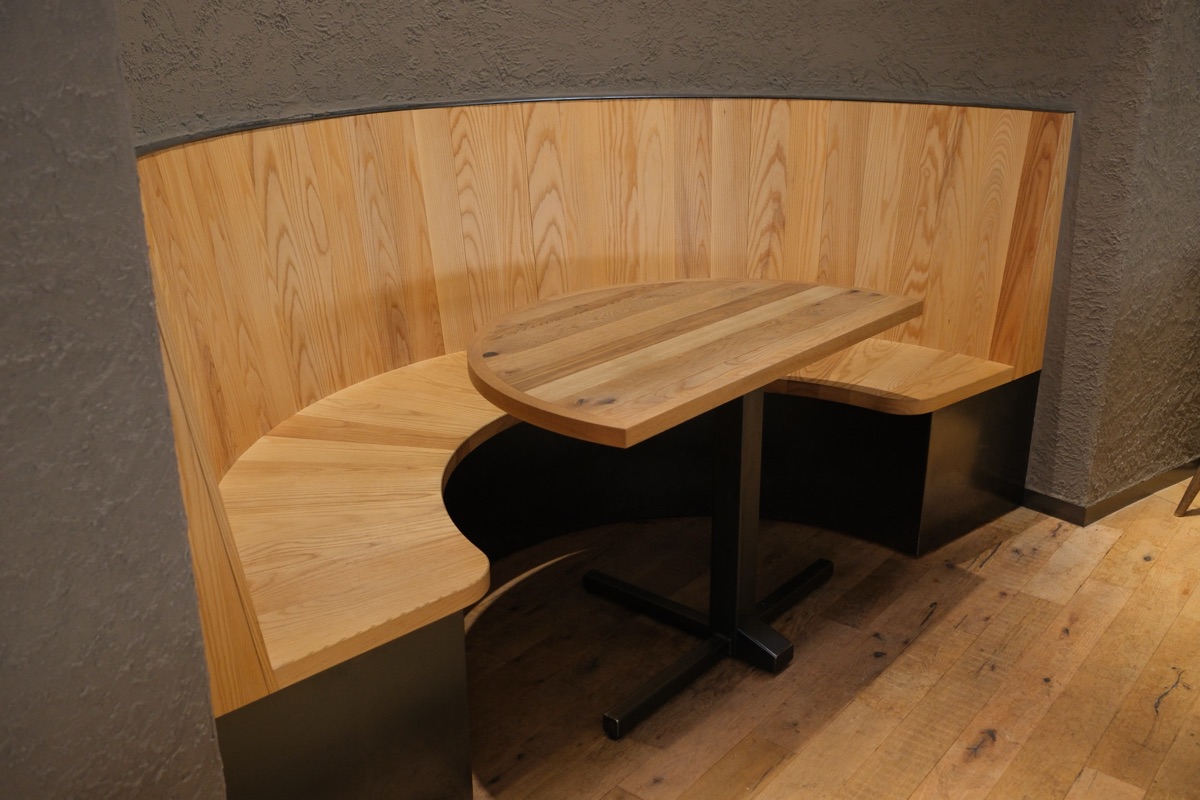
This table looks even more baumkuchen-like!
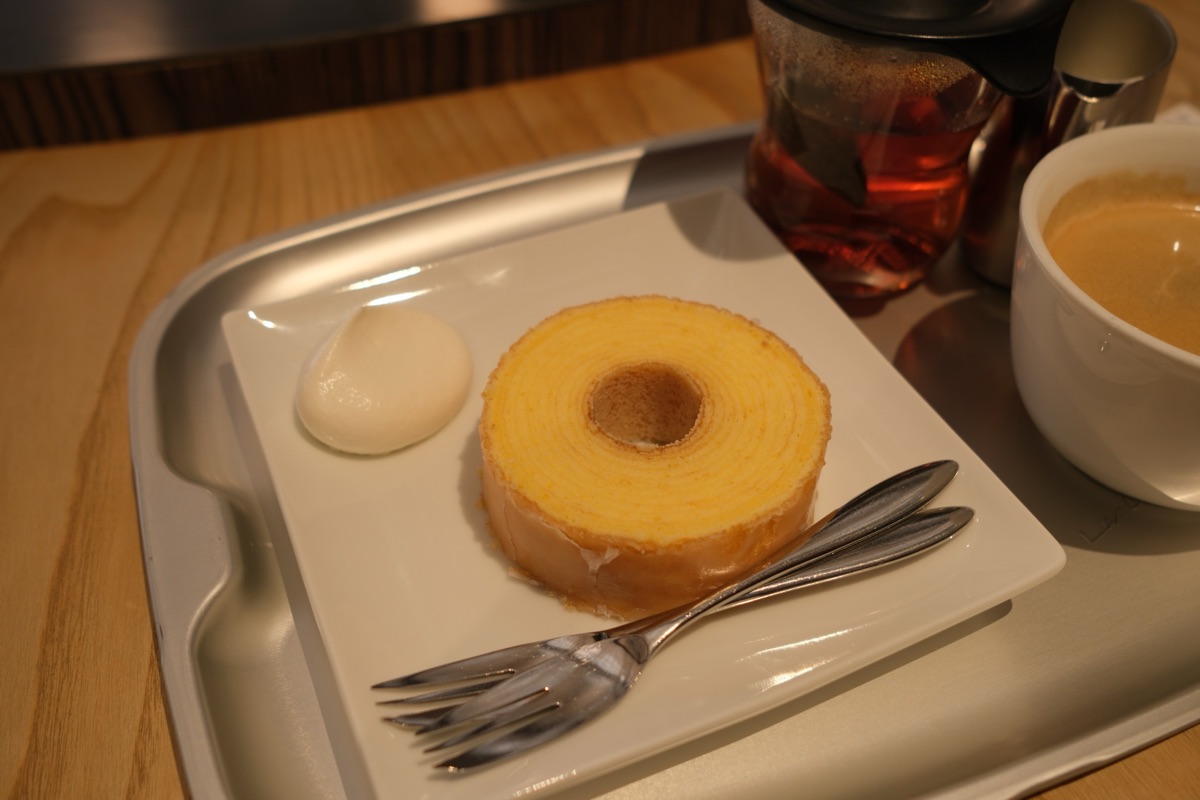
The freshly baked baumkuchen was wonderfully fragrant with butter, soft and fluffy, and absolutely delicious.
Even the No-Entry Sign Is Cute
La Collina as a whole is such a carefully crafted space that it's never boring to walk around.
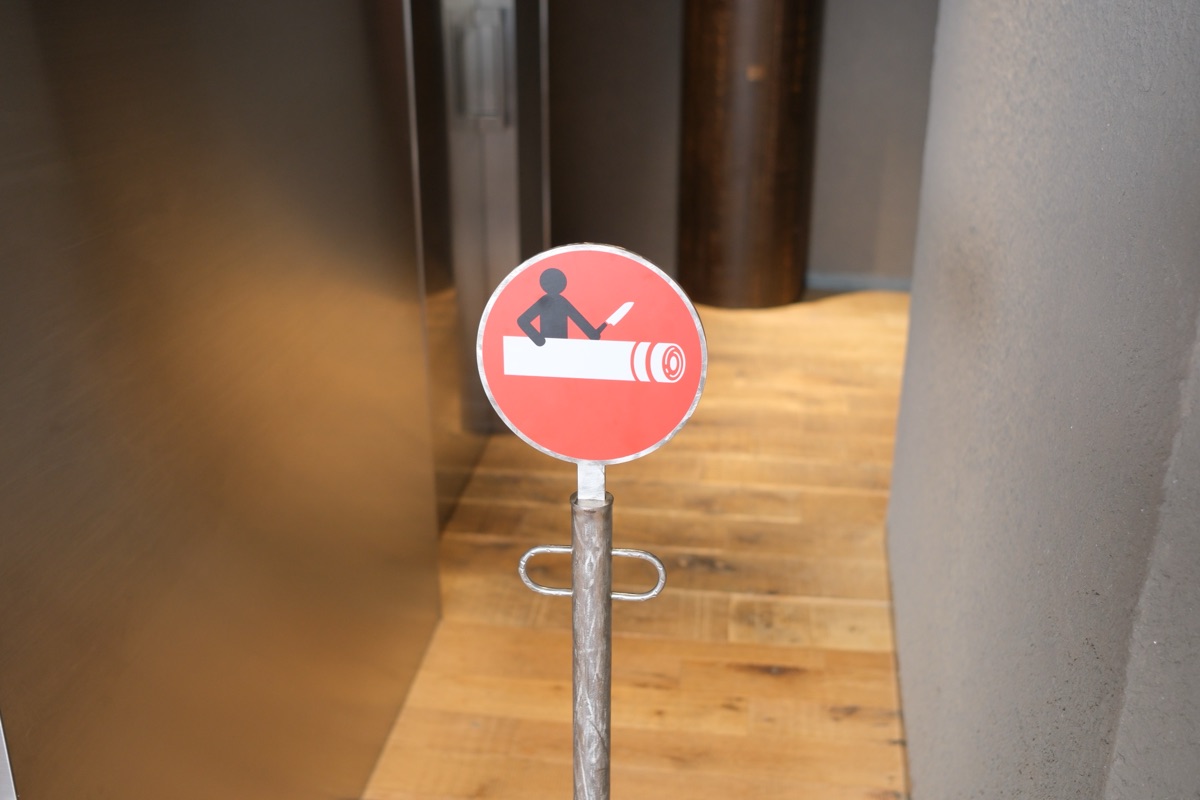
One thing that caught my eye was a no-entry sign. At first it looked a bit alarming, like a person holding a knife, but when I looked more closely, it was actually a pictogram of someone slicing baumkuchen. Cute!
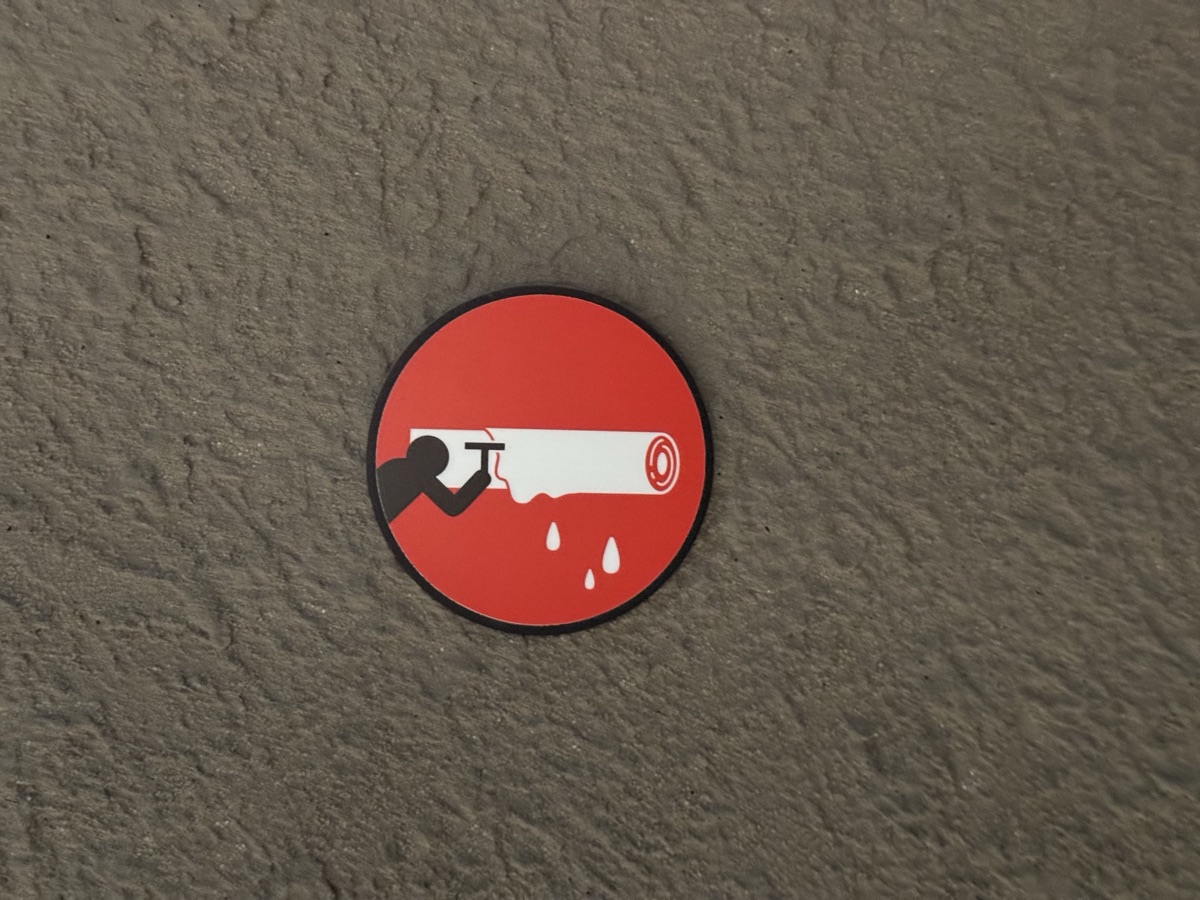
I also found another version of the pictogram showing someone glazing baumkuchen with sugar.
Playful design details like these are part of what makes this place so appealing.
Touring the Baumkuchen Factory
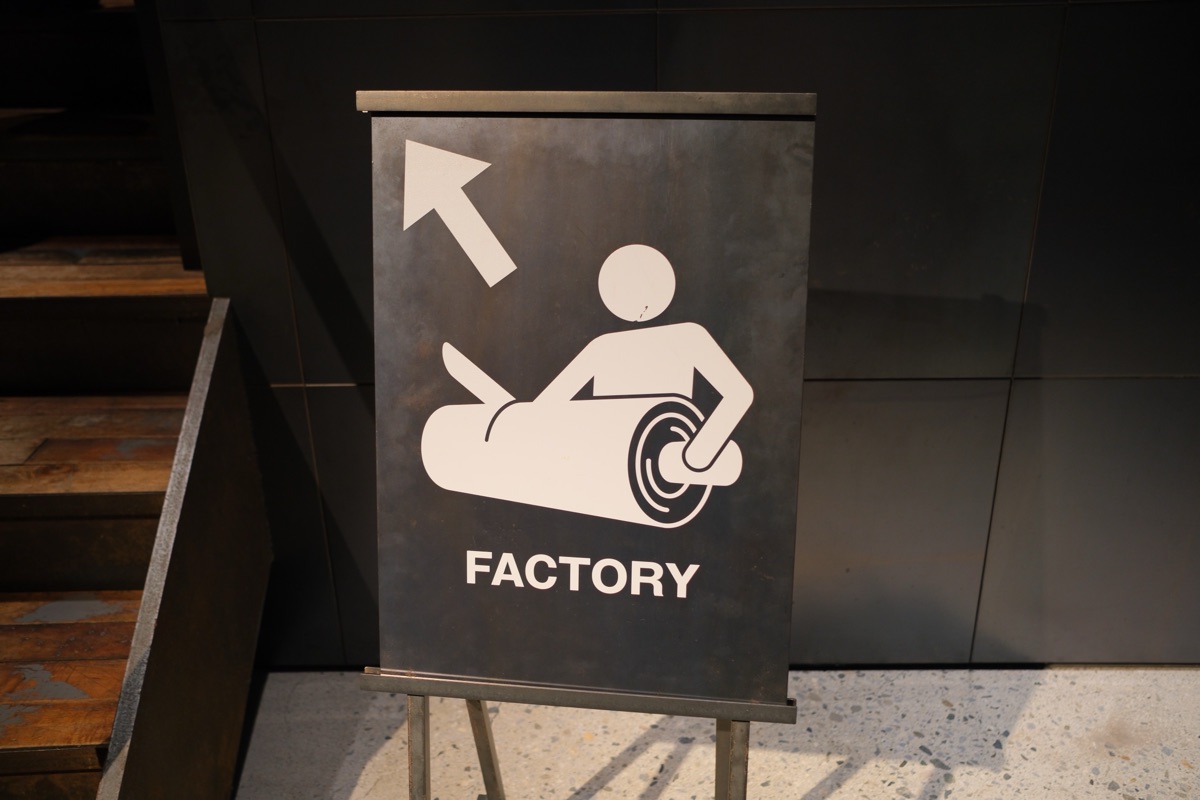
The Baum Factory has a visitor route, and you can enter freely.
At the entrance to the route, you're welcomed by a lion sculpture made of chocolate.
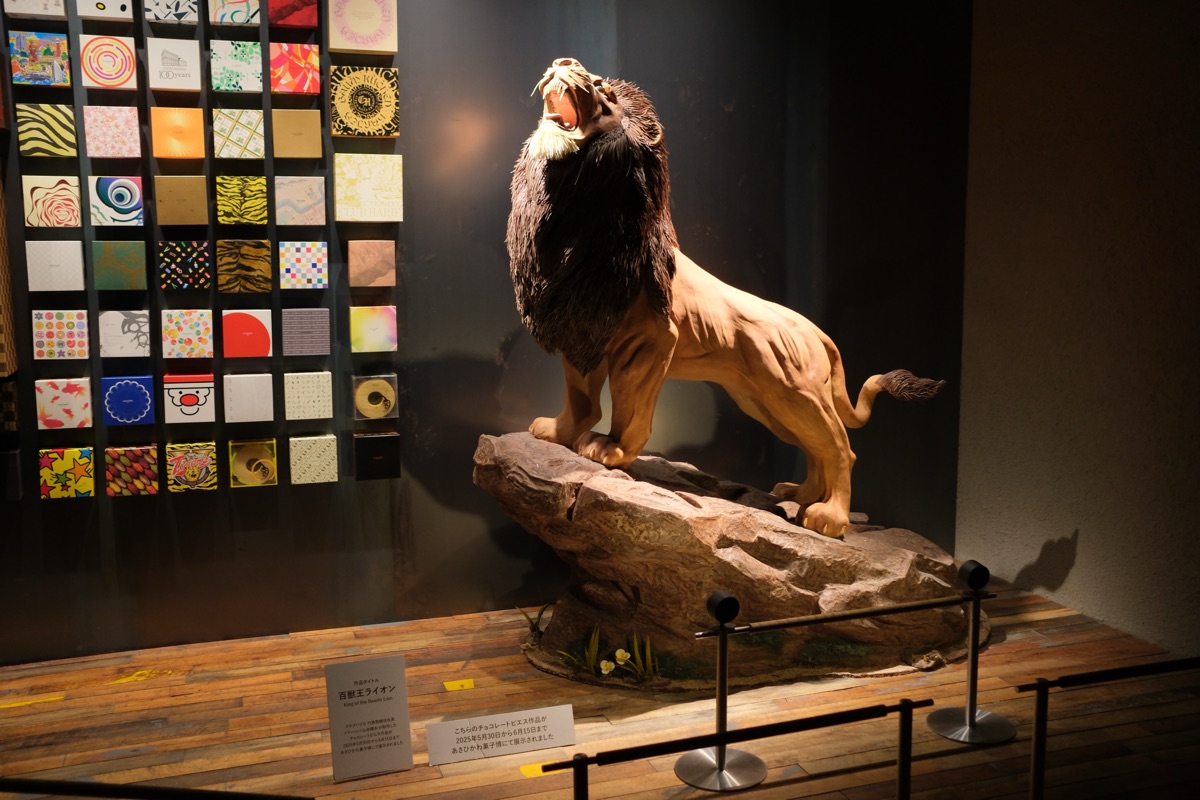
Even for a large-scale manufacturer, it still gives you a real sense of the presence of highly skilled artisans.
Along the tour route, you can watch baumkuchen being cut through the glass and see it moving along on conveyor belts.
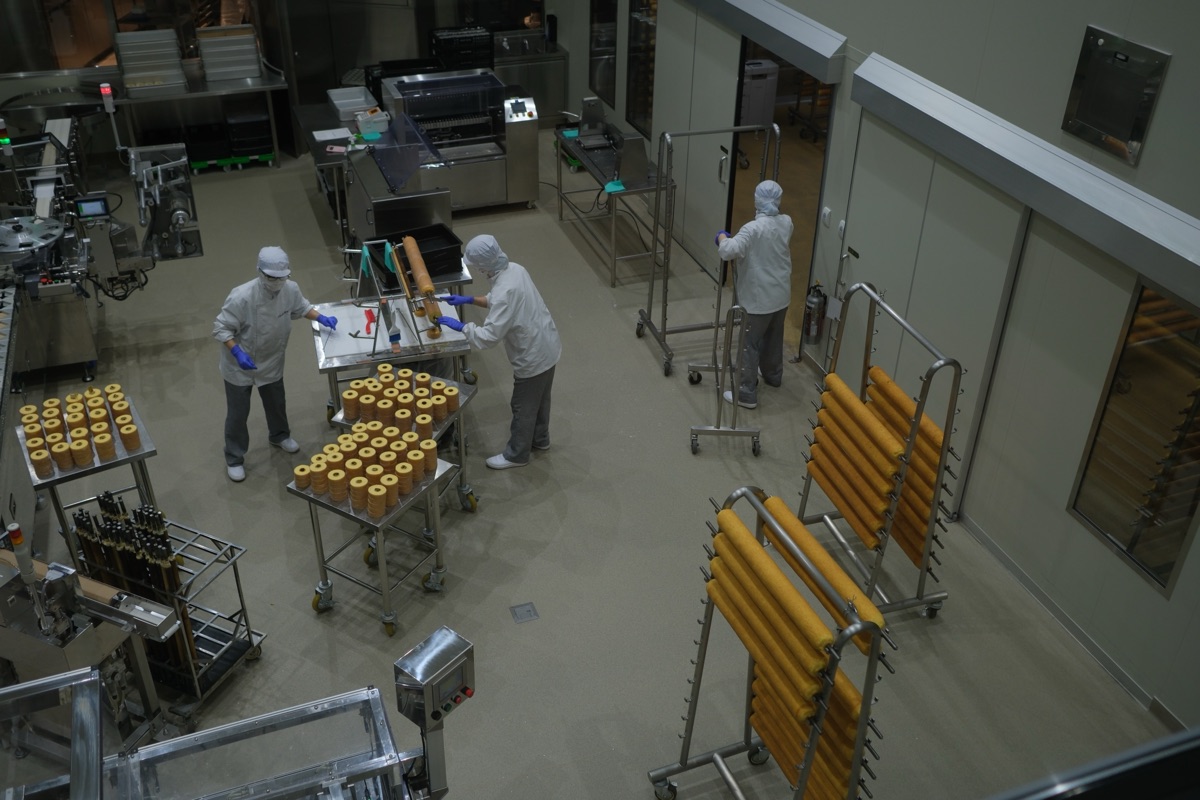
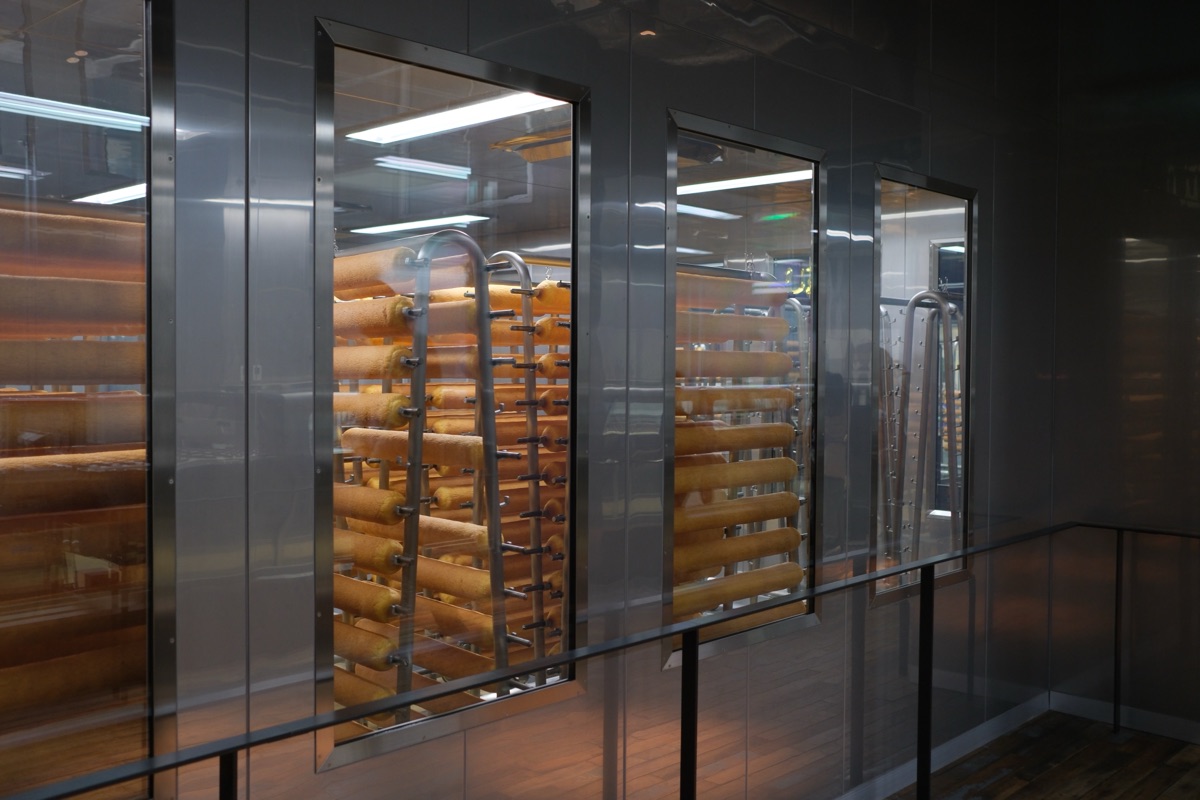
It's impressively substantial—so much so that it's hard to believe all of this is open to the public for free!
Food Court and Gift Shop
Let's Grab a Light Lunch
There was even more to see than I expected, so we decided to stay and have lunch here too.
On the opposite side of the Baum Factory, there's a food court and a gift shop. At this point, it feels like it's gone well beyond the scope of a flagship store and is basically on theme-park level, lol.
Like the baumkuchen café, the food court also uses a self-order system with machines. The menu is wide-ranging, from sweets like dango to more filling meal options.
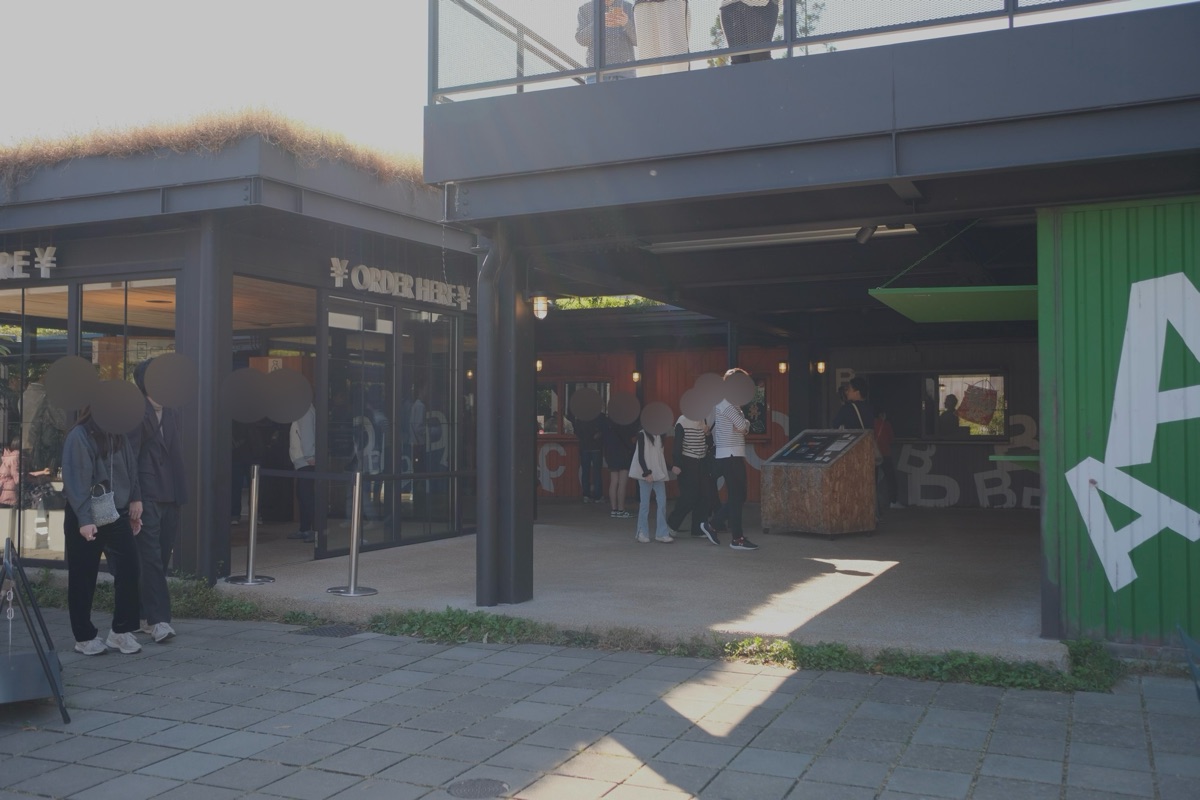
This time, we ordered red konnyaku soup and arancino.
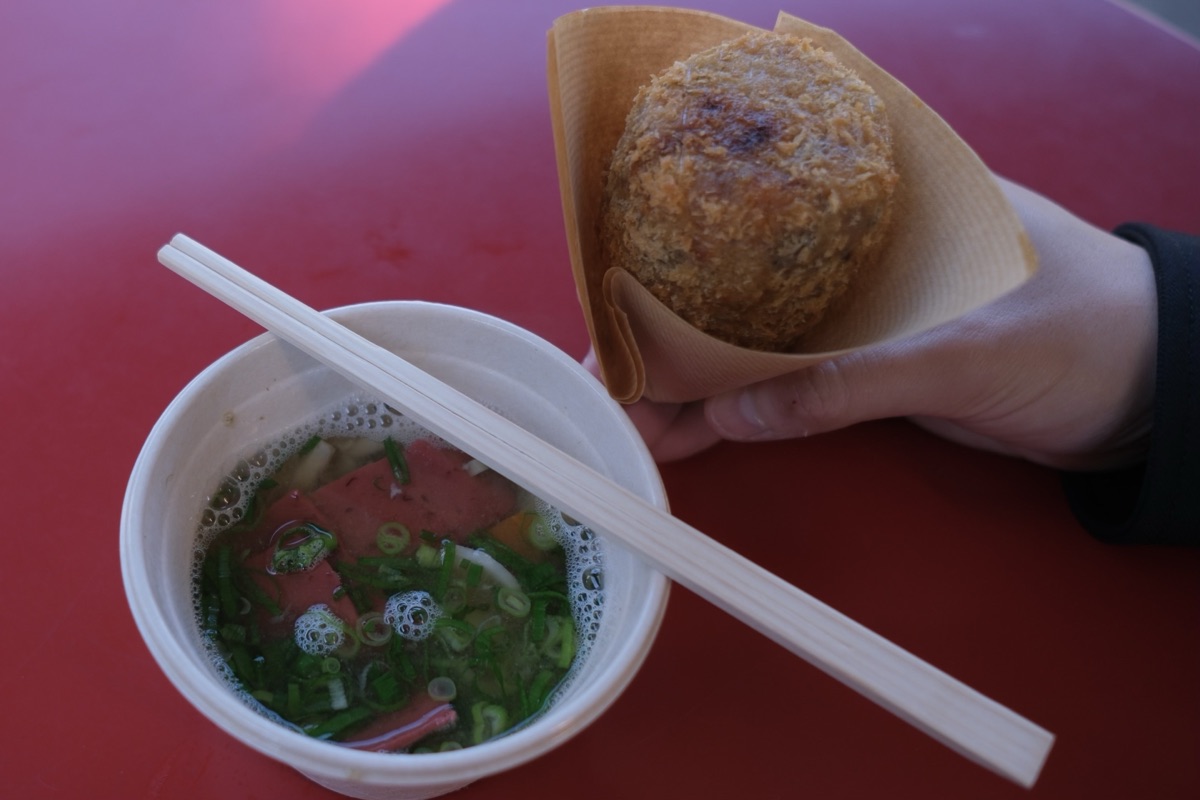
Both were tasty and satisfying enough to make for a proper meal.
A Garage with a London Bus!?
The gift shop is set up like a garage, complete with a London bus and motorcycles.
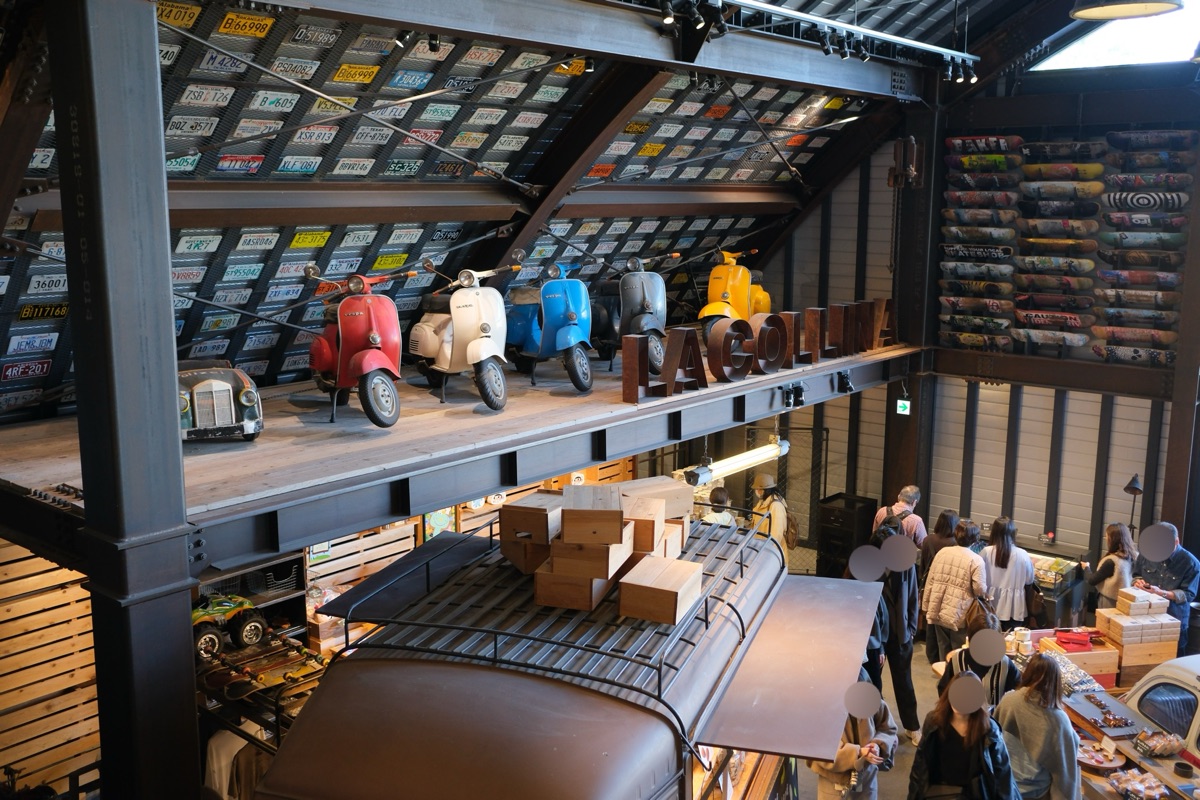
The selection seemed a little different from the Club Harie shop at the entrance. They were also selling bread here.
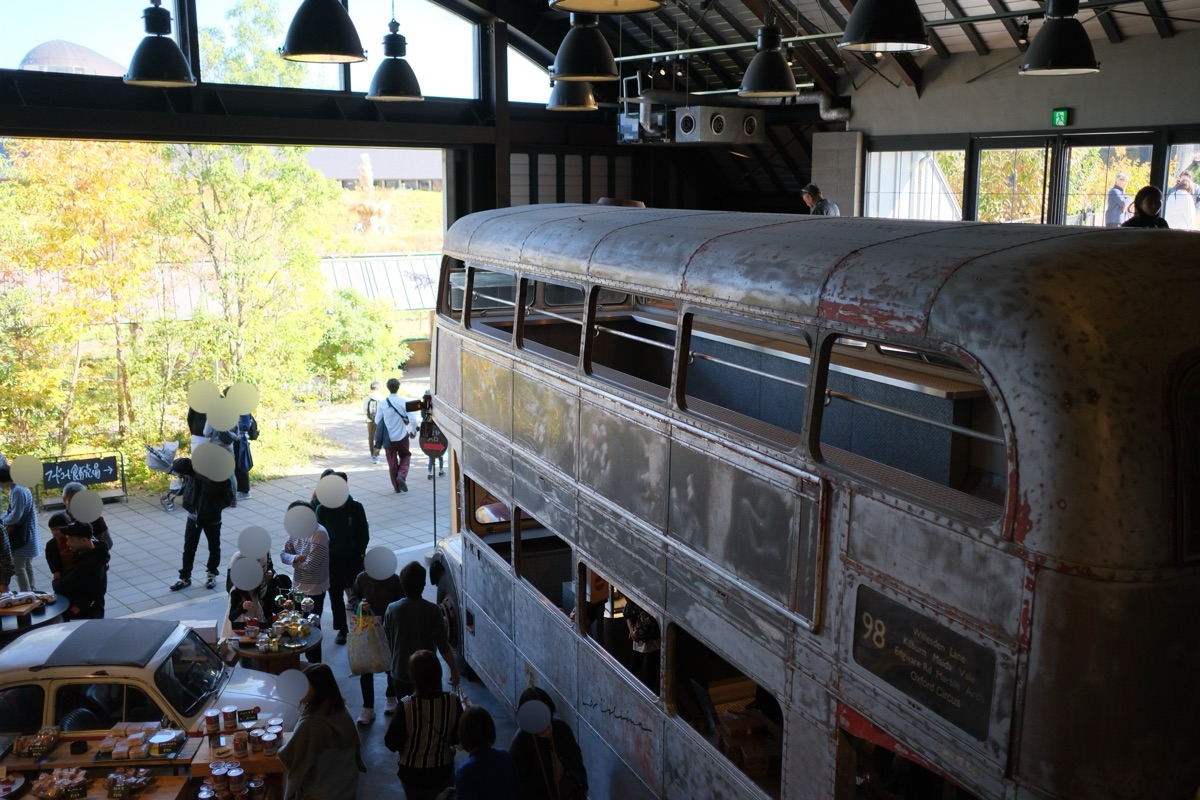
It had a completely different atmosphere from the other areas, which fully embrace nature, and it really showed the range of spatial variety here.
After looking around the whole place, we left La Collina behind.
On the right is a small pavilion called Kakigasa—something like a gazebo.
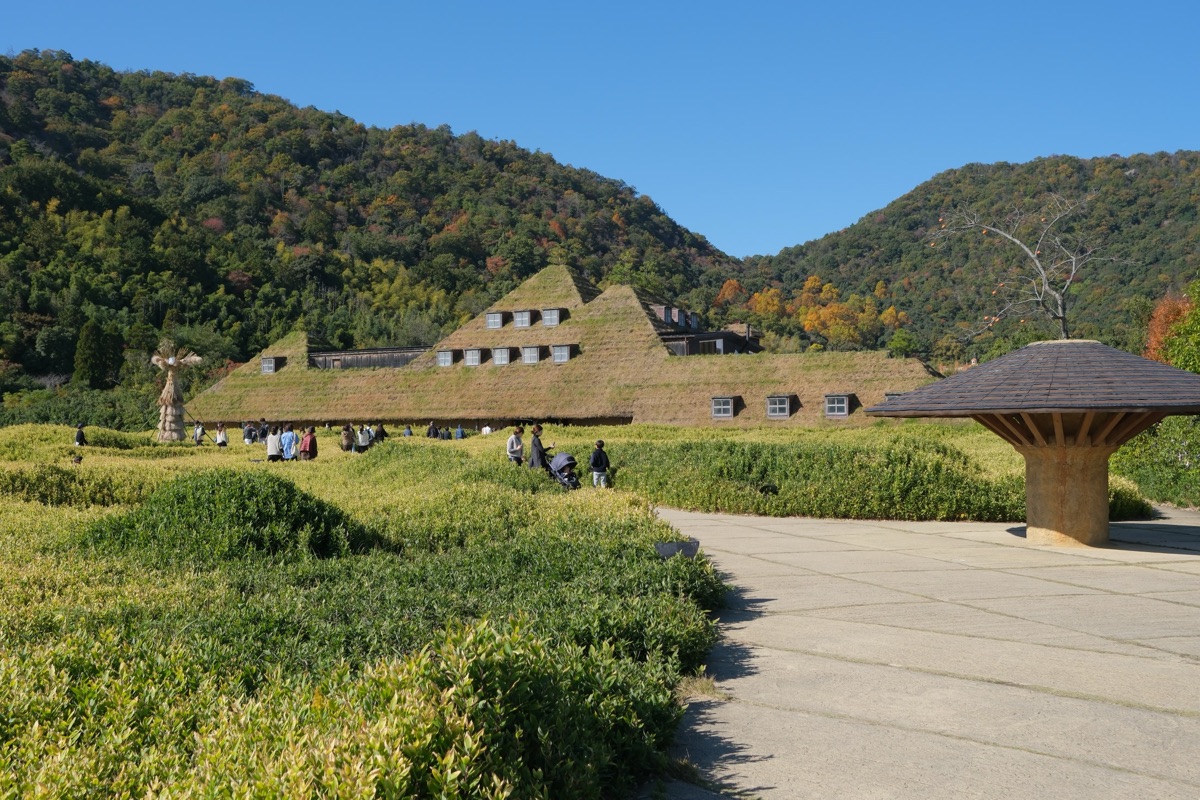
The persimmons happened to be in season, adding a lovely sense of the time of year to the scenery.
It sounds like La Collina still has expansion plans in the works, so I'd love to come back again in a few years!
Comments