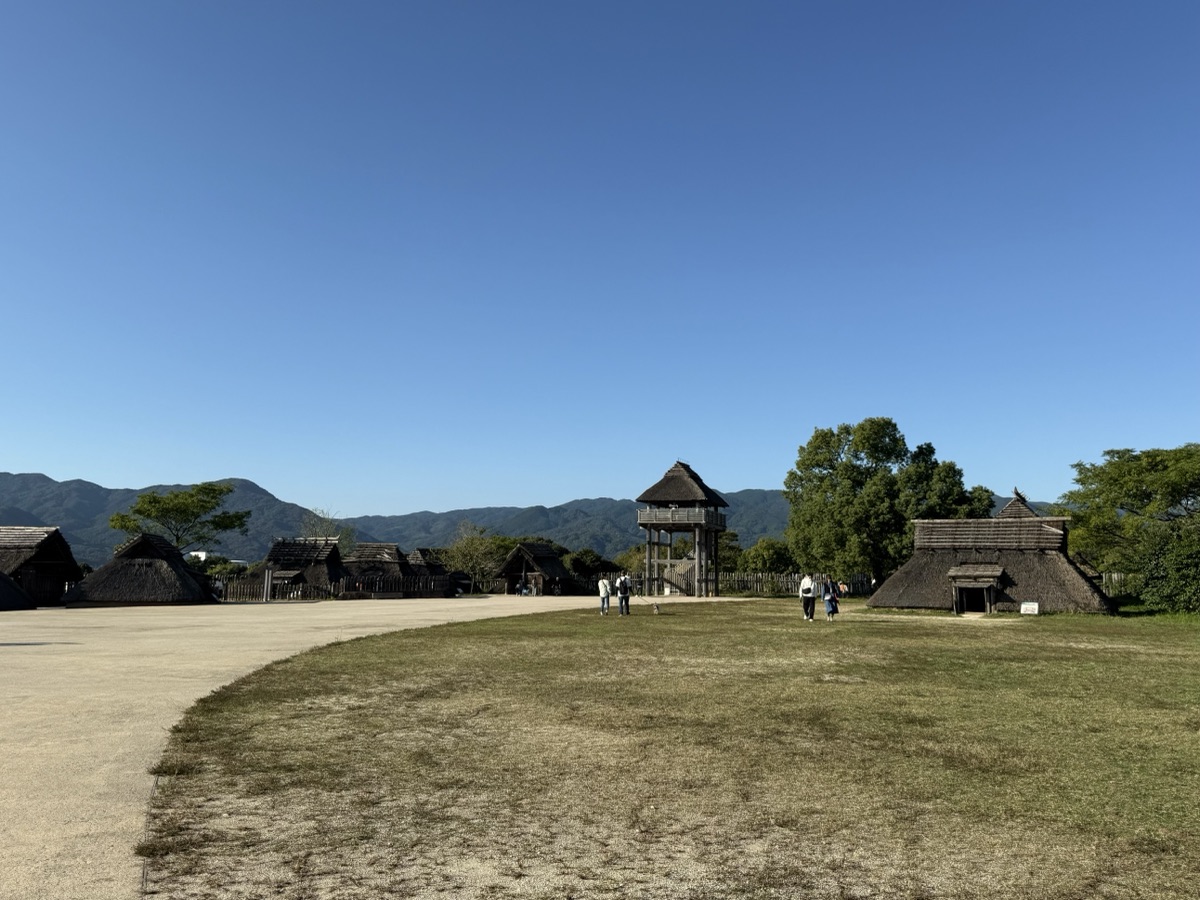

Heading to Yoshinogari Ruins to Learn About the Yayoi Period
Entering from the East Gate Parking Lot at Yoshinogari Historical Park
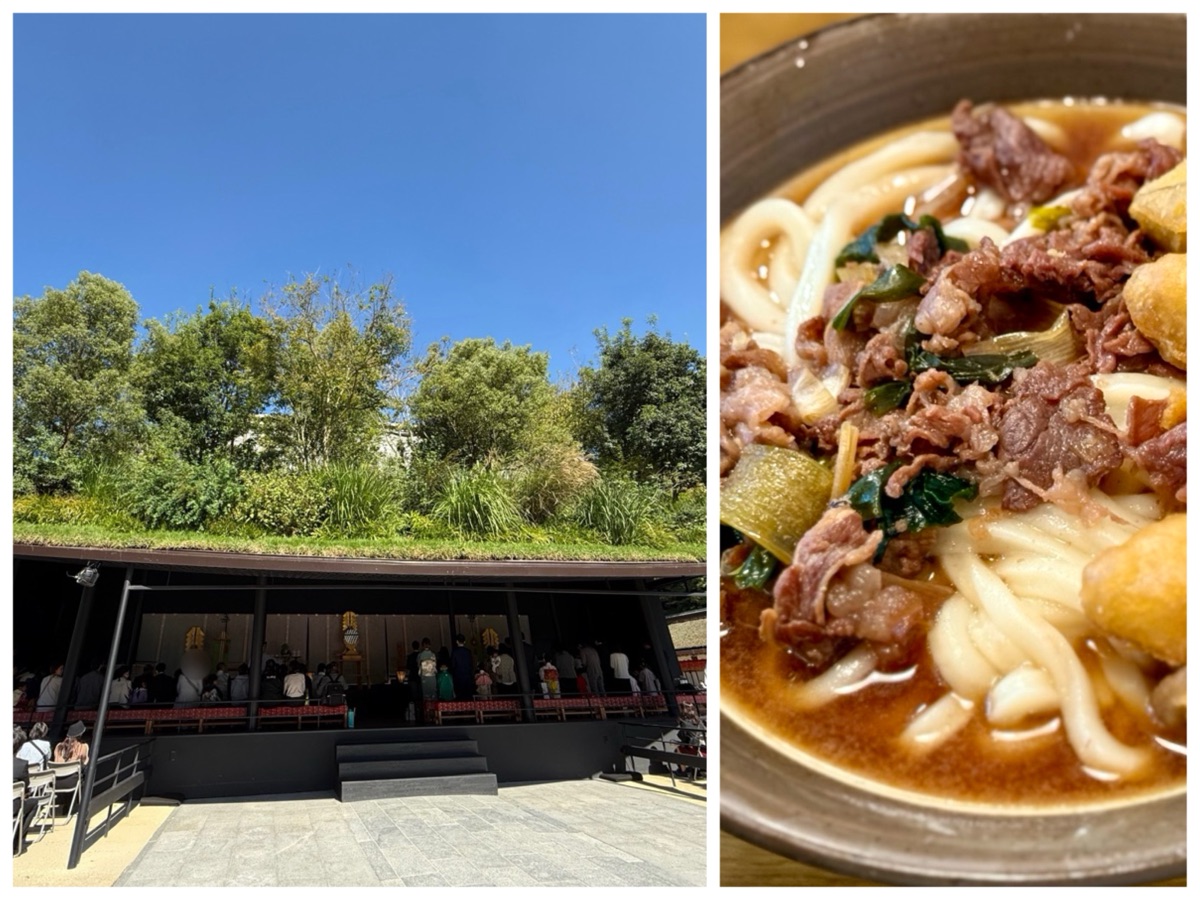
On the second day of our trip, we first visited Dazaifu Tenmangu Shrine and looked around the area, then had udon at Maki no Udon before heading on to Saga, the main destination of the day.
The place we visited in Saga was Yoshinogari Historical Park. As the name suggests, it is home to the Yoshinogari Ruins from the Yayoi period. Since the park grounds are enormous, it seems best to decide in advance which areas you want to focus on.
There are 3 parking lots (4 during events), and we parked at the East Gate lot before entering the park. The reconstructed ruins area seems to be closest from the East Gate.
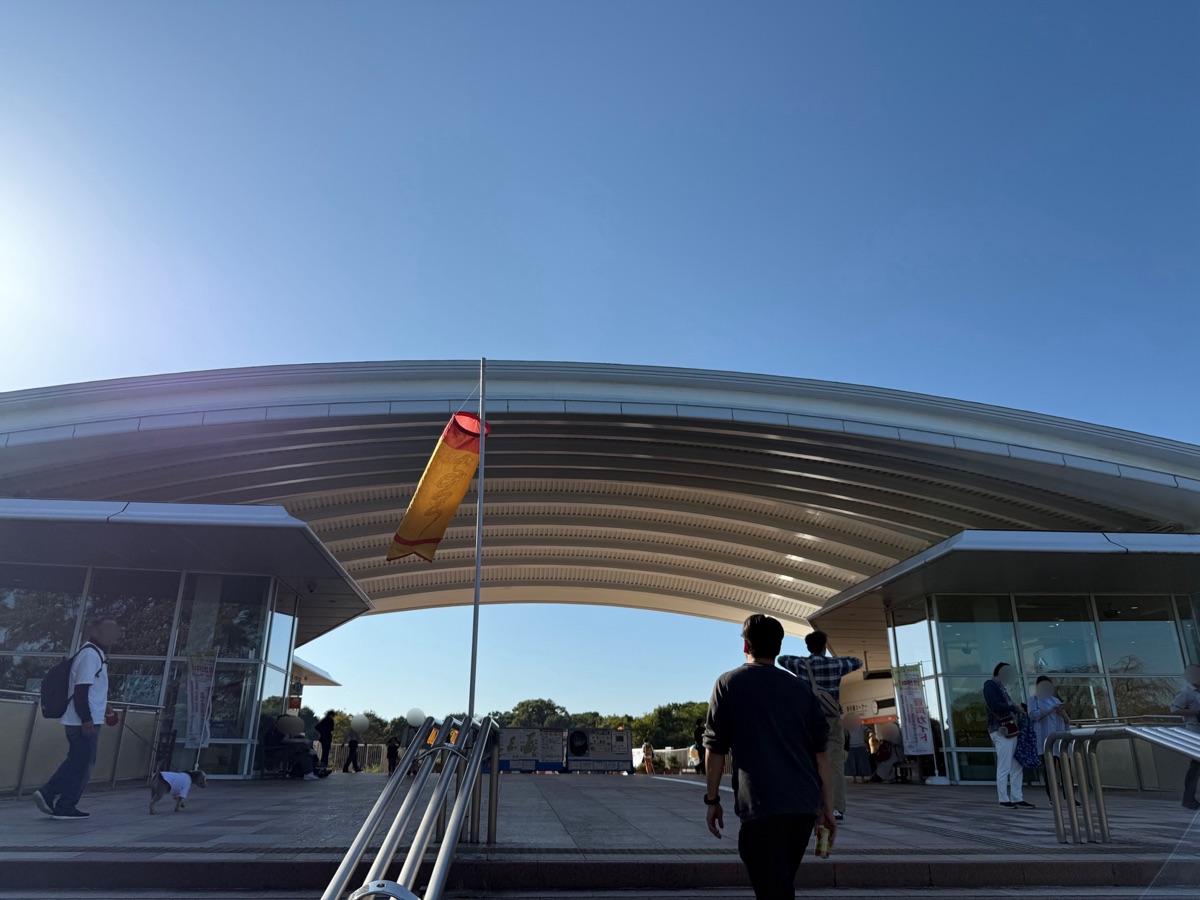
What an impressively grand entrance!
The Grounds Are Huge!
As soon as we entered the park, we came across a reconstructed moat just like the ones I remembered from history textbooks. On the ground, there were rows of sharply pointed wooden stakes called sakamogi.
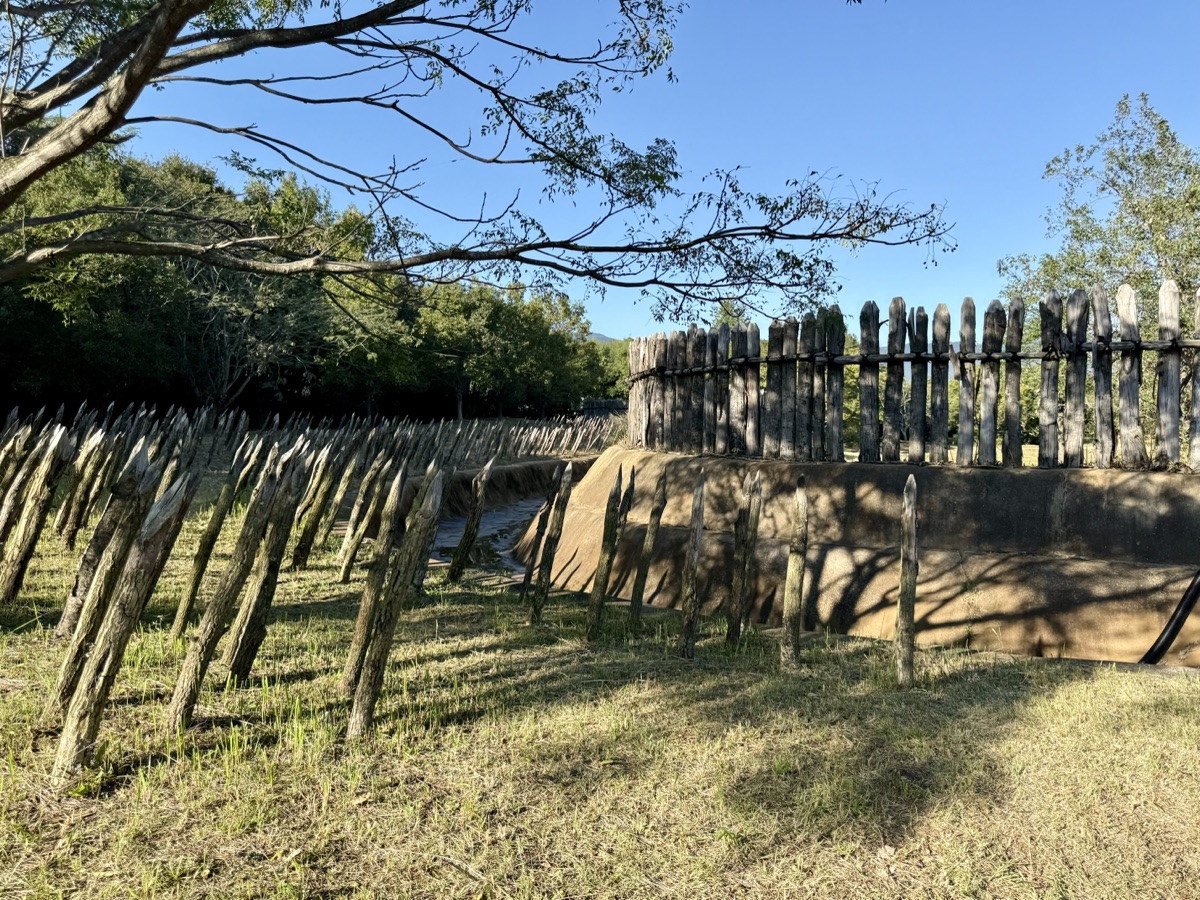
If you got impaled on that, you'd die…
South Inner Enclosure
The first place we headed to was the South Inner Enclosure. According to the pamphlet, this area features reconstructed buildings such as an impressive watchtower, the homes of the kings, and cooking huts.
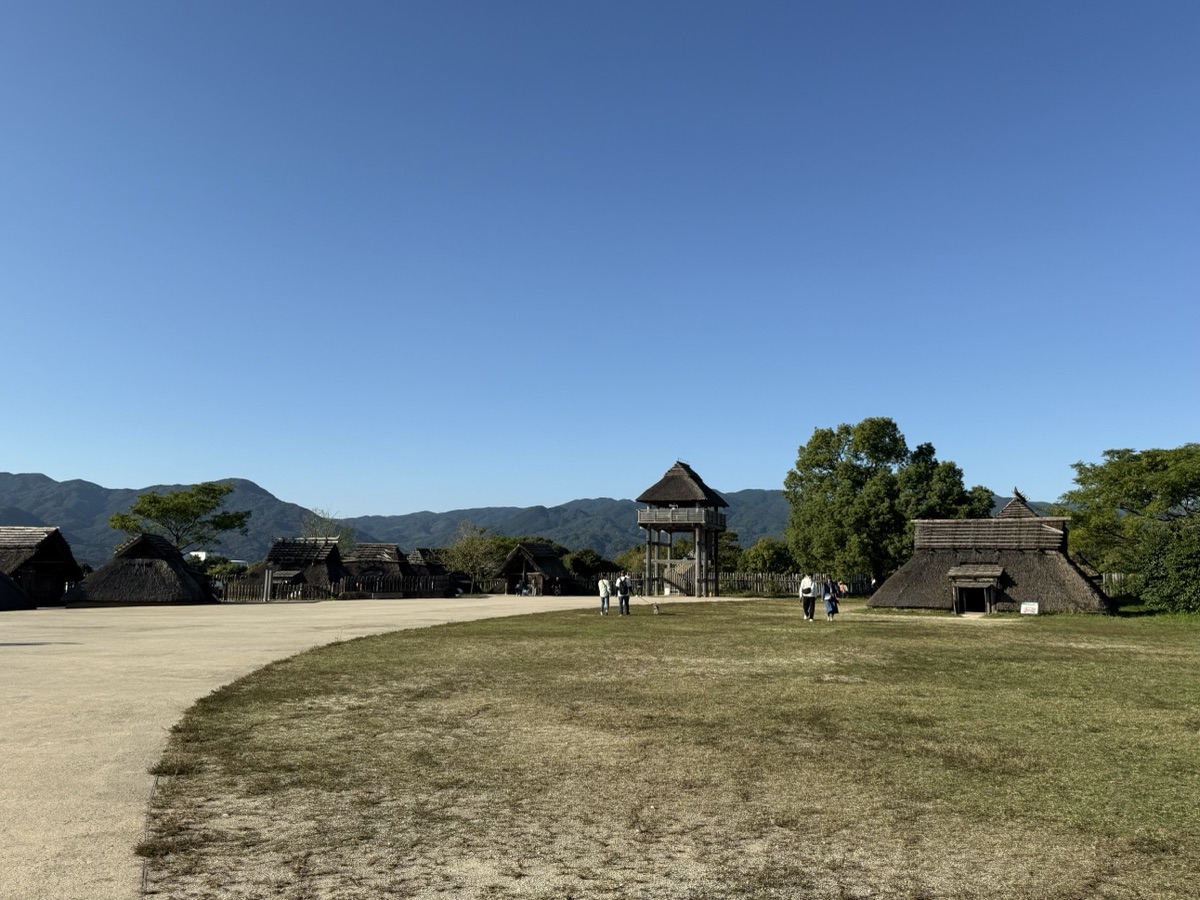
We could actually climb the watchtower as well.
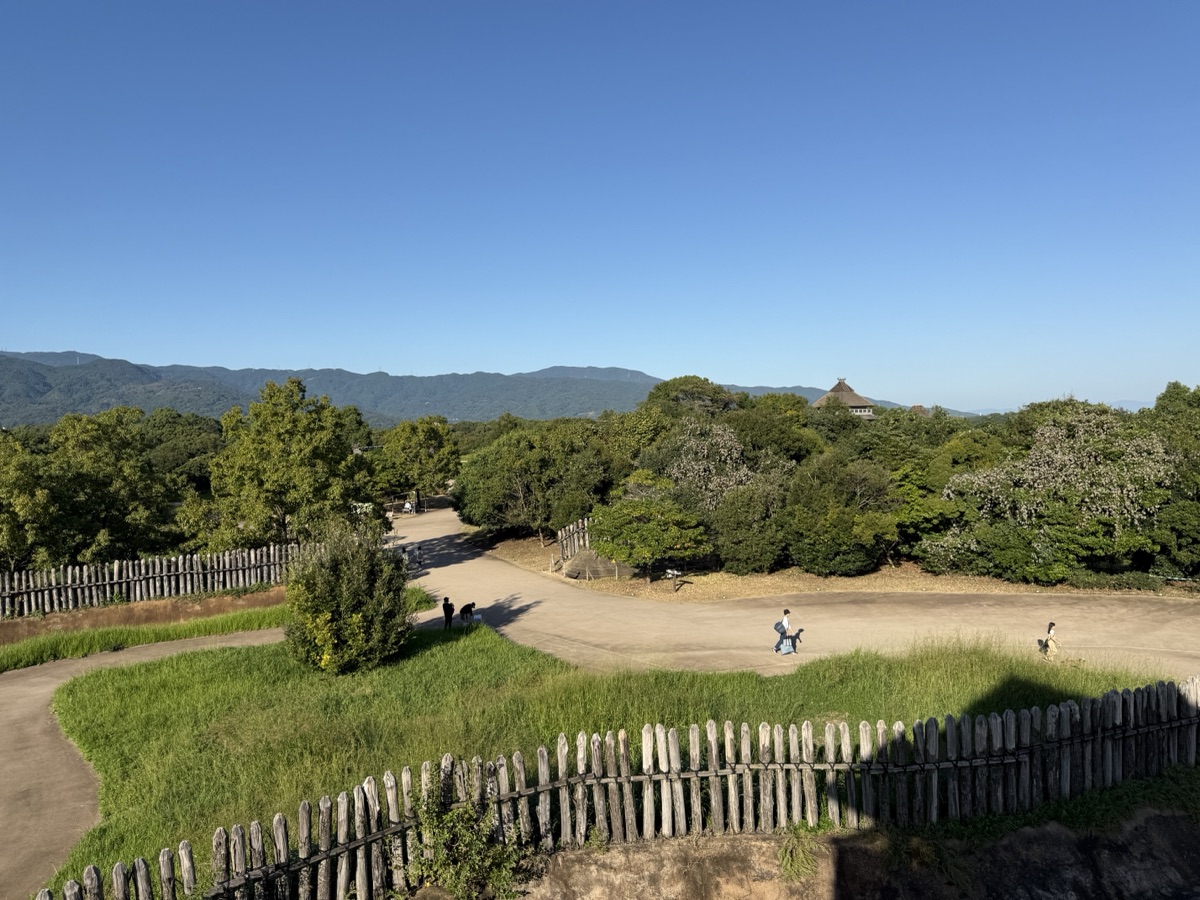
The park is absolutely vast, with reconstructed ruins scattered throughout. The grass along the paths is kept short, so visibility is good, but I doubt it would have been this open in the Yayoi period. Back then, the landscape may have been much more overgrown.
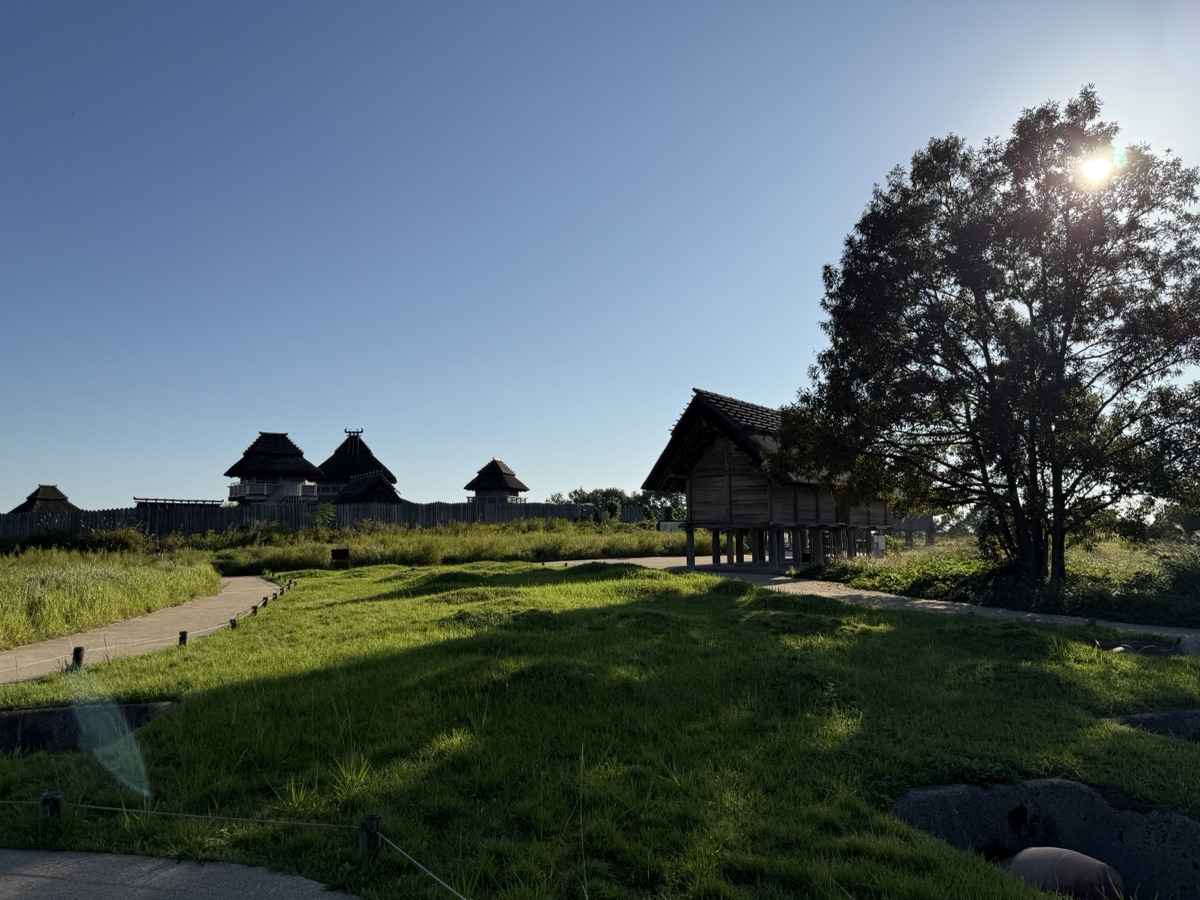
The remains of the Kita Funkyubo, a burial mound for people of high status, are covered by a building and have now been developed into a museum. I read that 14 jar coffins, capsule-shaped coffins known as kamekan, were excavated there.
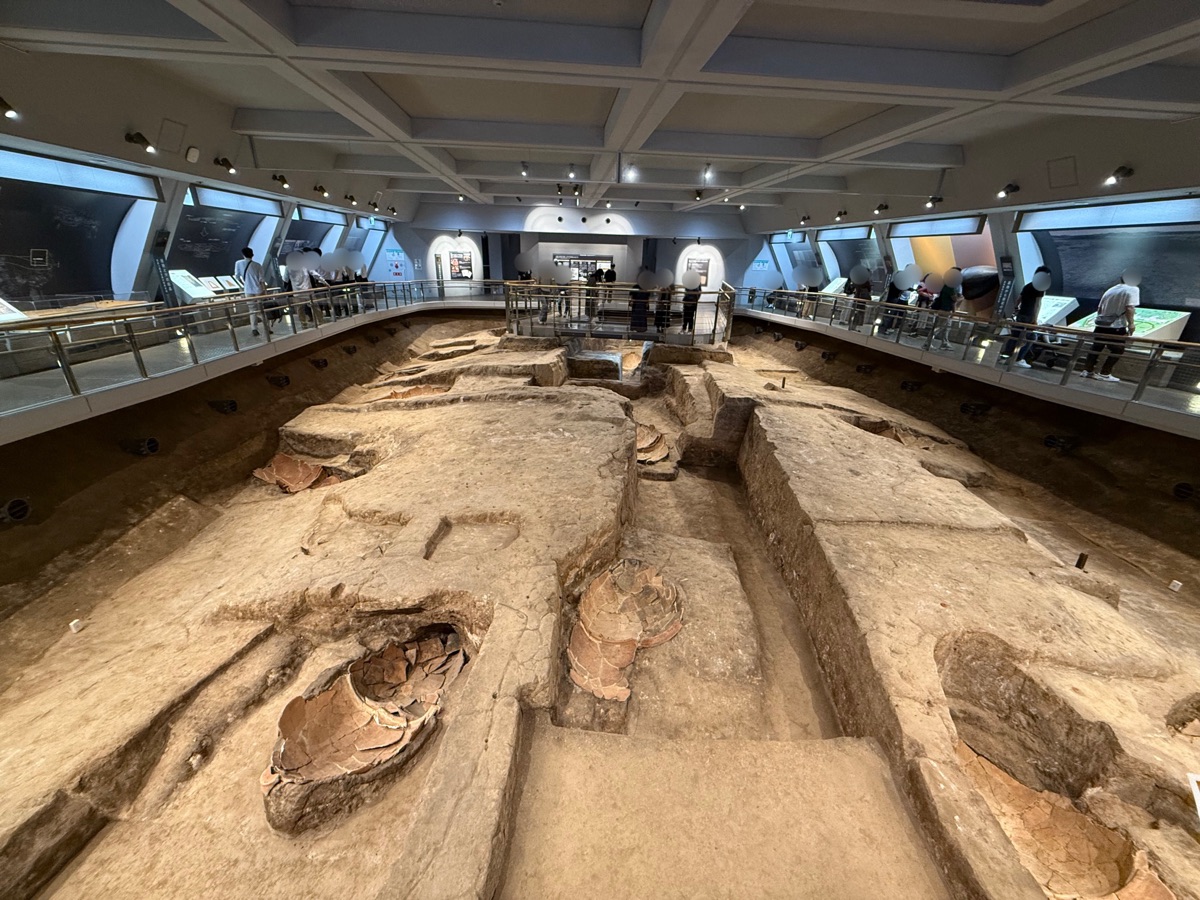
Farther back inside the building, there is a reconstruction showing how the jar coffins were actually buried, which lets you get a close sense of burial culture from that time.
Turning Back at the Jar Coffin Burial Row
Less than a 10-minute walk from the Kita Funkyubo brings you to an area called the Jar Coffin Burial Row, where graves from that period have been reconstructed. It stretches an impressive 30 meters in length and contains around 500 graves.
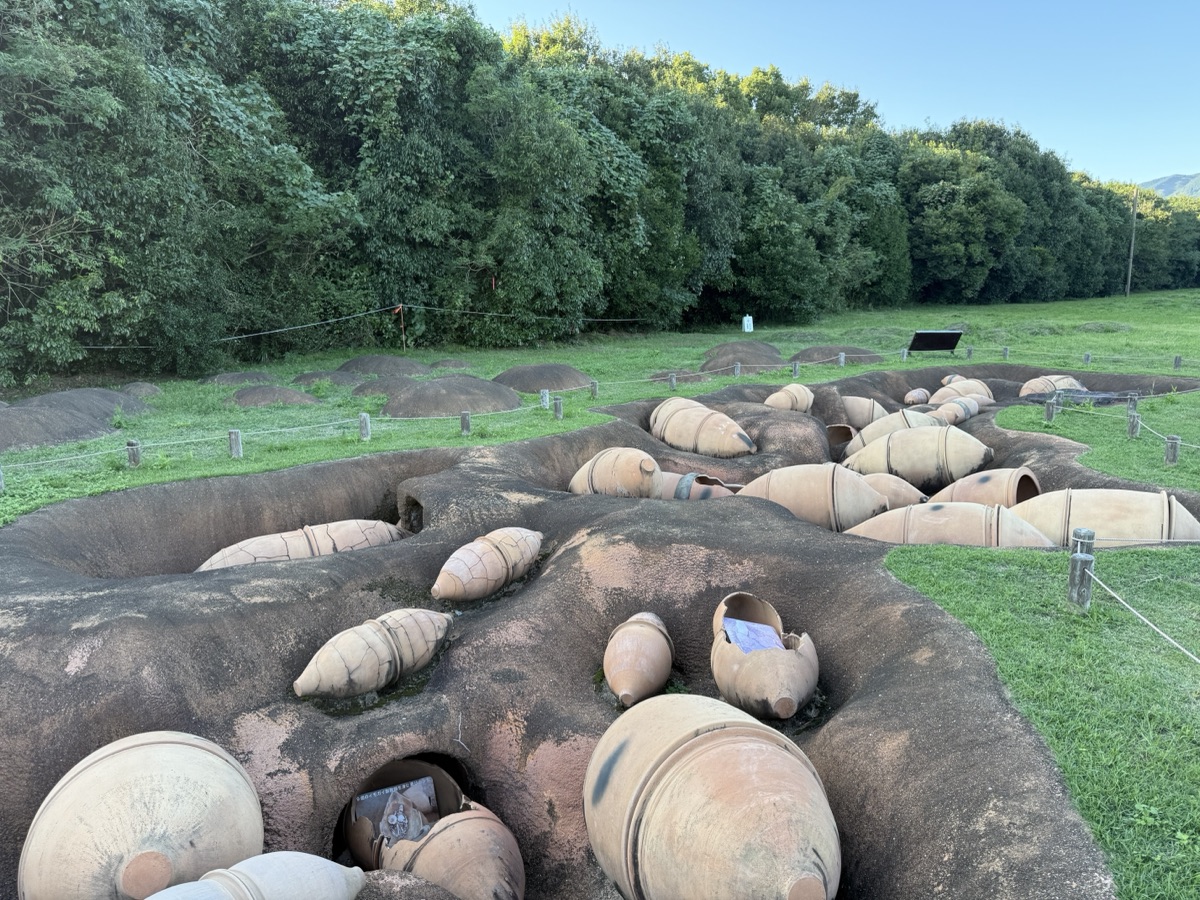
These date to the middle Yayoi period (2nd century BC to 1st century AD). After seeing this area, we turned back toward the entrance.
The park still goes on and on, but we're heading back toward the entrance.
North Inner Enclosure
Near the Kita Funkyubo is an area called the North Inner Enclosure. It is said to have been a sacred place within the Yoshinogari settlement where rituals and political affairs were carried out.
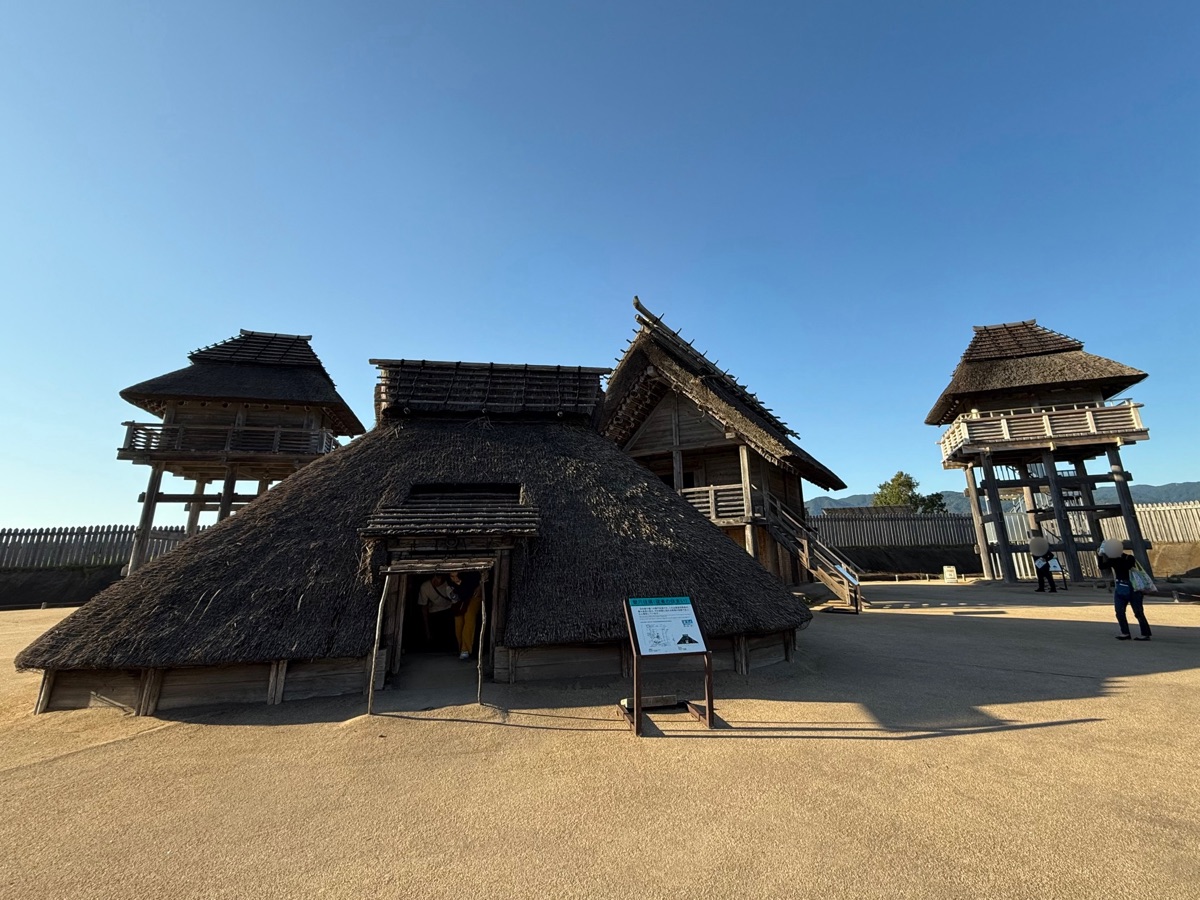
Inside the especially impressive building there, scenes from that time have been recreated.
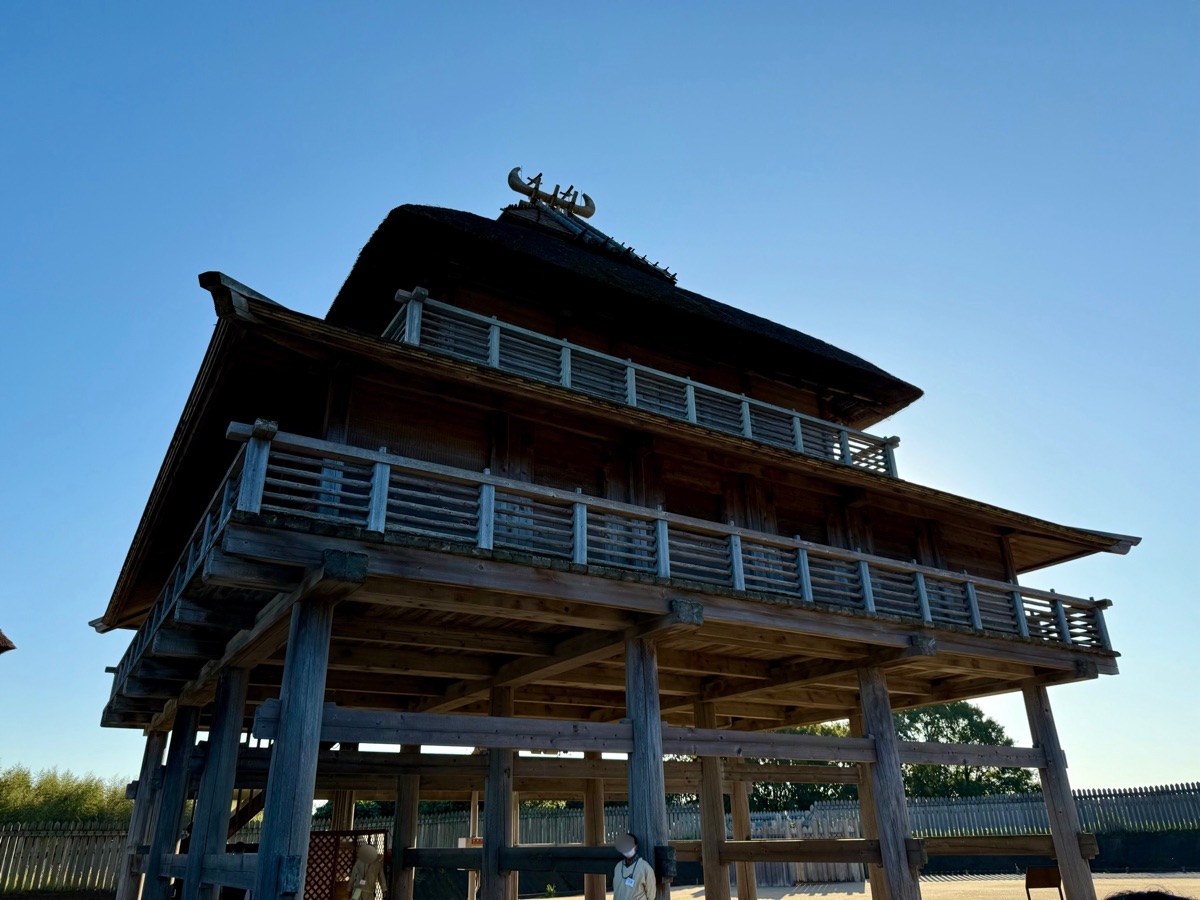
The building has 3 stories, and on the second floor there is a recreation of rituals held with the king and powerful leaders from the surrounding villages gathered together.
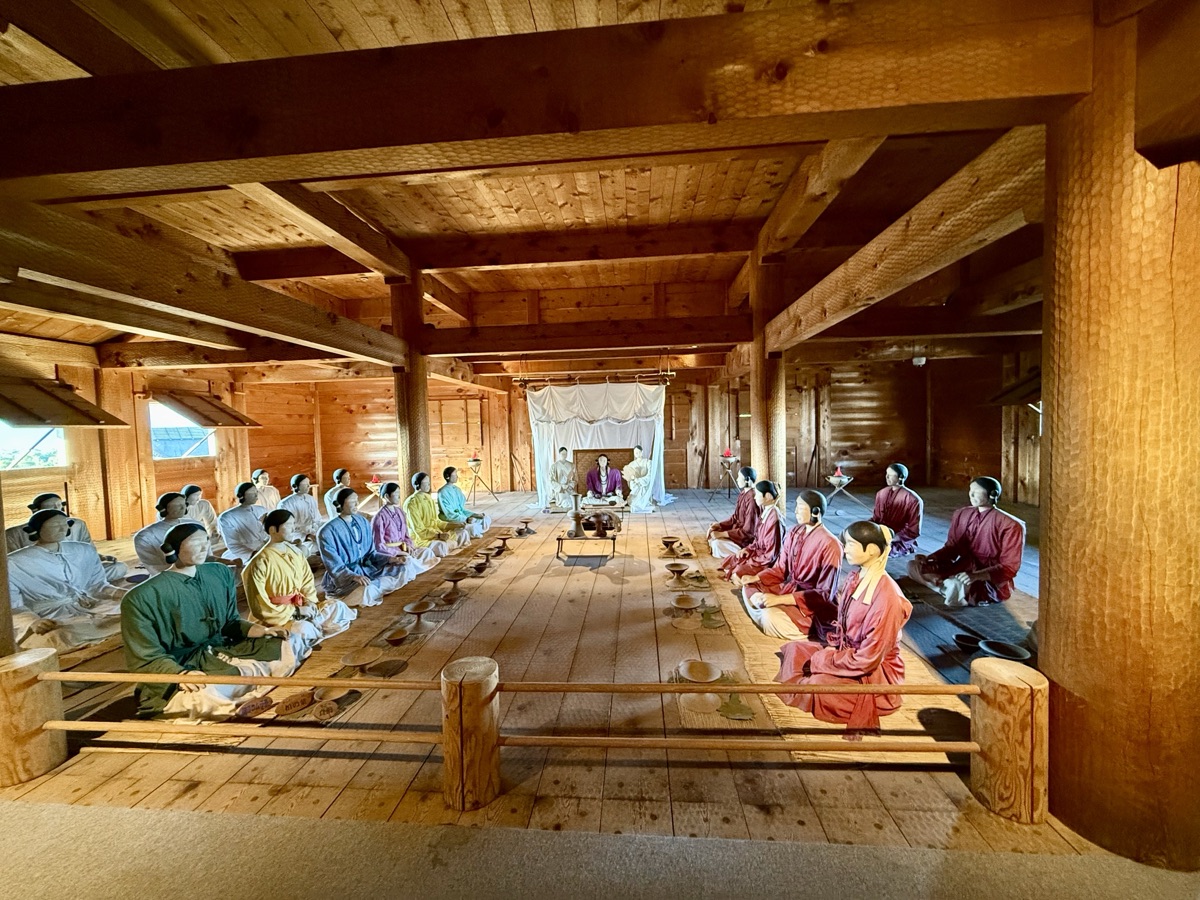
On the third floor above that, there is a recreation of a ritual in which a female shaman, the highest-ranking priestess, receives an oracle from ancestral spirits.
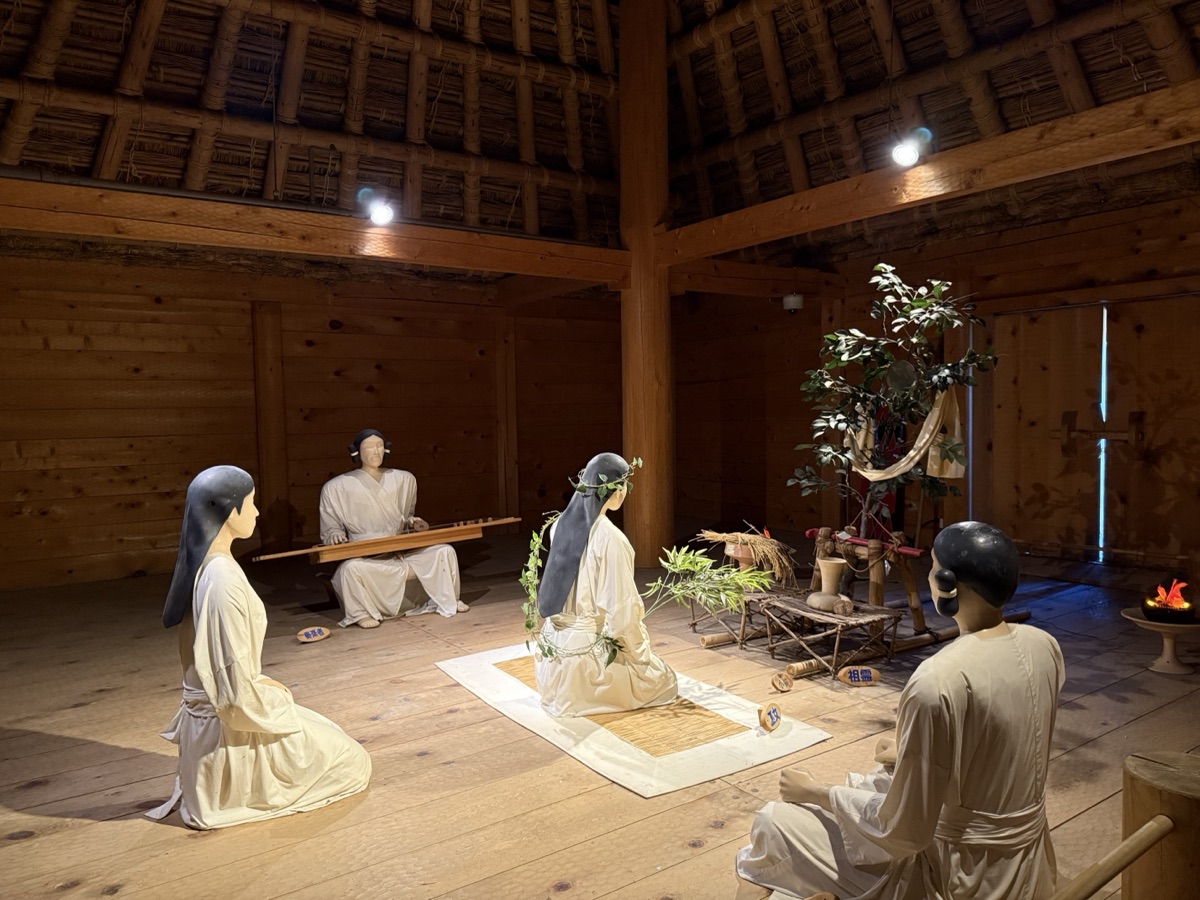
These scenes are said to represent the late Yayoi period (1st to 3rd century AD). I was amazed that such a sophisticated culture had already existed in such an early era.
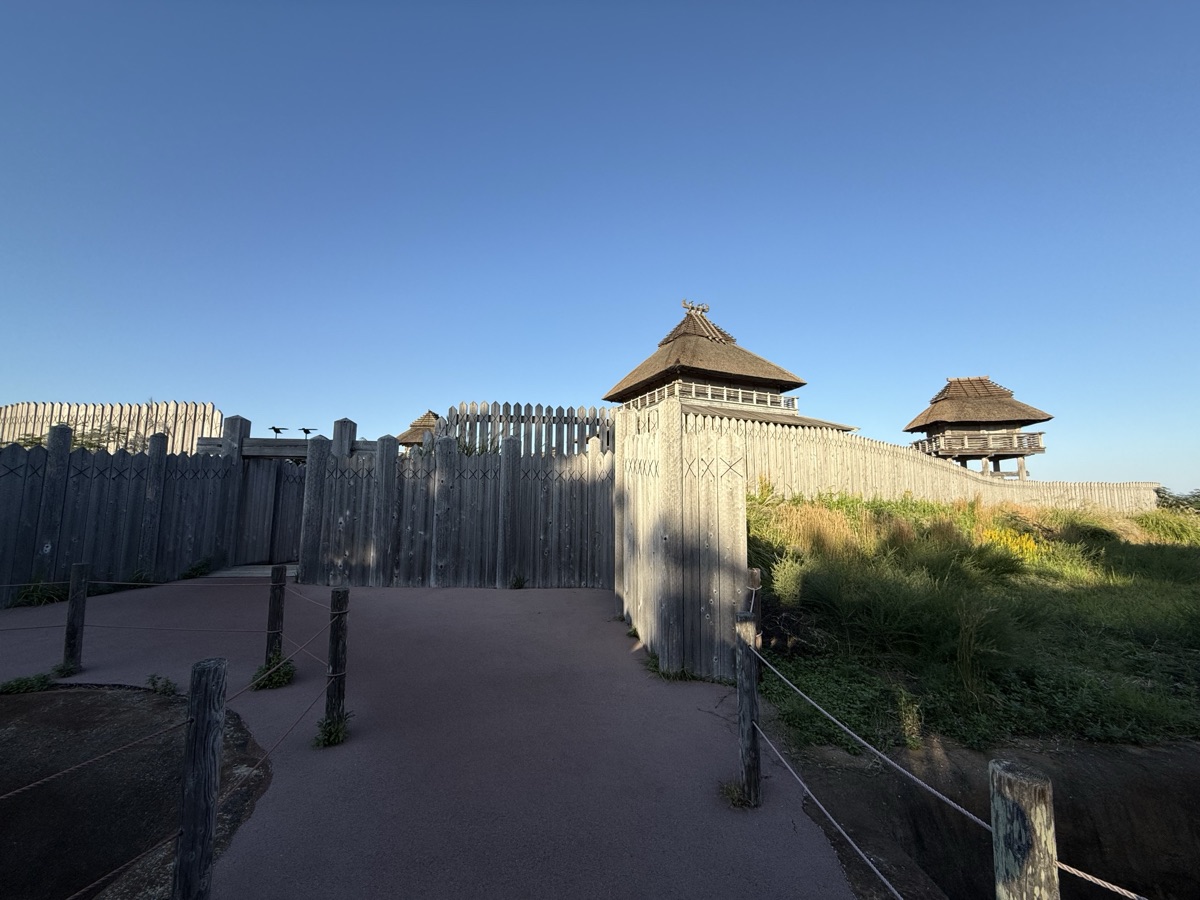
The building itself was far more impressive than I had imagined and very much worth seeing. I enjoyed Yoshinogari Historical Park more than I expected and left completely satisfied.




Comments