
Immerse Yourself in Tadao Ando’s World at the Hyogo Prefectural Museum of Art
Welcomed by a Frog
After finishing my curry, I took the Hanshin Main Line to Iwaya Station. From there, it was a short walk toward the sea to reach the Hyogo Prefectural Museum of Art.
Sitting amid Tadao Ando’s architecture is a giant frog. It’s a work by Florentijn Hofman, the artist famous for floating enormous yellow ducks in ponds and at sea.
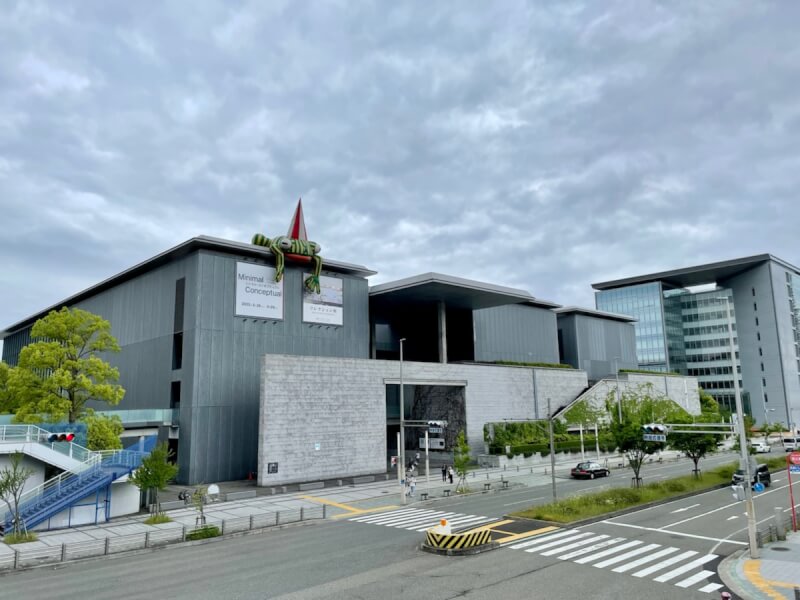
Compared with when it was first installed, it seems to have lost quite a bit of air and looks rather worn out now… lol
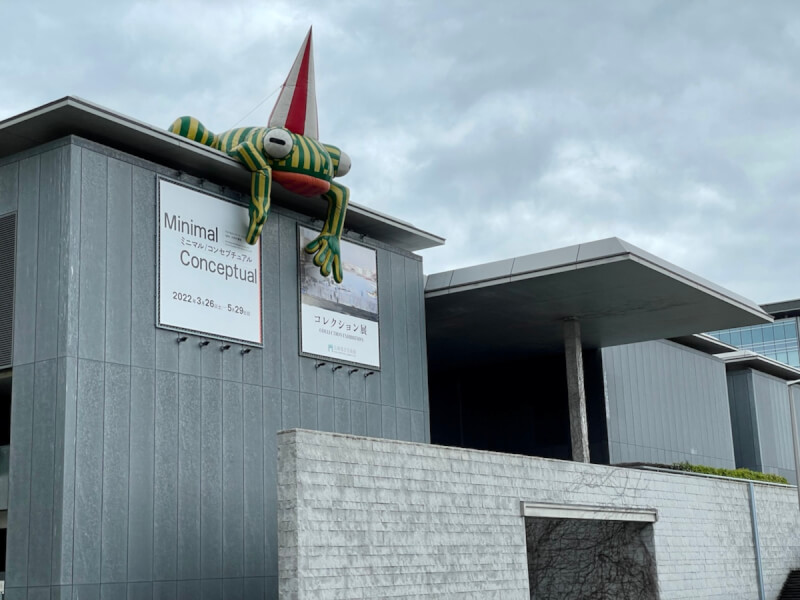
Here’s a reference link below where you can see what it looked like when it was first installed.
https://kiito.jp/project/mikaeru/
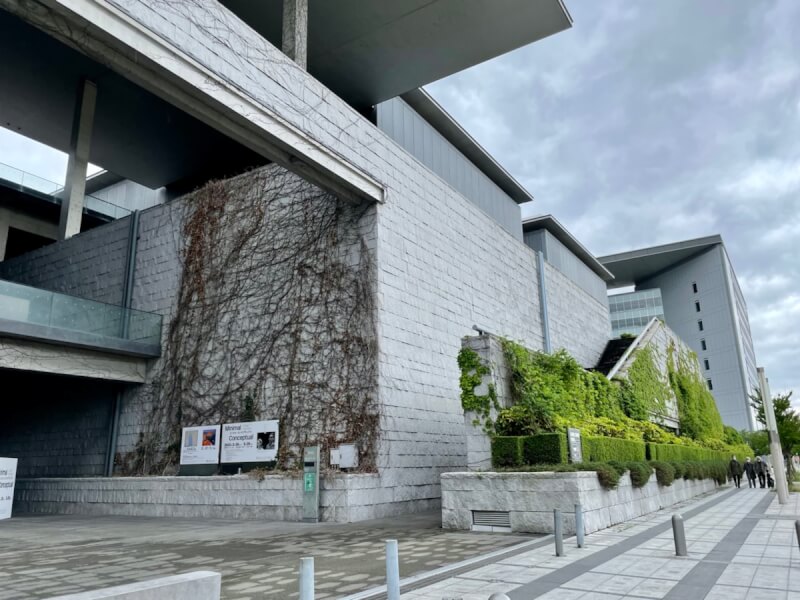
Now, let’s head inside. We begin with a classic feature of Ando architecture: a green wall. The contrast between the bare sections and the leafy ones is pretty striking.
As usual with Ando’s buildings, the interior is intricately laid out, almost like a three-dimensional maze. There isn’t really anything in particular going on, and with hardly anyone around, it feels very quiet.
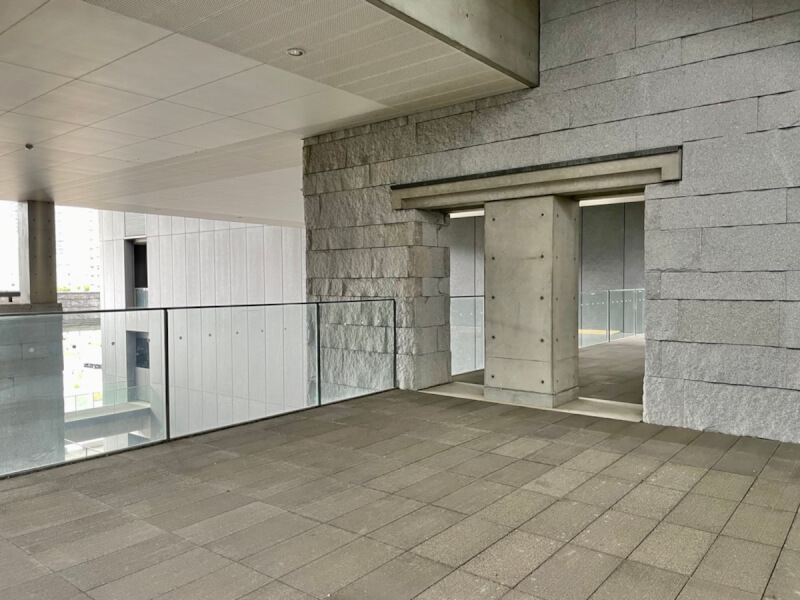
Before going indoors, I decided to explore the exterior first. So I headed to the seaside, on the opposite side from the route I’d taken from the station. Architecturally speaking, this seems to be the building’s main front.
Concrete and a Blue Apple
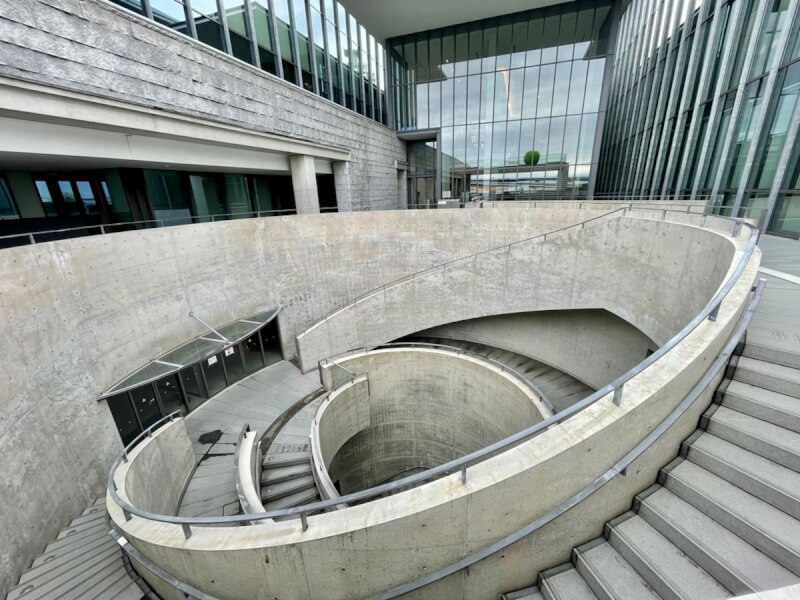
That huge opening is actually a giant staircase. This kind of boldness is part of what makes Ando architecture so appealing…
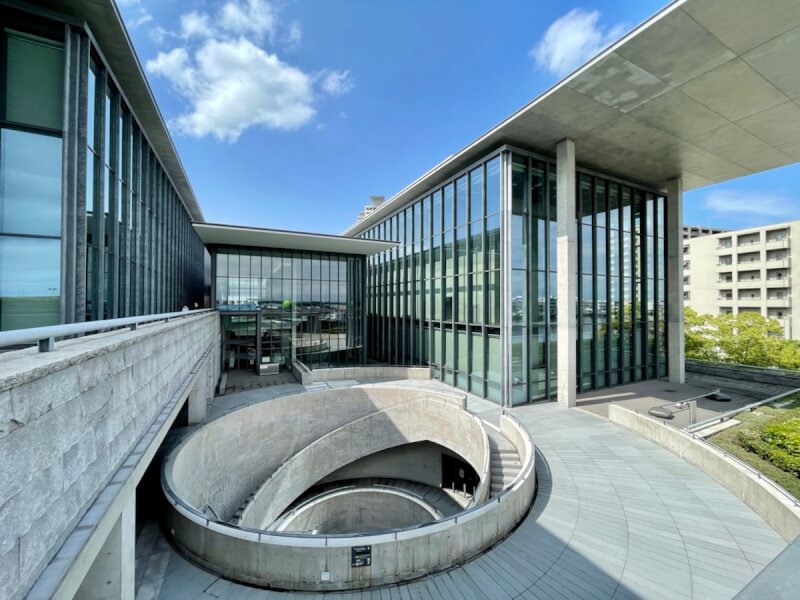
It forms a massive spiral. Pretty overwhelming—maybe?
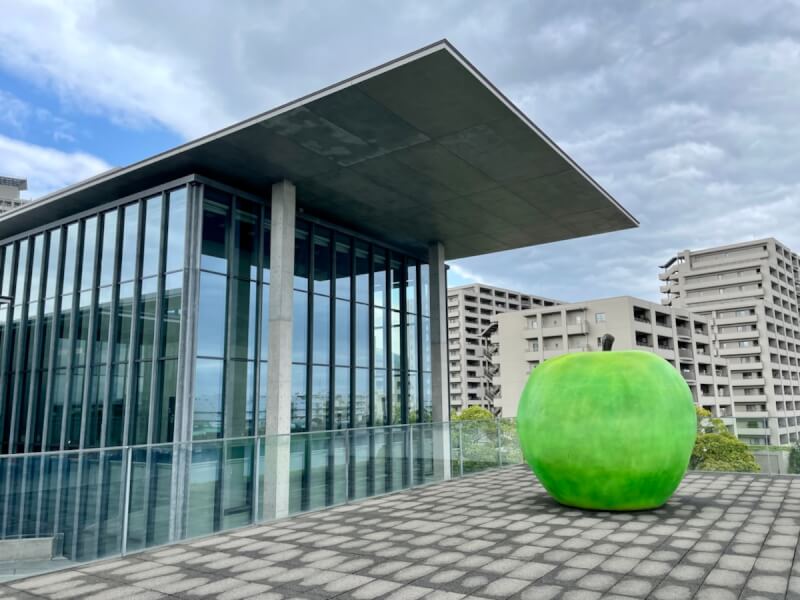
On the terrace facing the sea (?) sits a giant blue apple. Apparently, it was designed by Tadao Ando himself and represents a symbol of youth.
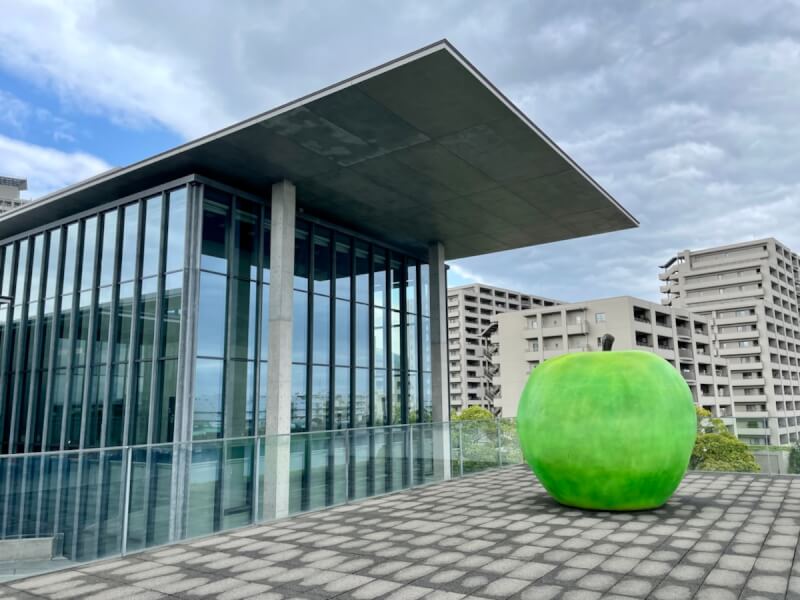
Some of you may be thinking, wait, haven’t I heard that somewhere before…? The same blue apple also appears at Nakanoshima Children’s Book Forest, which was donated by Tadao Ando. If you knew that already, maybe you’ve earned beginner level on the Tadao Ando proficiency test… lol
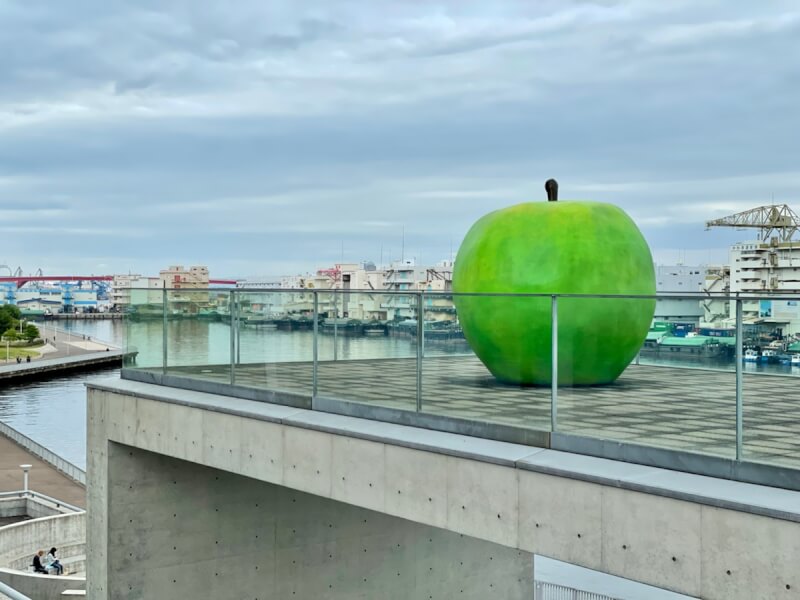
Before heading inside, I wandered around outside a bit more and came across a mysterious staircase…
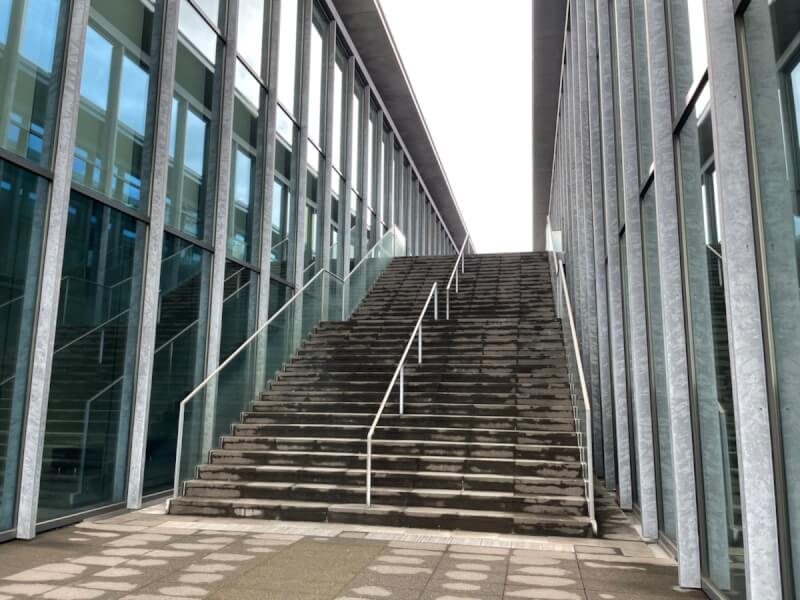
At the top was a wide open space. Apparently this area is called the Wind Deck. Fair enough—it definitely seems like it gets a good breeze.
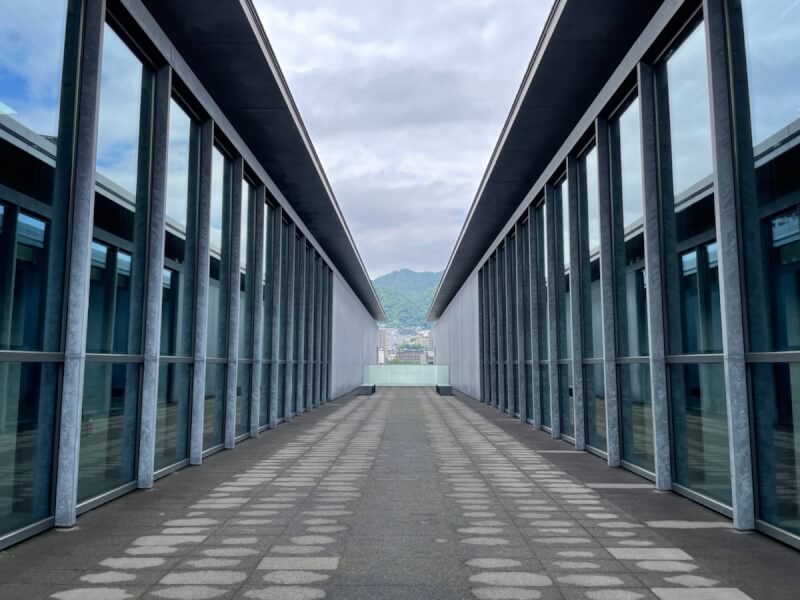
By the way, the place where I saw the blue apple earlier is apparently called the Sea Deck. And there’s also something called the Mountain Deck. (I didn’t visit that one.)
The Interior Is Interesting Too
After fully taking in the exterior, I finally headed inside. Expansive spaces. Concrete walls.
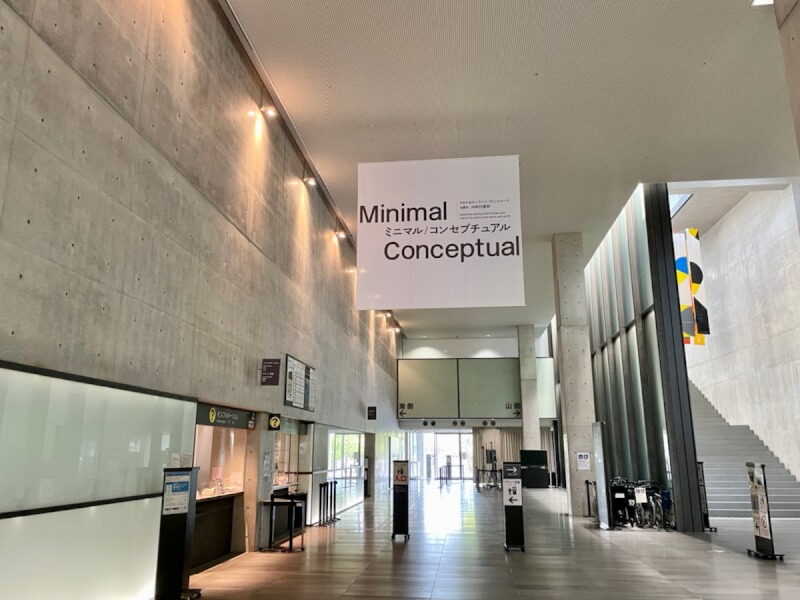
I put my belongings in a locker and made my way to the special exhibition gallery. The entrance to the gallery is, amazingly, at the top of a huge staircase…! It’s impressive to do something like this in a large public art museum. The building has incredible presence.
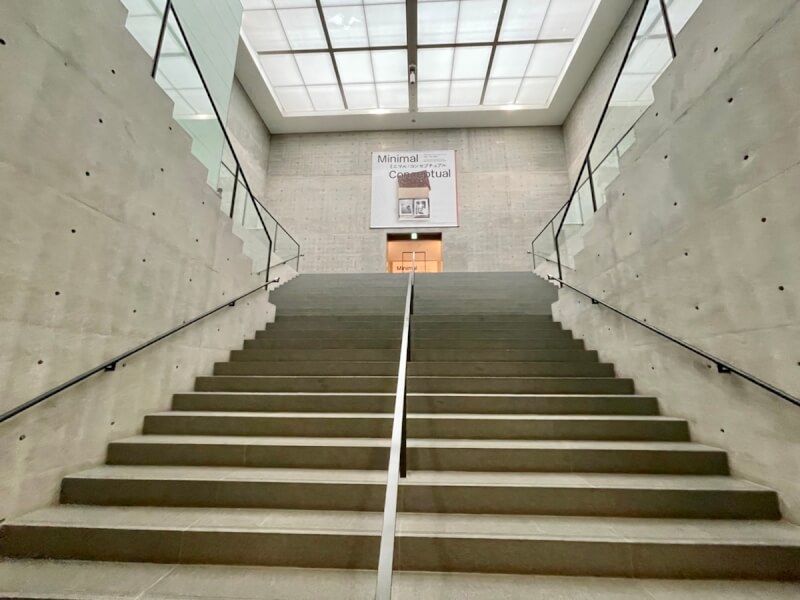
At the atrium by the entrance to the special exhibition gallery, natural light pours in from above and illuminates the exposed concrete.
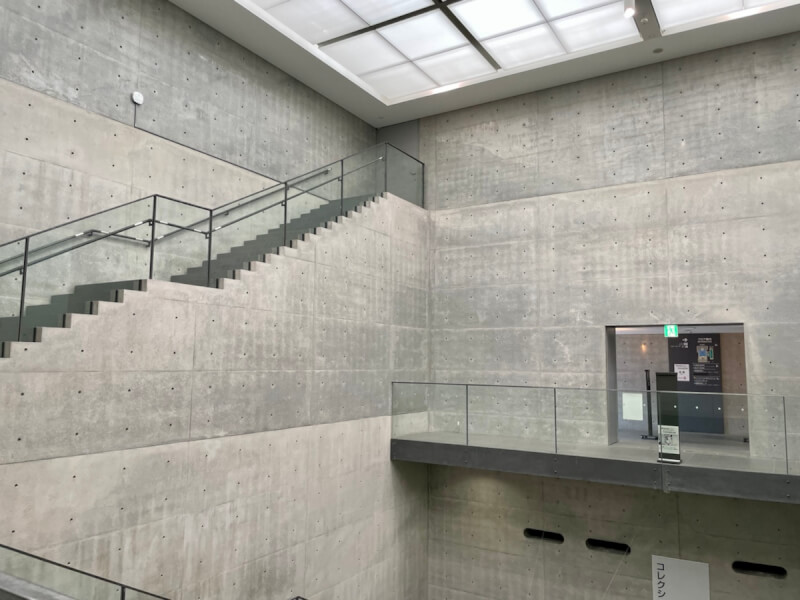
It’s not just one flat tone—there are subtle gradations, and I was really struck by how even exposed concrete can have its own expression.
The Free Ando Gallery
The Hyogo Prefectural Museum of Art also has a free room called the Ando Gallery, filled with Tadao Ando models and reference books.
There are bookshelves reaching all the way to the ceiling, and every single one is filled with books related to Tadao Ando. (There was a lot of debate about this at Children’s Book Forest, but Ando really does seem to love floor-to-ceiling bookshelves…)
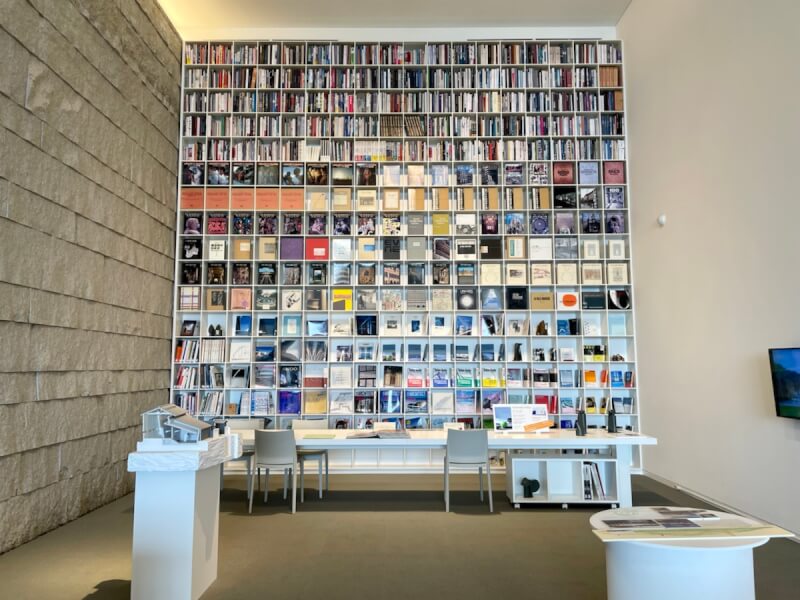
There are all kinds of architectural models as well. They include Hyogo-based works such as the Hyogo Prefectural Museum of Art, Awaji Yumebutai, and the Rokko Housing complexes.
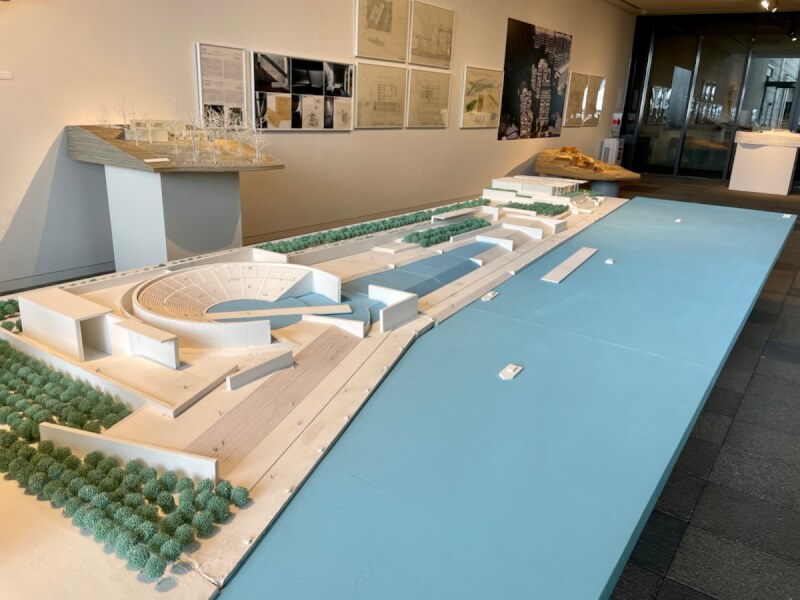
The model of the Hyogo Prefectural Museum of Art shows the building after the Ando Gallery extension, and the blue apple is properly included too.
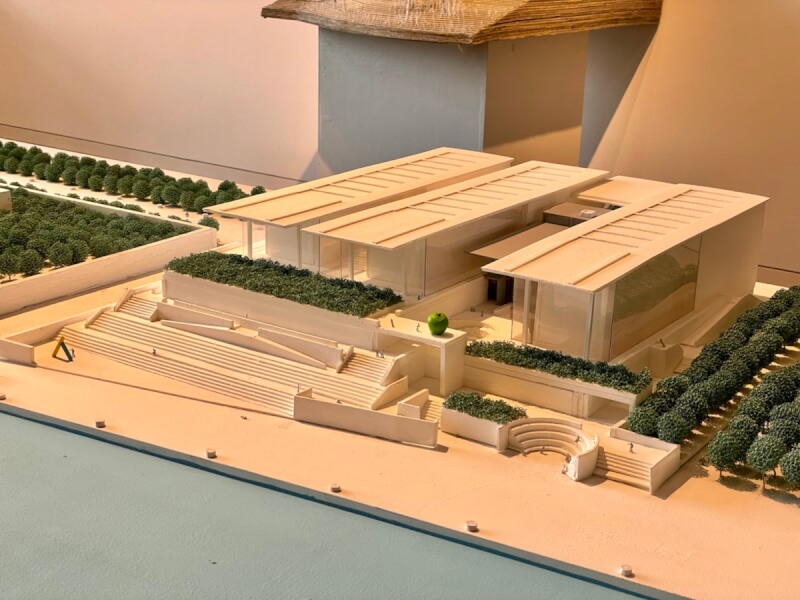
It’s a huge architectural model that also includes the neighboring Nagisa Park.
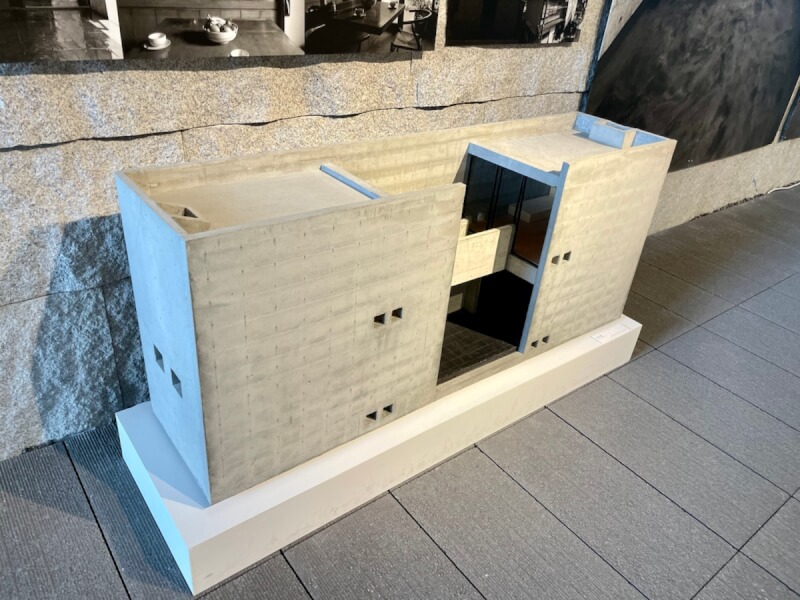
This one is a model of the Azuma House in Sumiyoshi, one of his best-known works.
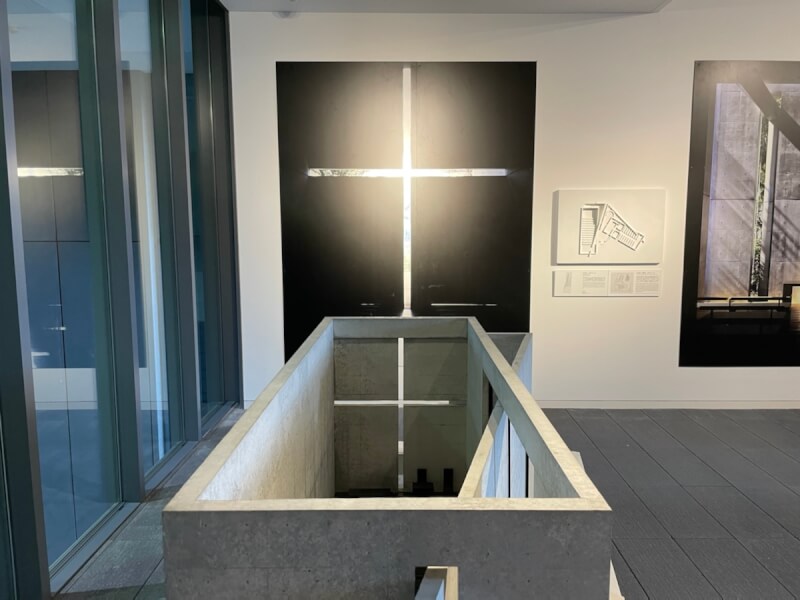
And this is a model of another iconic work, the Church of the Light.
This one is a model of the Bourse de Commerce, which recently opened in Paris. It’s a facility that repurposes an 18th-century grain exchange.
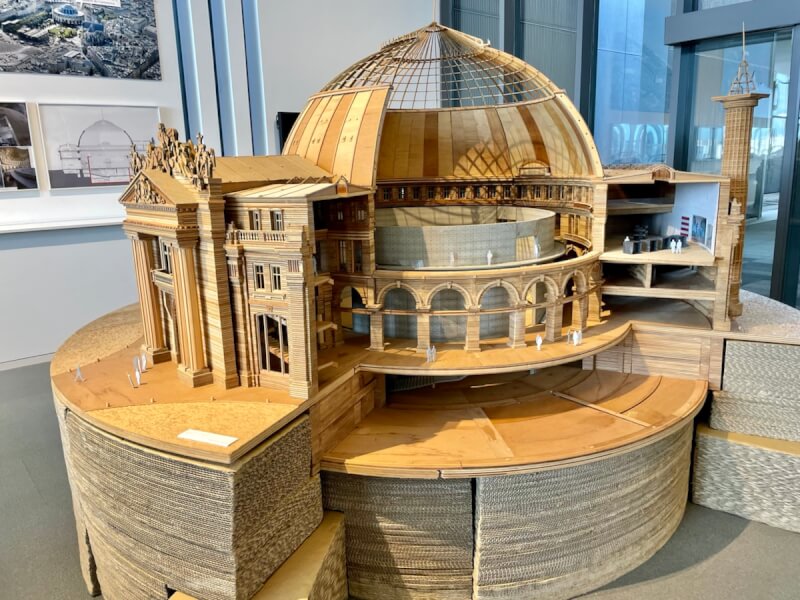
I’d love to go…
There was also a model of Honpukuji Water Temple, a temple on Awaji Island. It brought back memories of how incredibly far it was when I walked there from Awaji Yumebutai, lol.
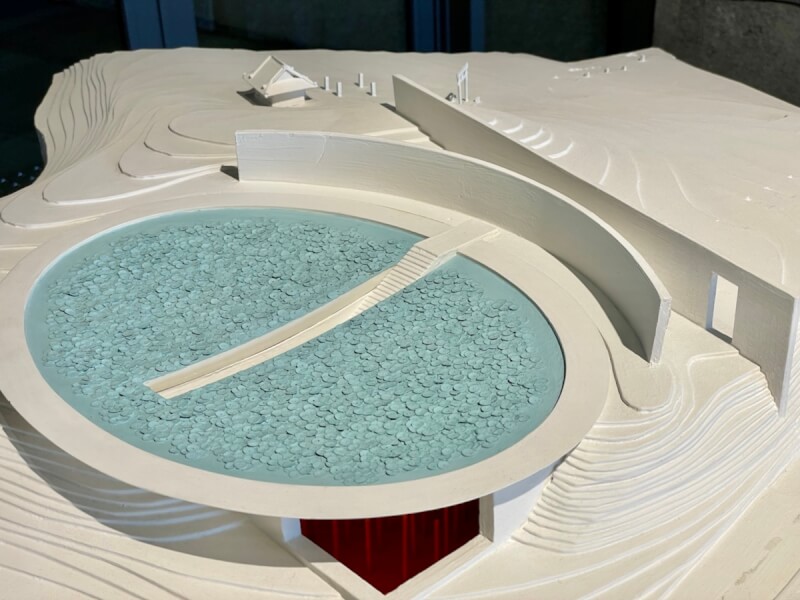
Here’s the travel post from that trip.
The Adjacent Nagisa Park Is Also Part of Tadao Ando’s World
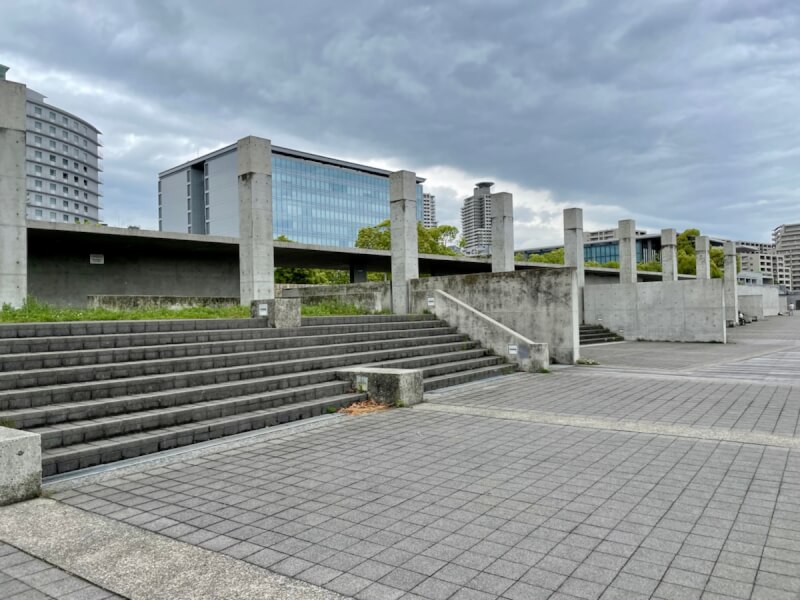
I decided to visit Nagisa Park as well, which I’d just seen in the architectural model. Right from the entrance, there’s this mysterious wall. You can tell immediately that this is not your average park, lol.
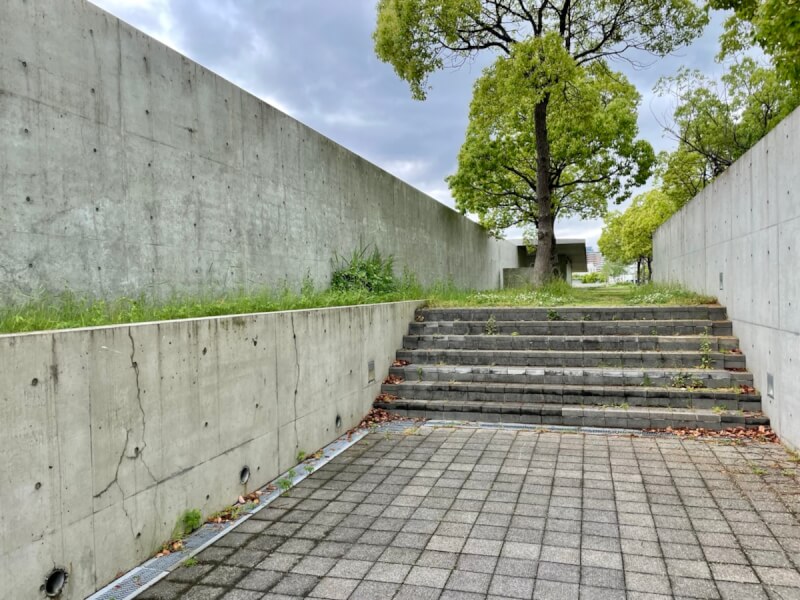
The park has restrooms, and in front of them stands a line of curious pillars stretching evenly into the distance.
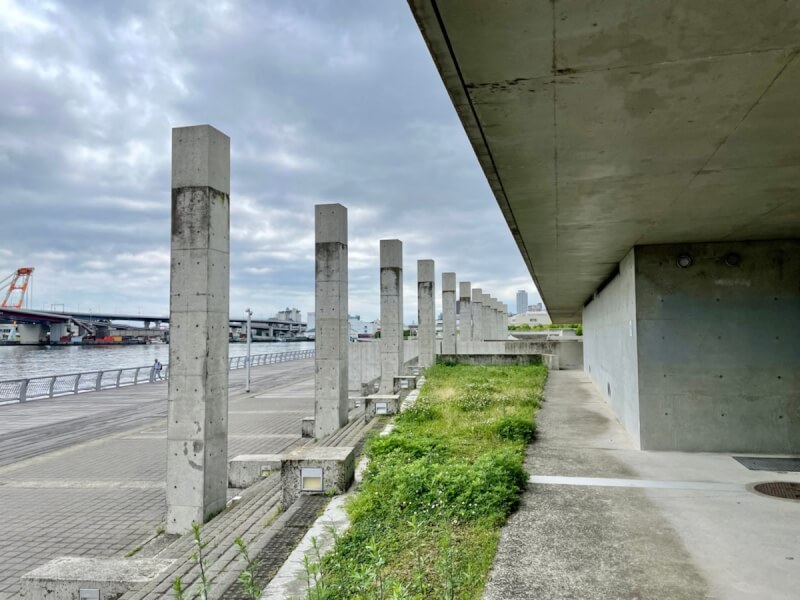
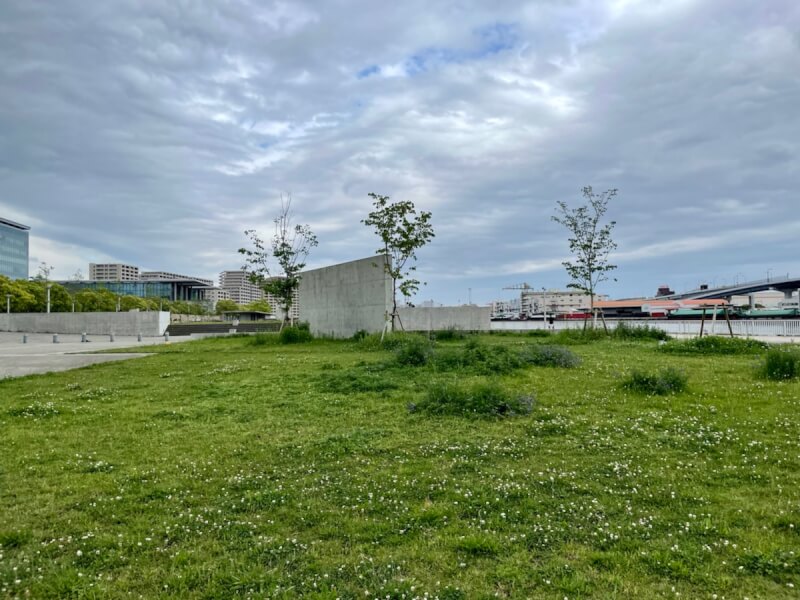
Greenery, concrete, sky, and sea. It’s a quiet park with hardly anyone around.
This is what those concrete pillars look like from the seaside. It absolutely radiates Ando-ness.
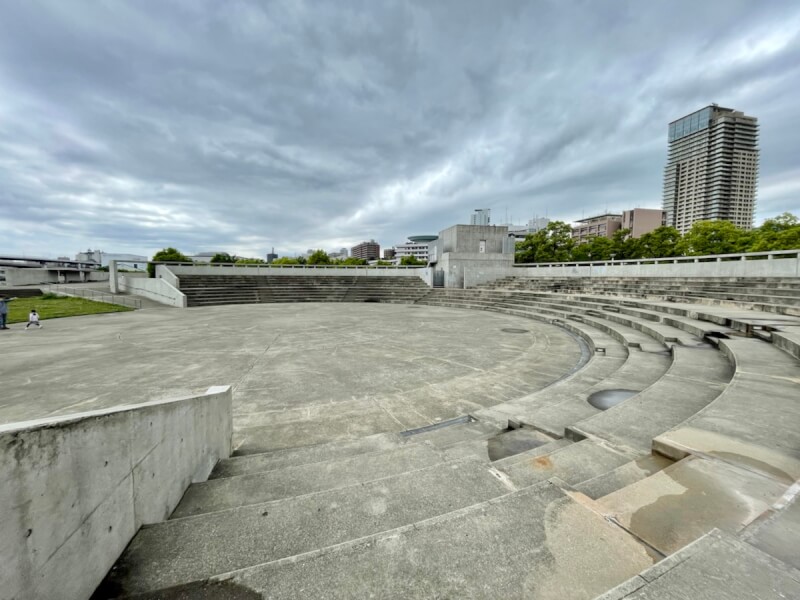
At the far end of the park from the museum, there’s a circular stage. There’s also a circular stage at Awaji Yumebutai, so maybe it’s just something he likes…

Comments