
Another Space for Prayer
It Stands in Hiroshima Peace Memorial Park
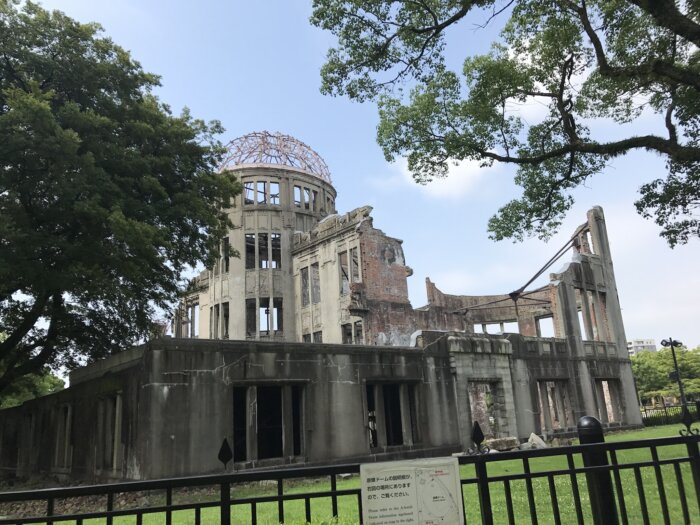
The other piece of architecture I want to share is in Hiroshima Peace Memorial Park, home to the Atomic Bomb Dome.
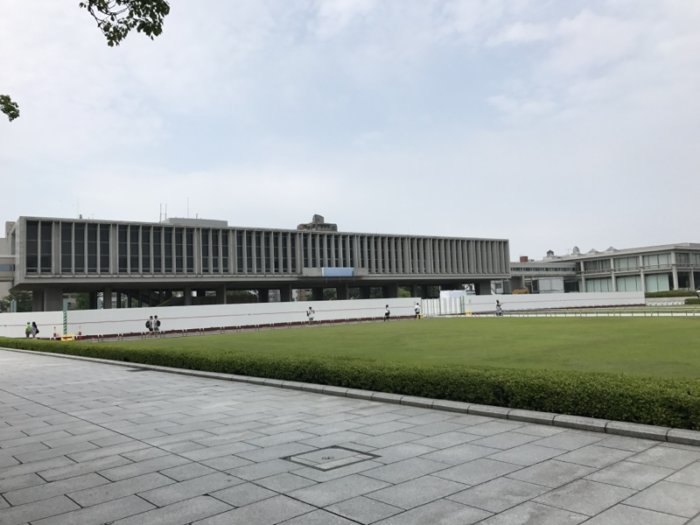
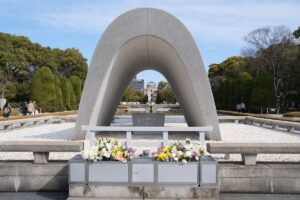
Hiroshima Peace Memorial Park was designed by Kenzo Tange, one of Japan’s greatest architects. The most famous building there is probably the Hiroshima Peace Memorial Museum (in the background of the photo), with its exhibition facilities, but…

That’s not the one I’m introducing here, though of course I went there too! The one I want to share is the National Hiroshima Memorial Hall for the Atomic Bomb Victims. Quite a long name!
This facility preserves the names of those who lost their lives, among other records. The following is from the official website.
The National Memorial Hall for the Atomic Bomb Victims was established by the state in Hiroshima and Nagasaki, the cities affected by the atomic bombing, to commemorate the precious sacrifice of those who died, to express mourning, and to pray for lasting peace.
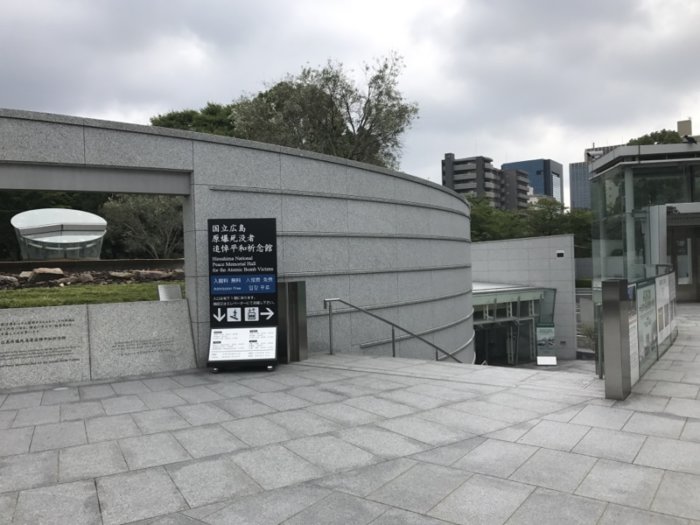
This building was also designed by Kenzo Tange, who created Peace Memorial Park. It was completed in 2002, so it was built much later. Since Tange passed away in 2005, this was one of his very late works.
Most of the building is underground, so it doesn’t stand out much within the park and feels very quiet. Some people might not even notice it.
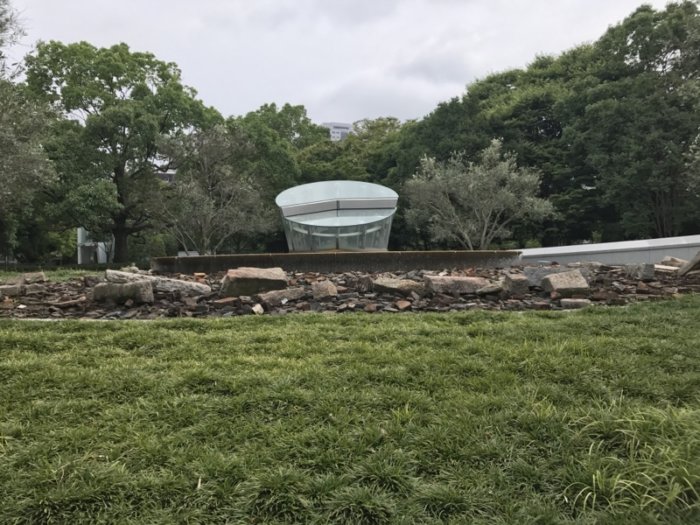
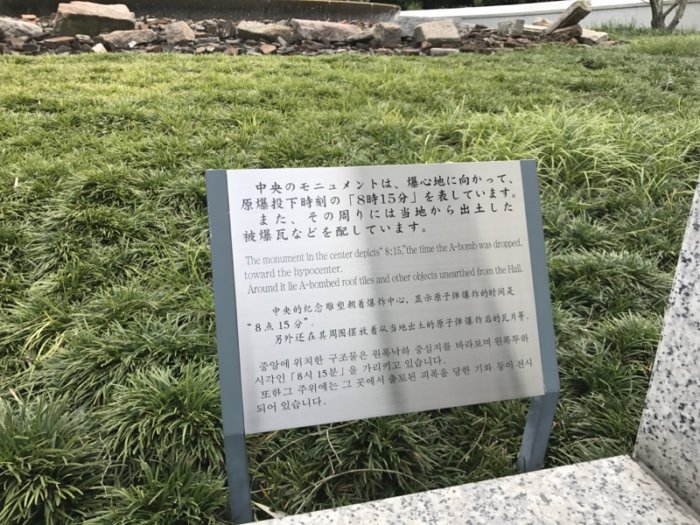
This object visible from outside the building represents 8:15, the time when the atomic bomb was dropped. “Time” is one of the key motifs of this facility.
Now, Let’s Go Inside
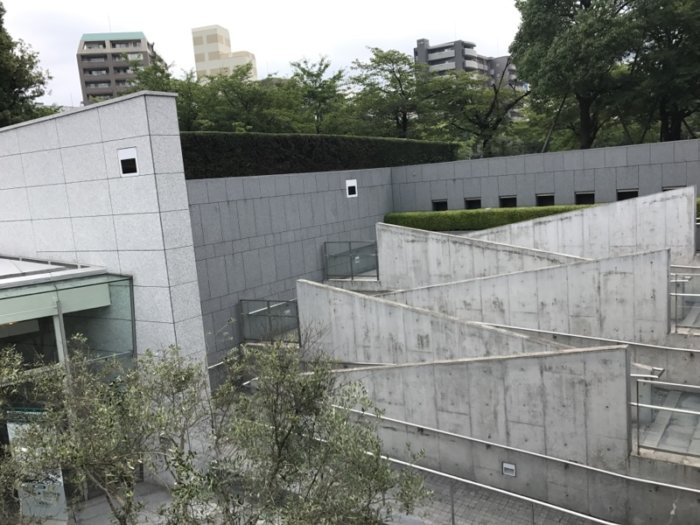
The entrance is on the first basement level, so you head down by stairs or by ramp. And that grand, imposing wall along the ramp… I absolutely love it, haha.
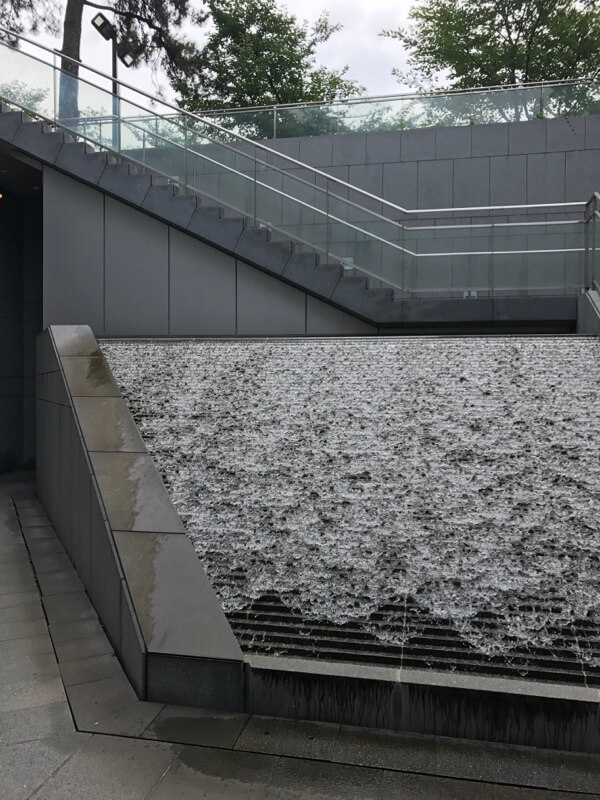
Water flows down toward the entrance. It isn’t just visually beautiful—used like this, the sound of the water becomes a very effective part of the experience. Water is the second key motif of this facility.
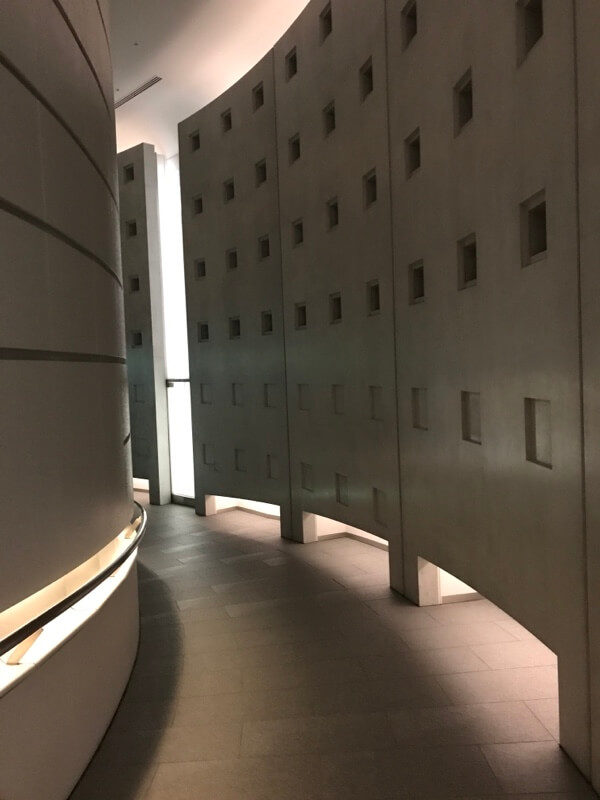
The main space in the facility is a room called the Peace Memorial Hall, but before reaching it, you continue down to a lower level along a counterclockwise ramp. I’ve read that this is meant to evoke turning back time. So here the time motif appears for the second time.
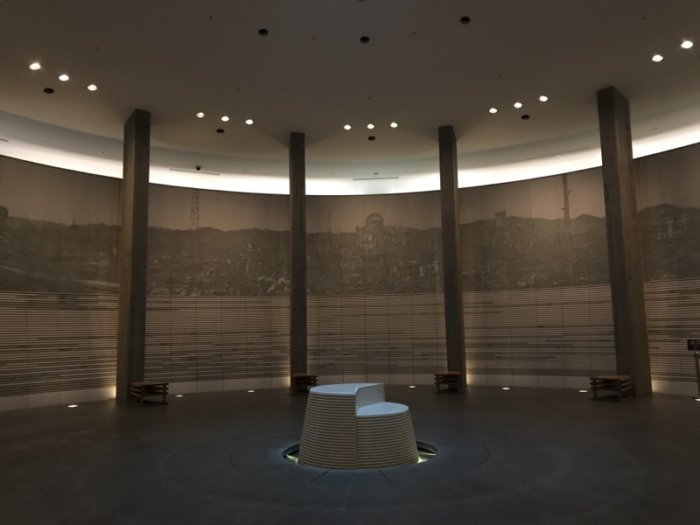
And this is the space you arrive at after descending that “ramp that goes back through time”: the Peace Memorial Hall. On the walls is a view of Hiroshima just after the bombing, and in the center is the same object representing 8:15 that I mentioned outside.
Yes—this is 8:15 on August 6, 1945, the moment the atomic bomb was dropped.
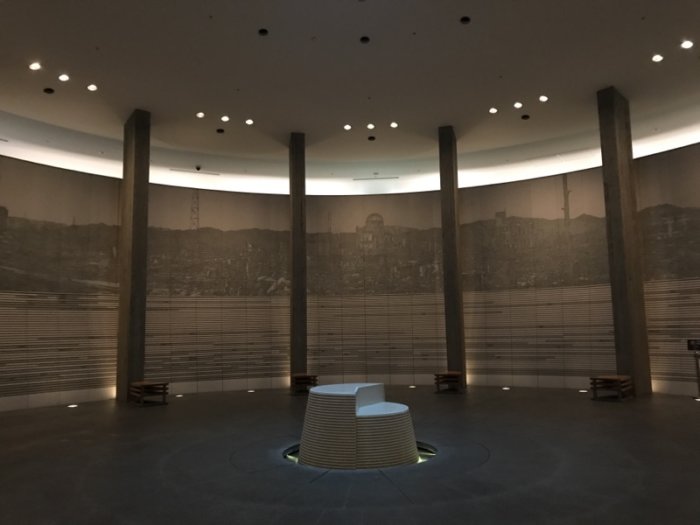
Water flows from the object, and I’m told it is offered “in memory of the atomic bomb victims who died seeking water.” In the quiet space, the sound of the water echoes. I also learned that this image of Hiroshima is made from the same number of tiles as the number of people who had died from the bombing by the end of 1945—about 140,000. (Source for both.)
I’m sorry I can’t express it better, but I was truly struck by the way the architecture unfolds as a story. If you visit Hiroshima Peace Memorial Park, I really hope you’ll step into the National Memorial Hall for the Atomic Bomb Victims as well. Admission is free.


Comments