
Let’s Visit Dazaifu Tenmangu
An Extremely Crowded Approach
After breakfast at our hotel in Hakata, we set out for a day of sightseeing. Our first destination was Dazaifu Tenmangu.
We drove there from Hakata, but the traffic along the way was terrible, so it took much longer than expected to arrive….
There were no parking spaces available either, and we only just managed to park in a lot set up on someone’s residential property.
Once we got out of the car and started along the approach, we found an enormous crowd there too.
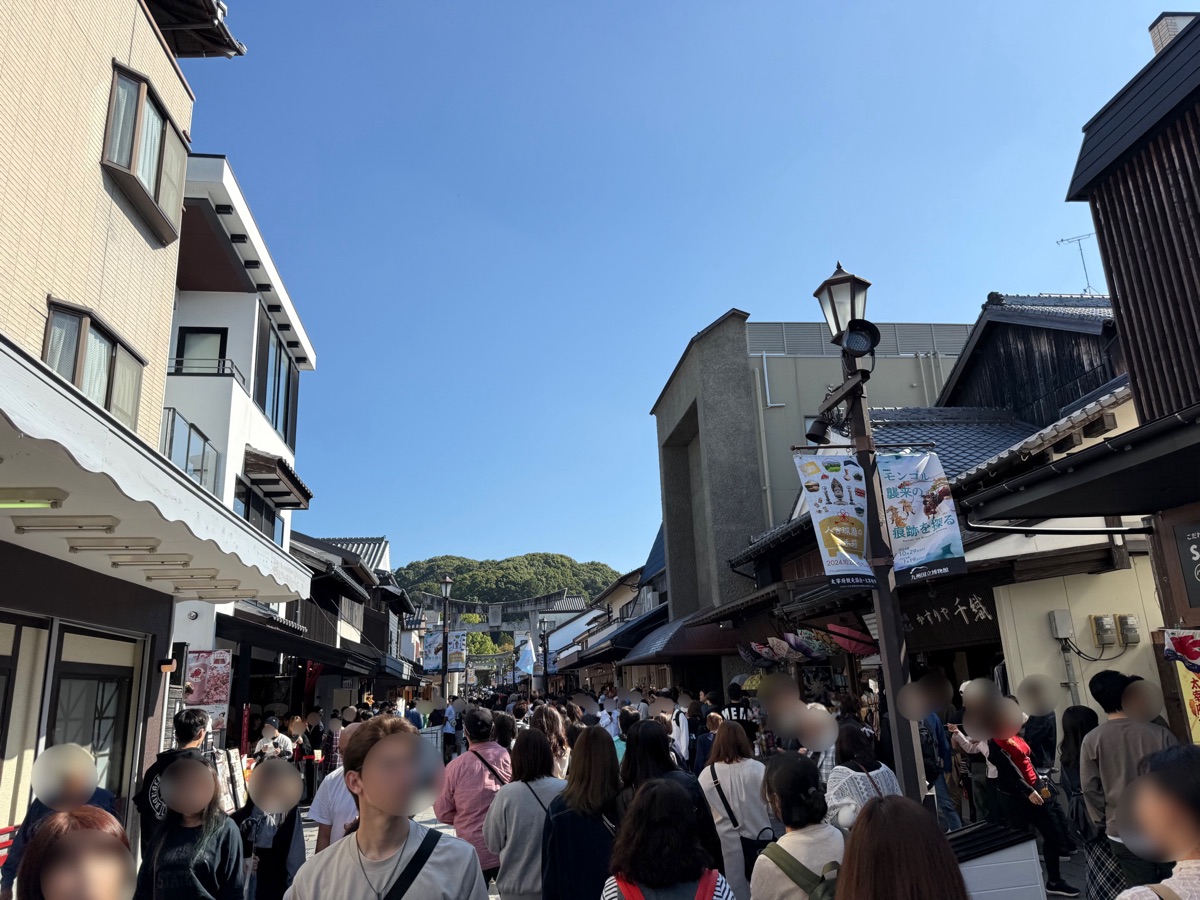
There were also many tourists who seemed to be from Korea and Taiwan, which really made me feel that Dazaifu Tenmangu is a popular destination for people from across Asia as well.
Umegae Mochi at “Yasutake”
On the way to Dazaifu Tenmangu, we decided to try the umegae mochi at Yasutake.

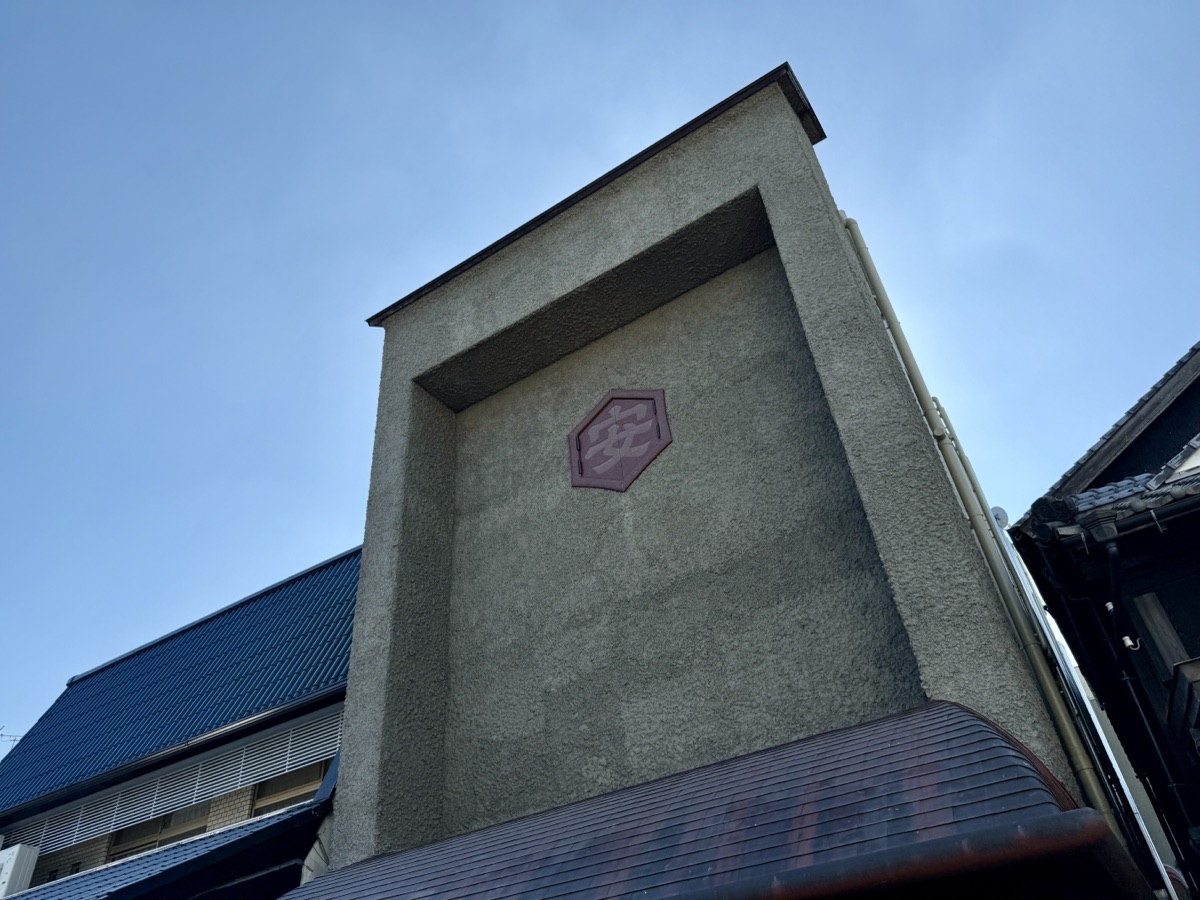
The shop made use of an old building while giving it a very modern renovation, so it really stood out.
Through the glass, I could watch the staff skillfully grilling the umegae mochi.
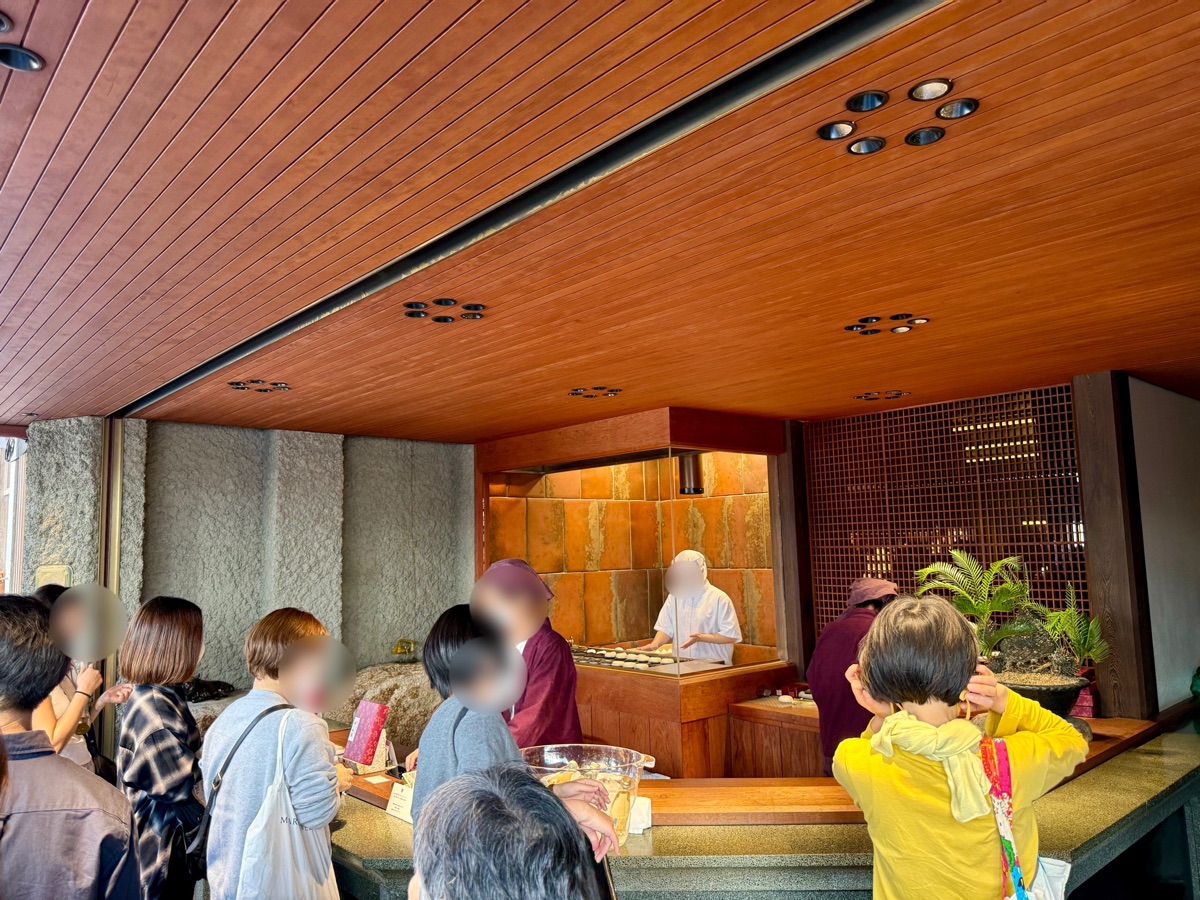
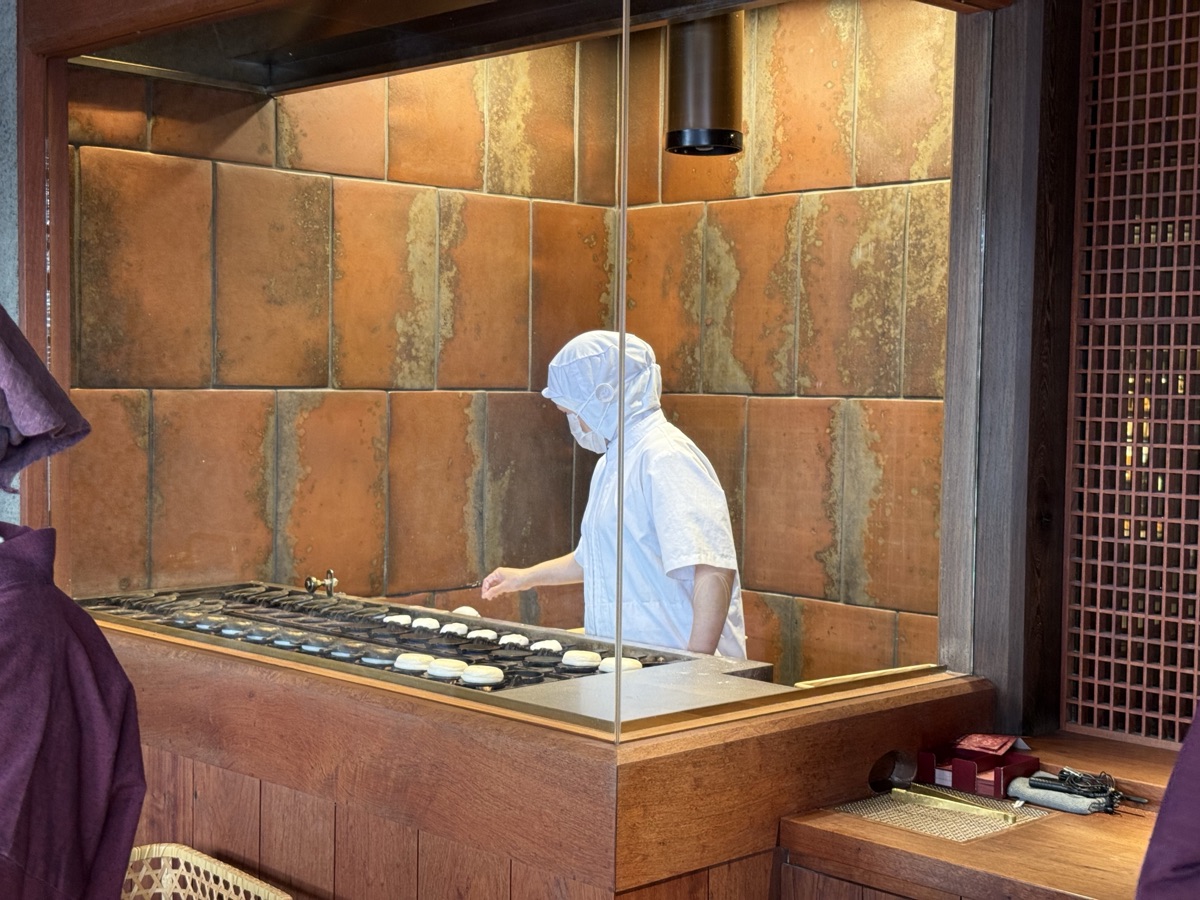
The freshly cooked mochi were passed through a small opening to the sales counter, and it was fun to watch them come through.
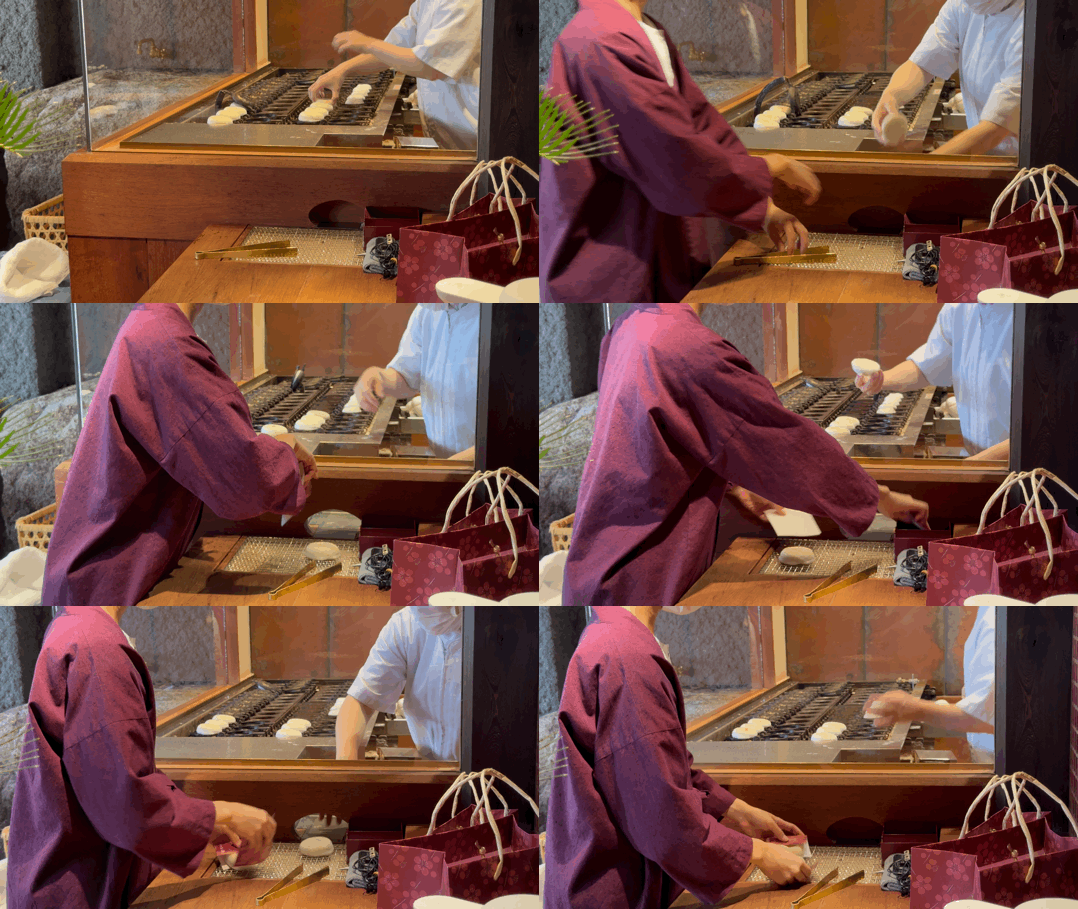
The freshly made mochi were extremely hot, and I slightly burned my tongue, but they were absolutely delicious.
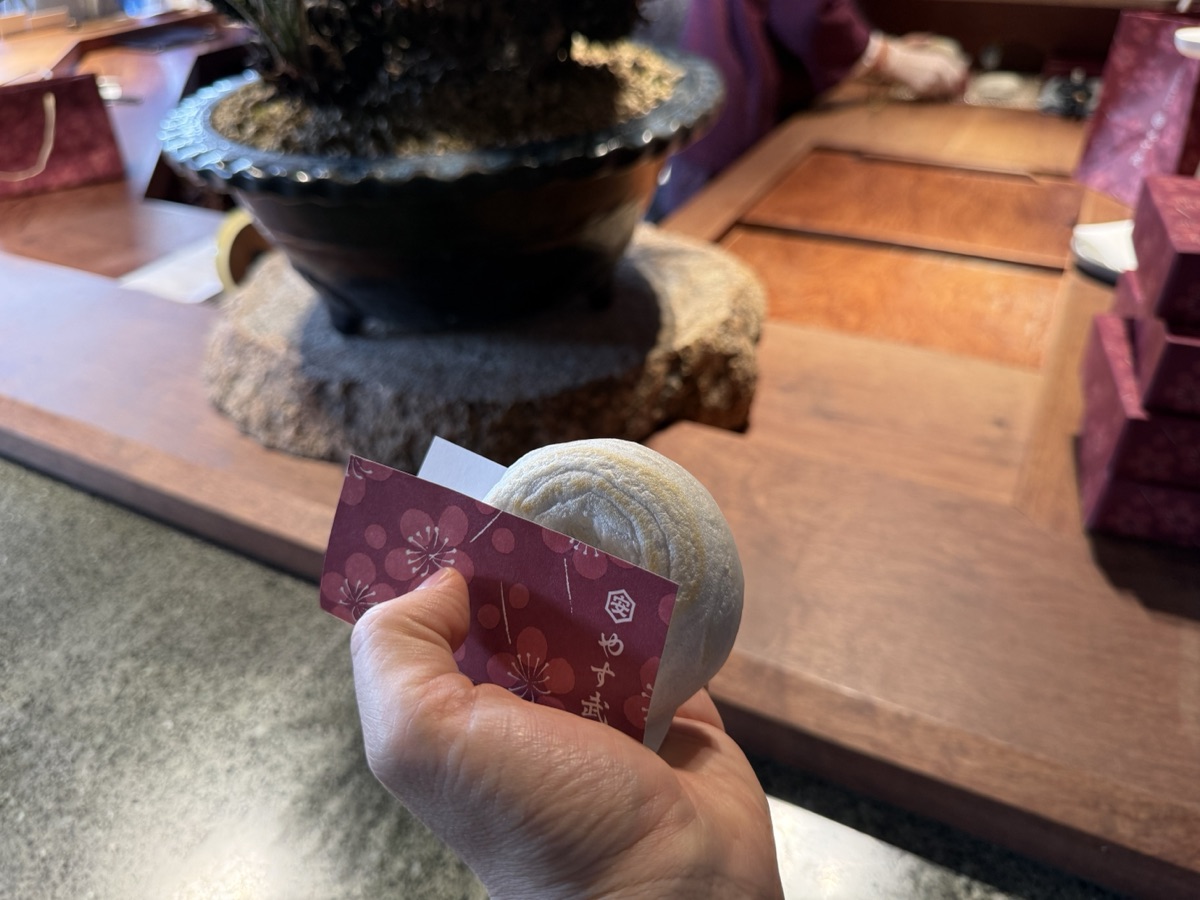
There are more than 30 umegae mochi shops along the approach, so it’s hard to decide where to buy them.
That Architect-Designed Starbucks
Very close by, there’s a famous Starbucks Coffee location. It’s known as a work by the celebrated architect Kengo Kuma.
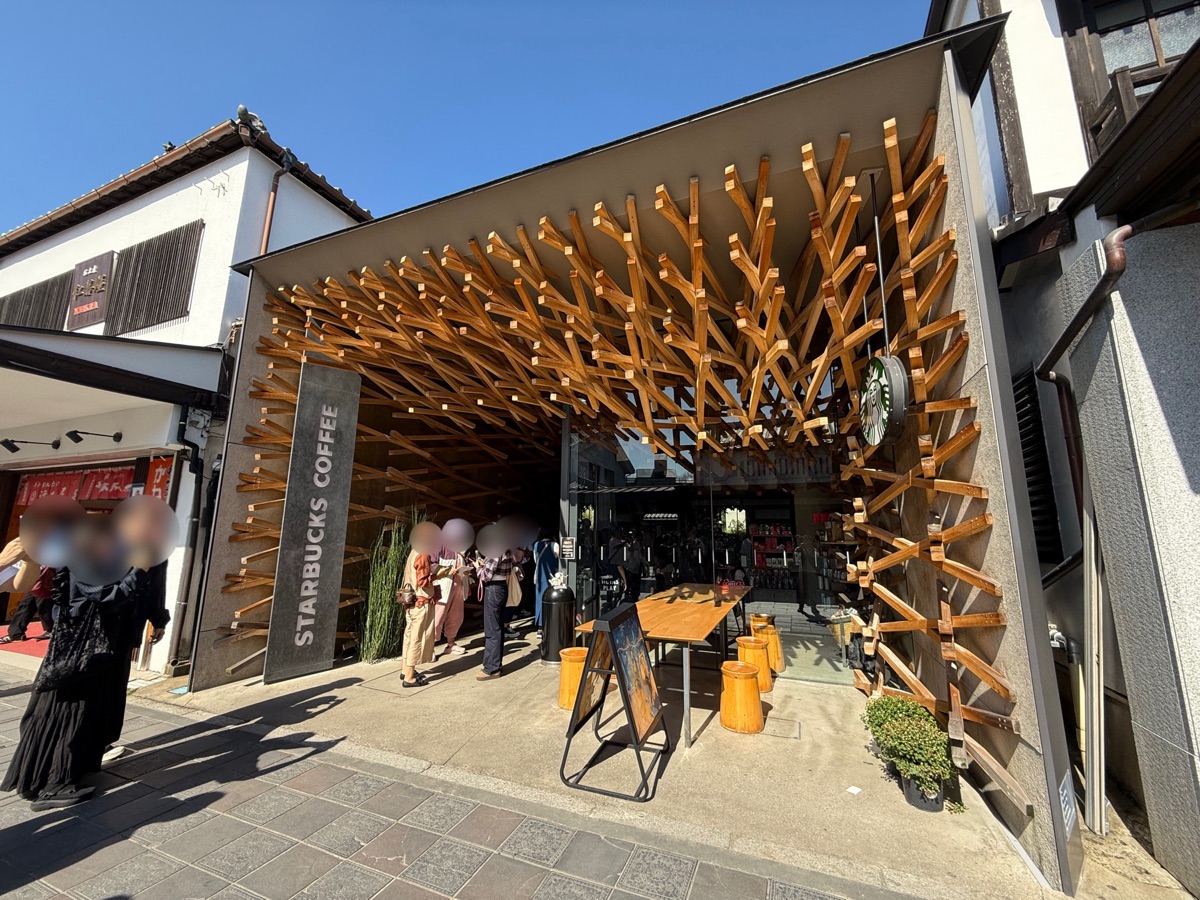
There were lots of overseas visitors taking commemorative photos in front of the store!
Only Visible Now! Amazed by the Temporary Shrine
Paying My Respects at the Lush Green Temporary Shrine
Given how crowded the approach had been, the shrine grounds were of course packed as well. It was only when I got there that I realized there were especially many families visiting for Shichi-Go-San at this time of year.
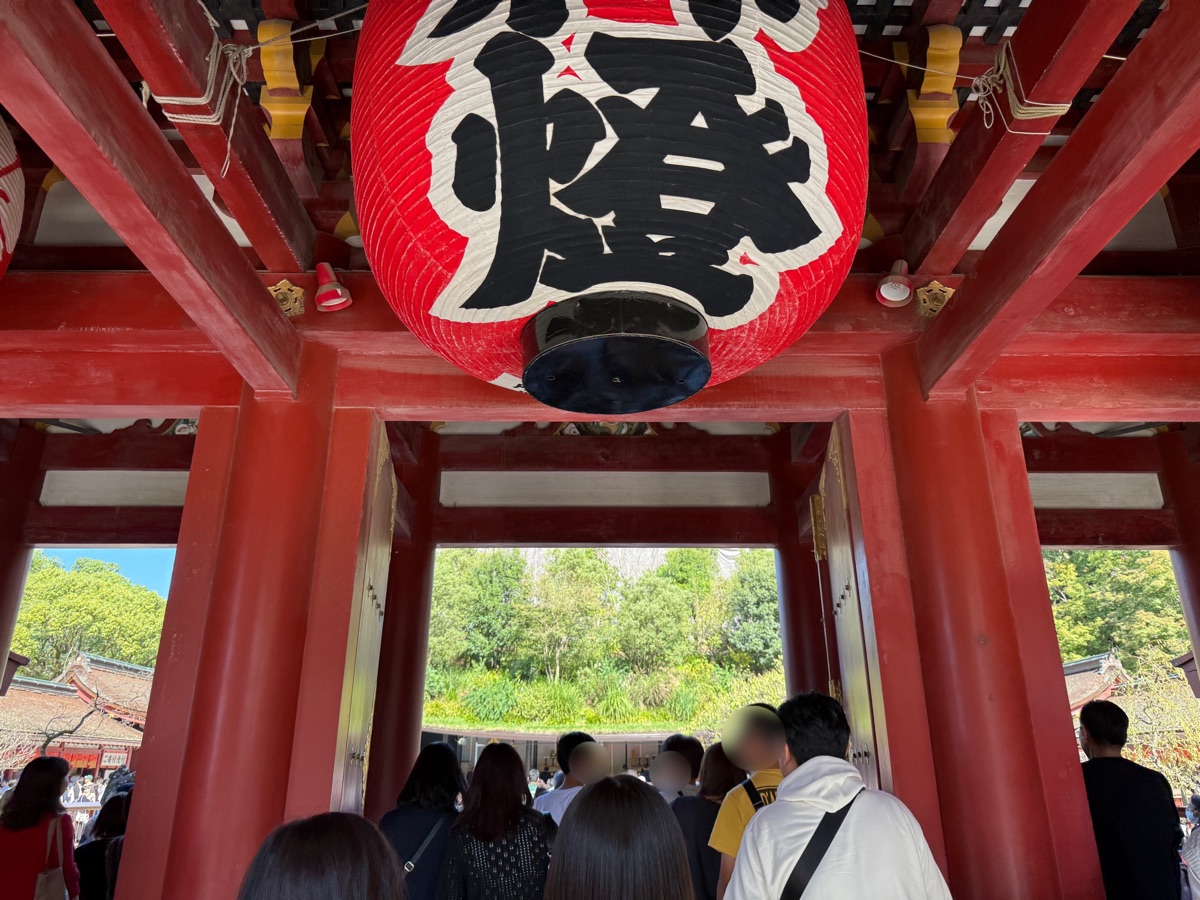
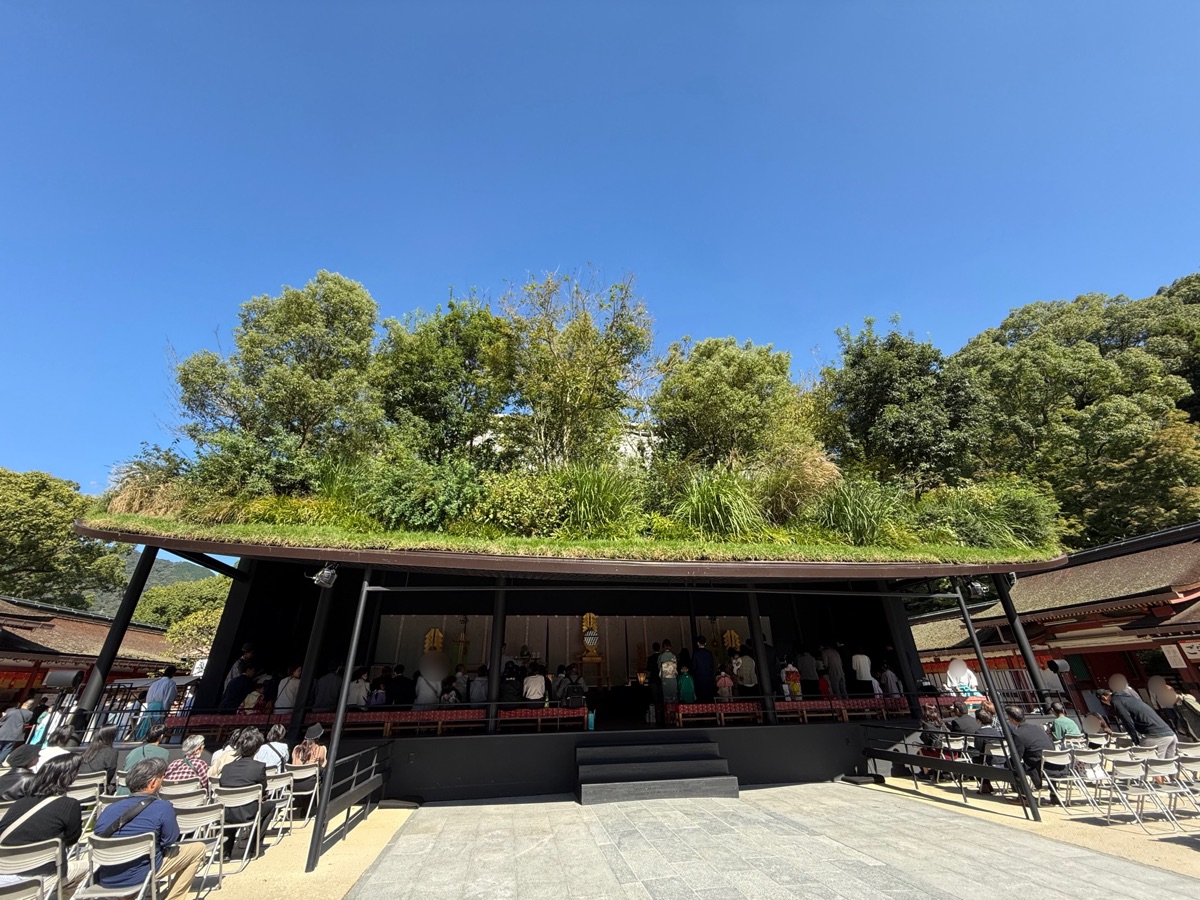
The main shrine building of Dazaifu Tenmangu is currently undergoing major renovation work, so the temporary shrine built in front of it serves as the place of worship.
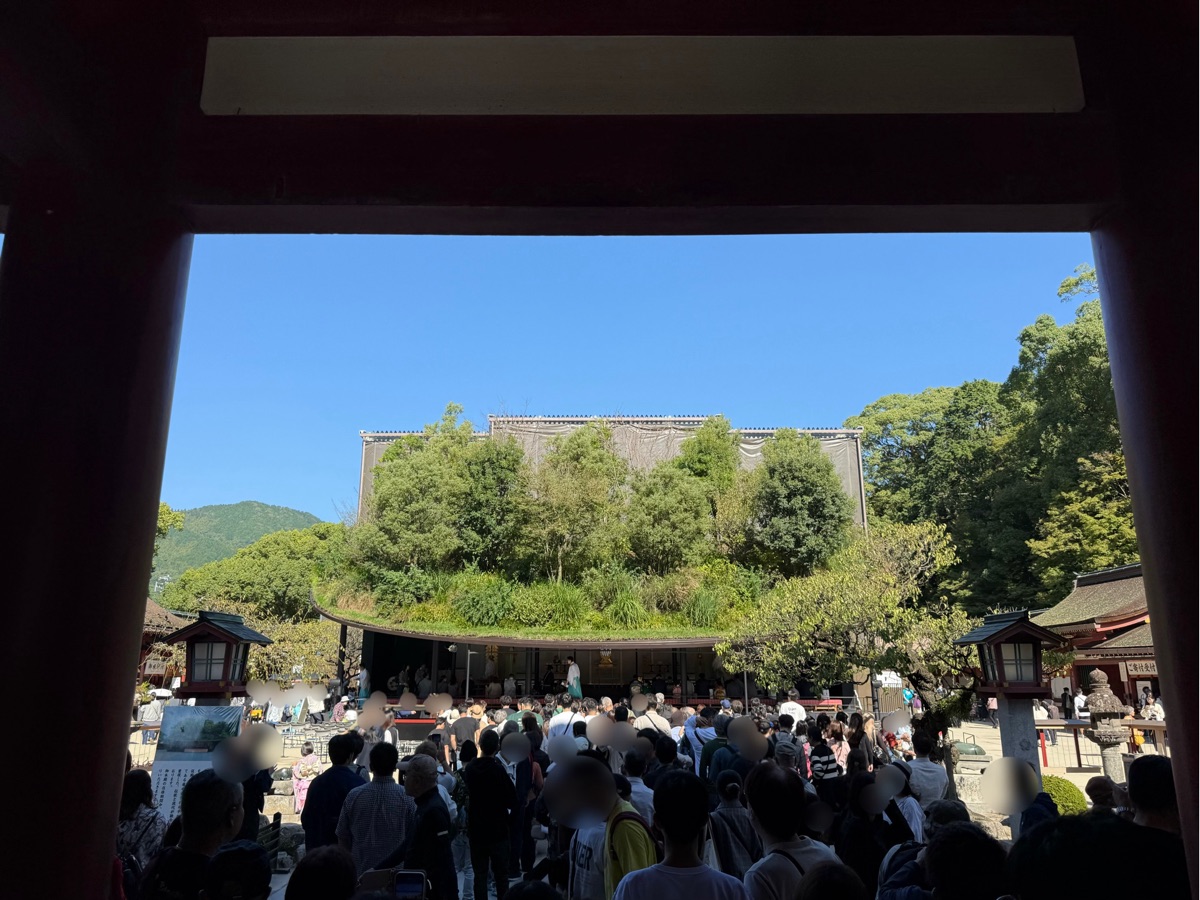
This temporary shrine is not just a simple provisional structure—it is a work by the architect Sou Fujimoto.
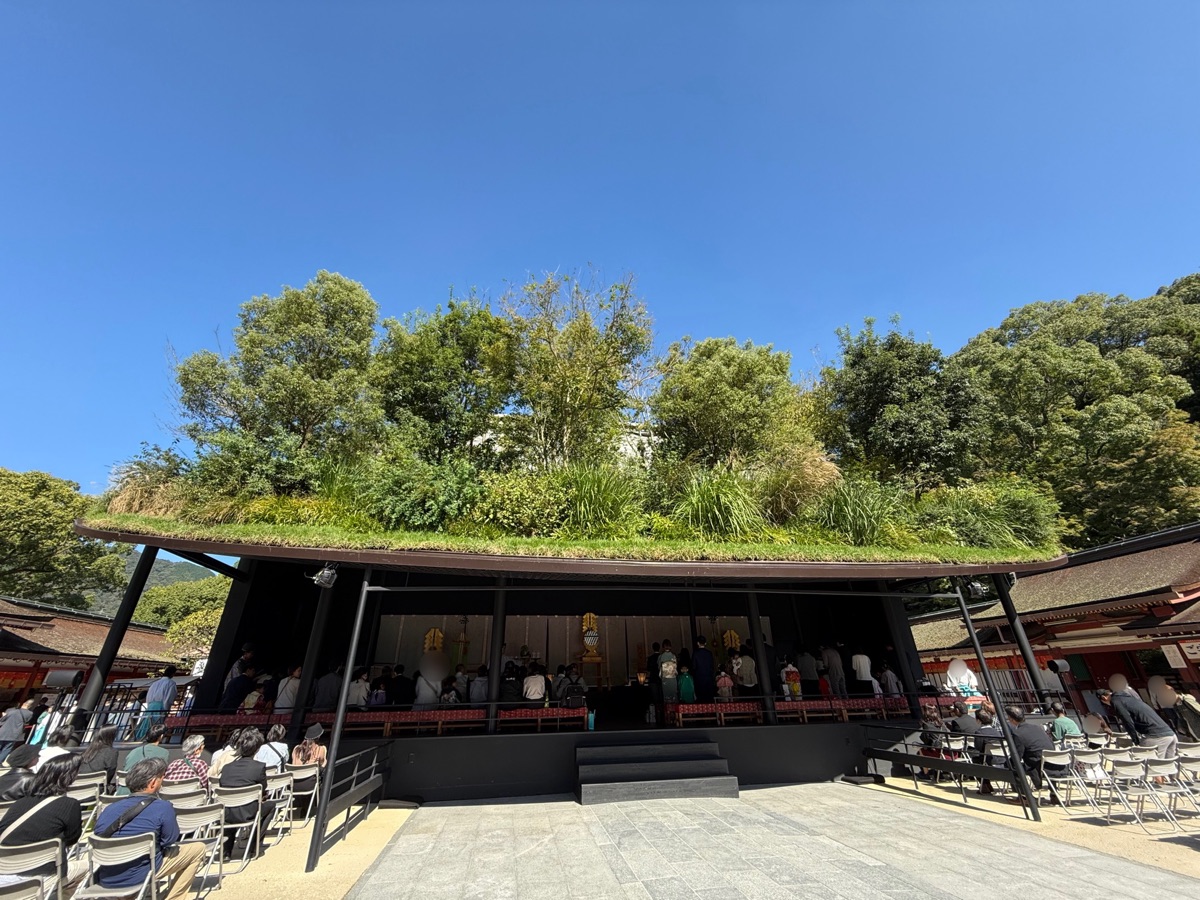
Plants have been set into the roof, giving it a unique form unlike anything I had seen before.
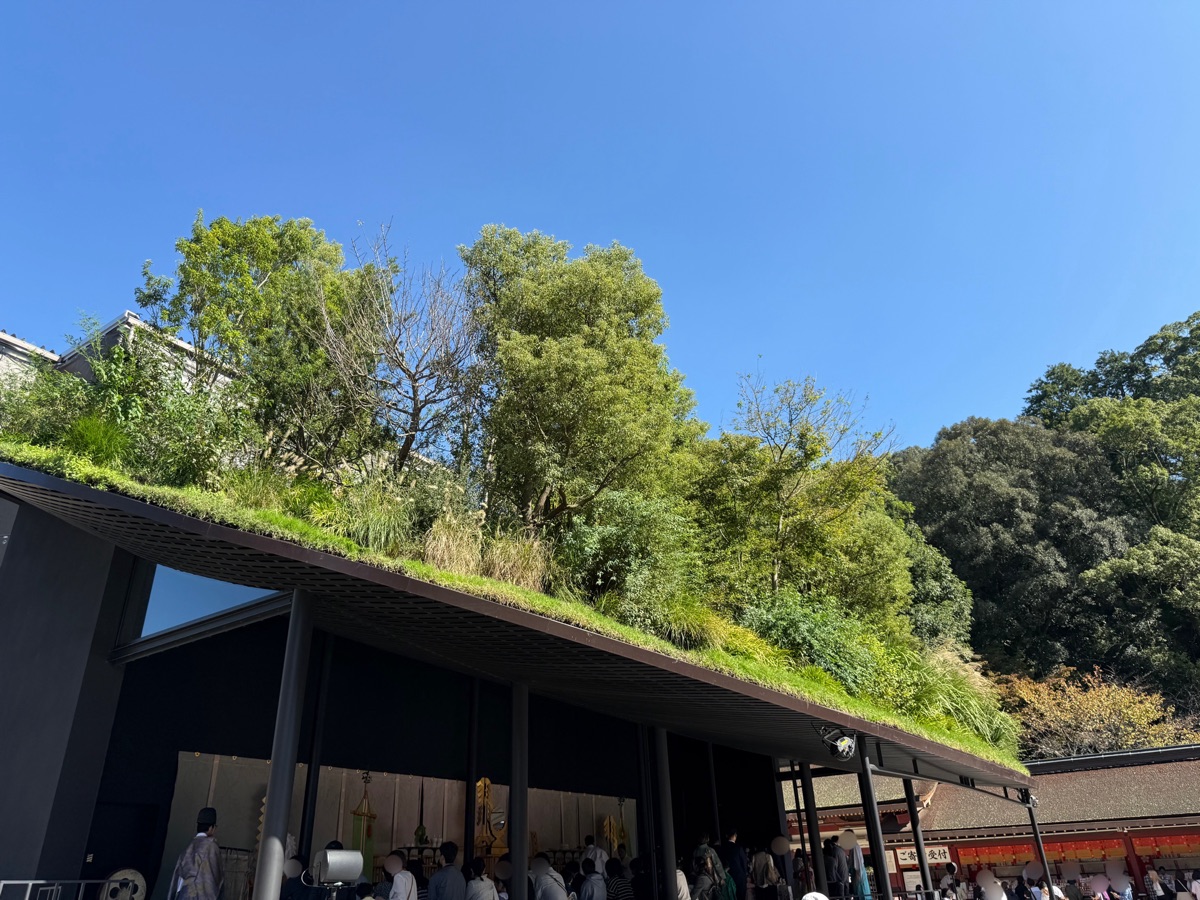
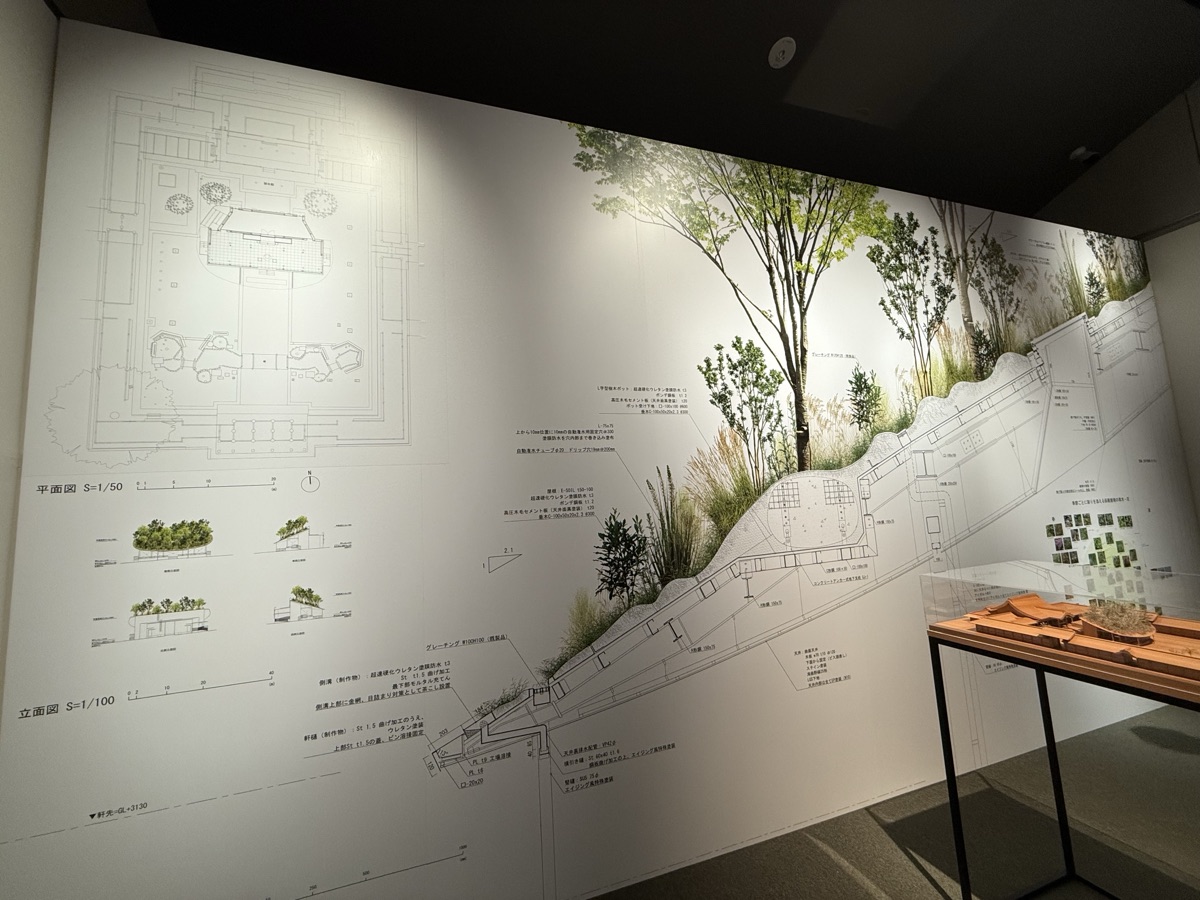
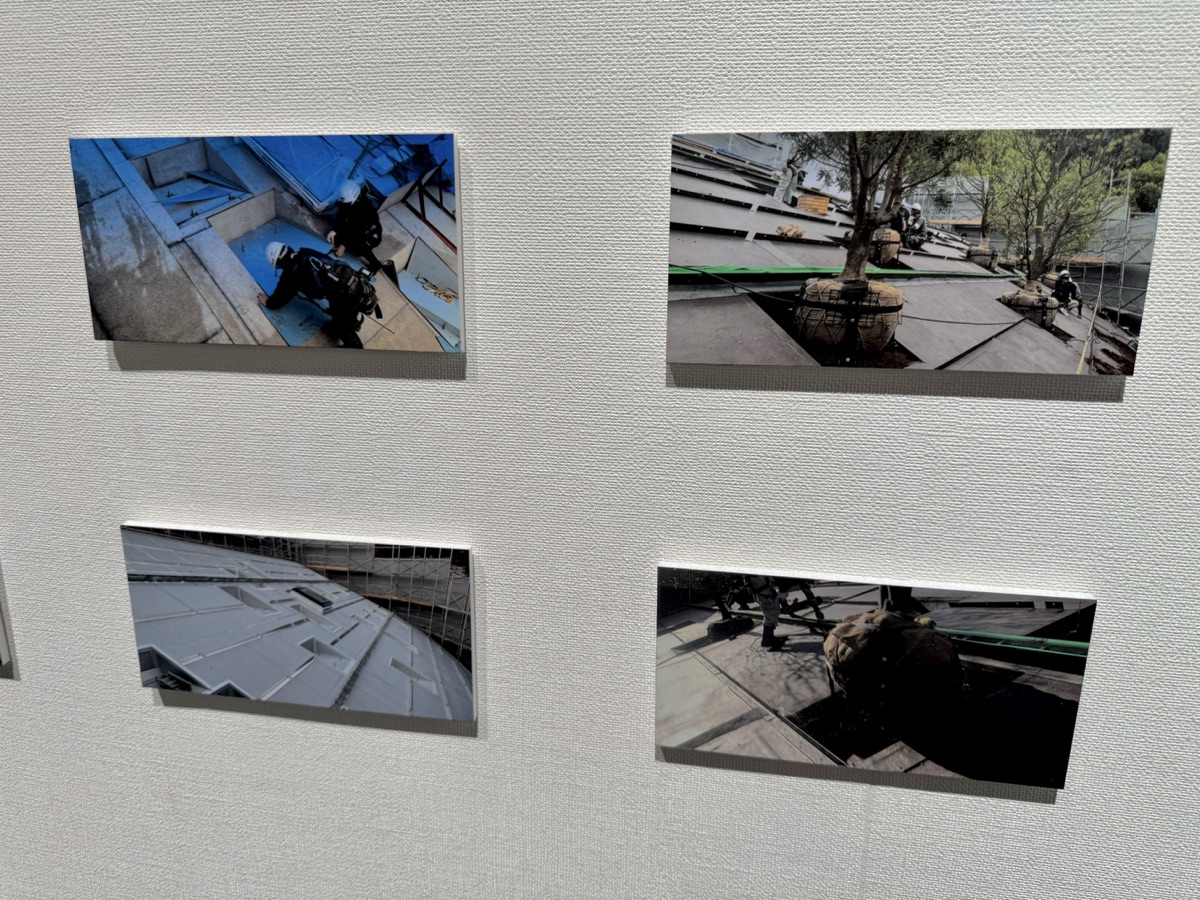
Seen from the side, the roof looks surprisingly thin, so I found myself wondering how they had managed to plant all that greenery in it.

I heard this temporary shrine will only be here for 3 years, and I really wanted to see it, so I’m so glad I was able to visit.
Learning at the Kanko History Museum
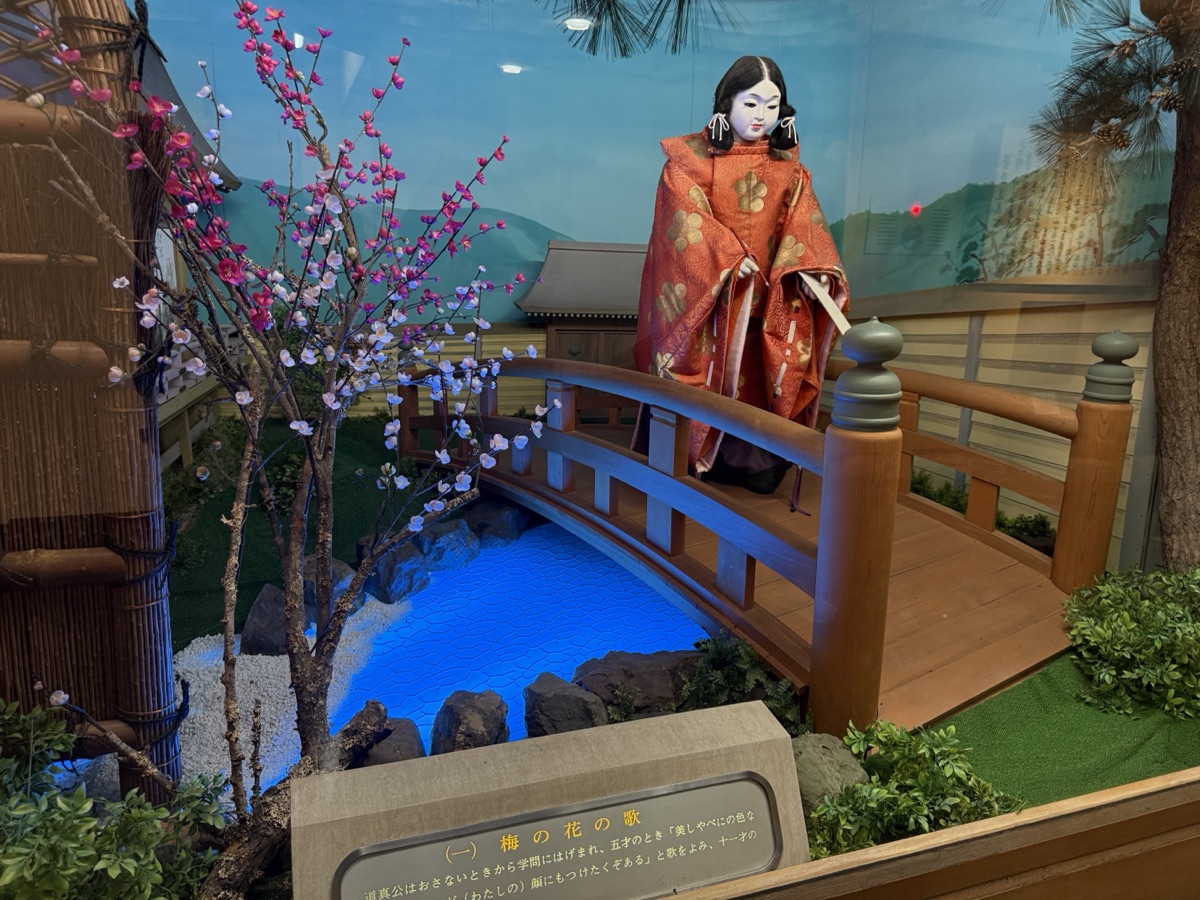
Farther inside, there is a history museum with exhibits depicting the life of Sugawara no Michizane using Hakata dolls. Since we were there, we decided to take a look at that as well.
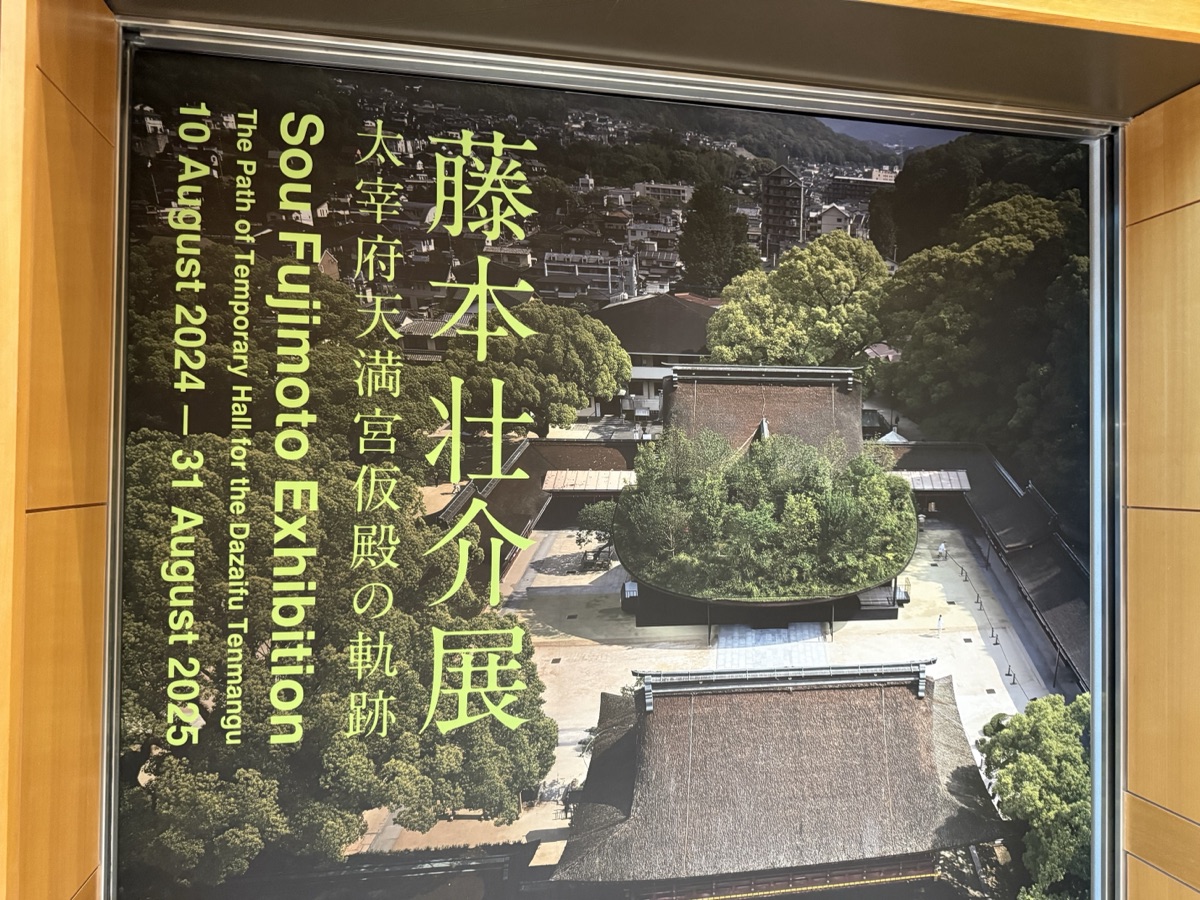
The Treasure Hall Is Hosting “Sou Fujimoto Exhibition: The Path of the Dazaifu Tenmangu Temporary Shrine”
On the way back toward the approach, there is also a treasure hall. It was hosting an exhibition introducing the process by which Sou Fujimoto, who designed the temporary shrine we had just seen, arrived at its final design, and this was one of the reasons for our trip.
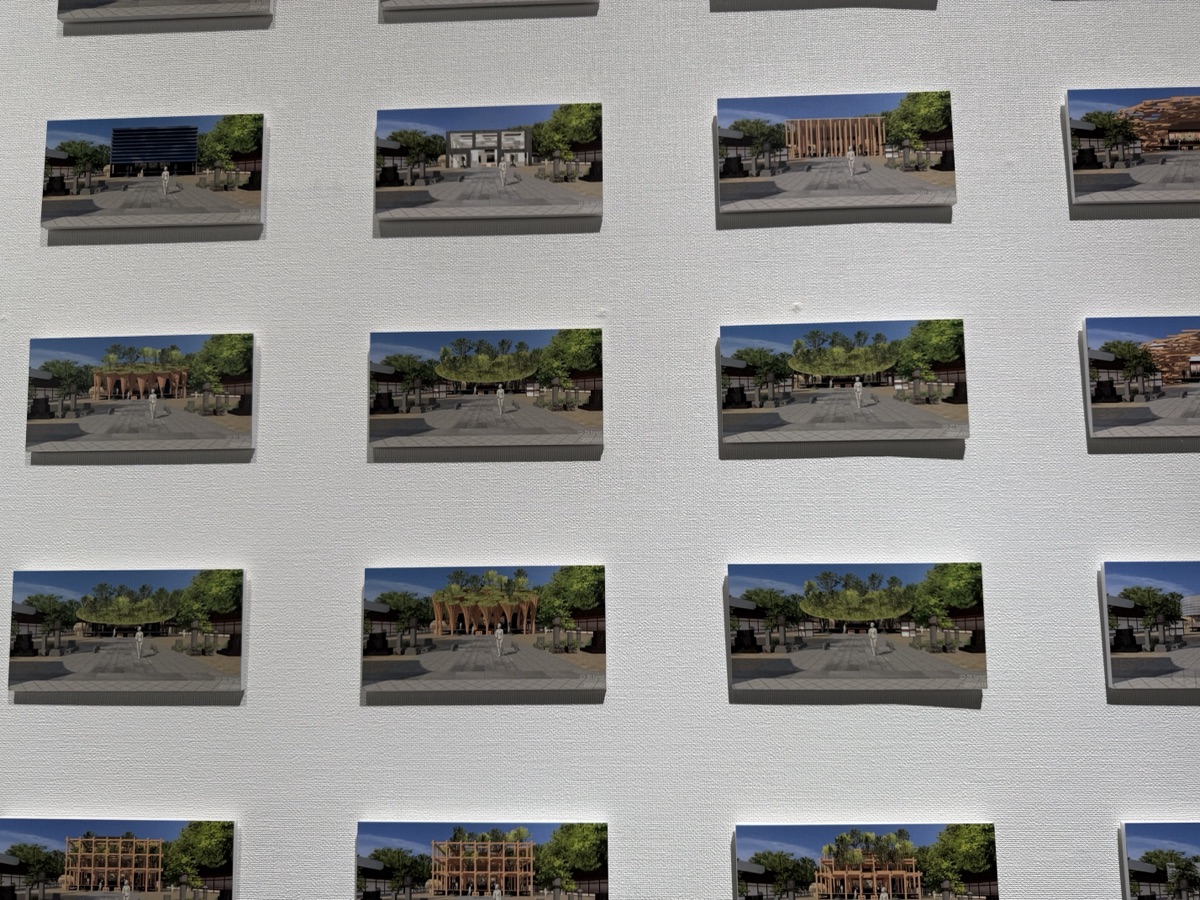
The exhibition uses the last room of the treasure hall. Through numerous architectural models and CG images, it shows the trial and error that went into reaching the final form.
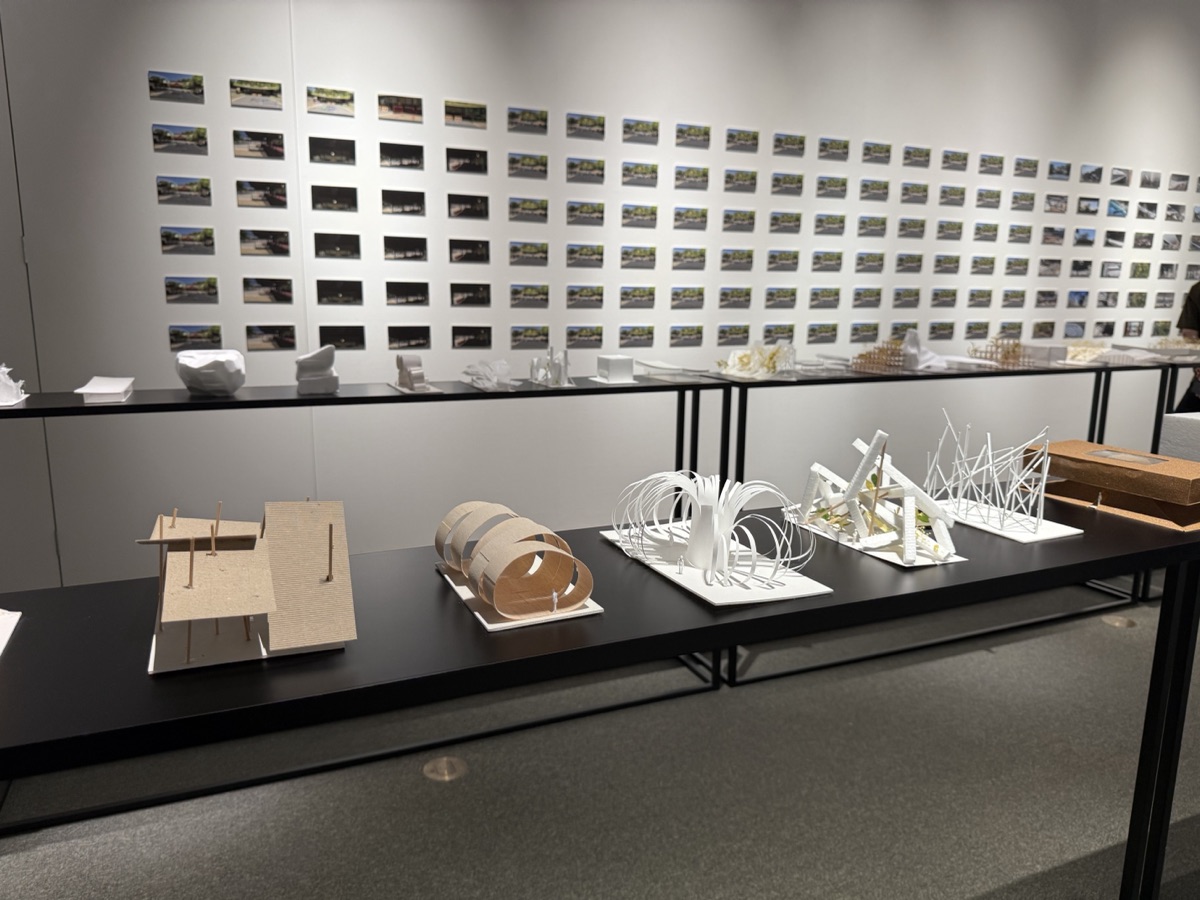
Some of the ideas were wonderfully unusual—things like cone-shaped concepts and jungle gym-like structures—and I found them fascinating.
There was also a large enlarged drawing of the planted roof we had seen earlier, displayed in a way that let us examine it from the side.
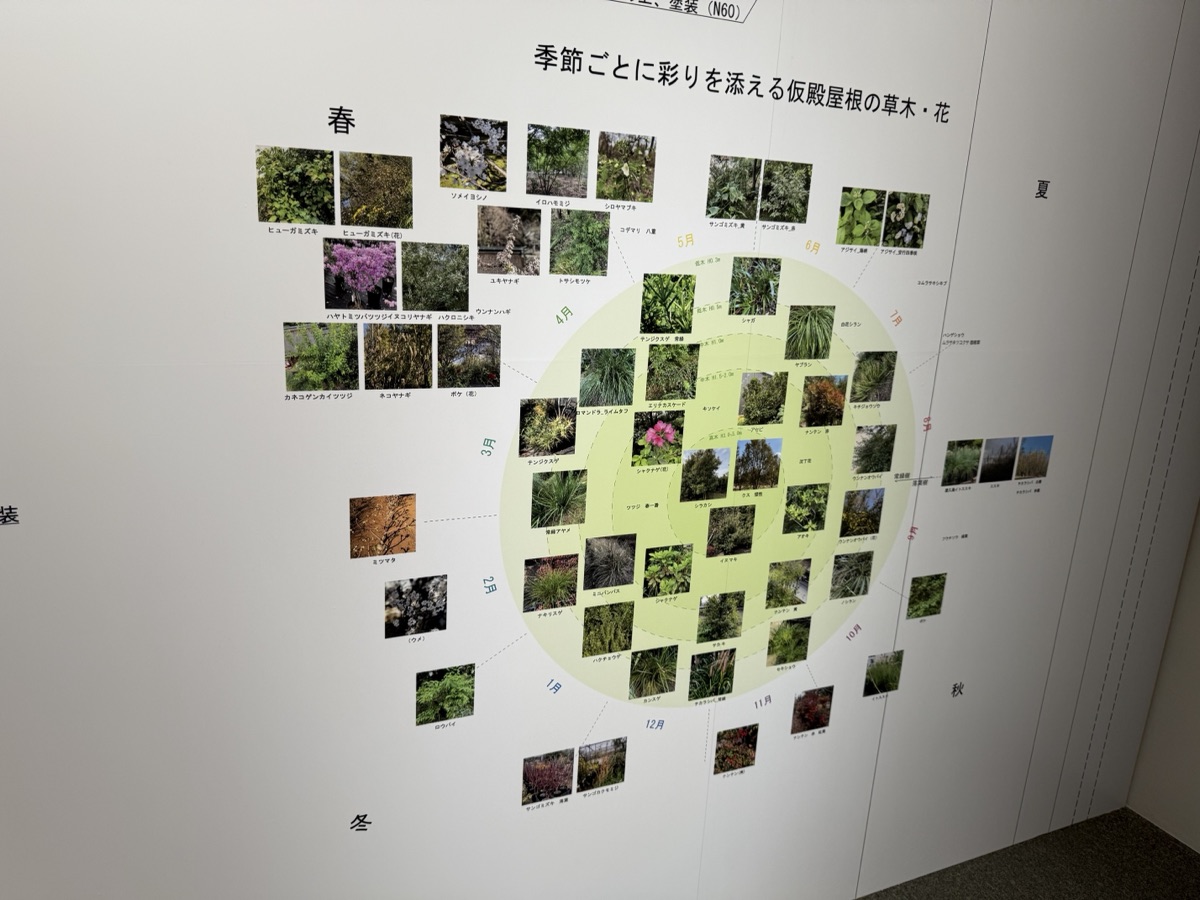
I learned that the plants had been selected with seasonal changes in mind.
There were also photos showing trees being planted into the roof while it was still under construction, before the greenery was fully in place. Although the roof looks thin at first glance, it became clear that the planted sections were built with plenty of depth.
After fully enjoying the exhibition, we left Dazaifu Tenmangu feeling completely satisfied.







Comments